

Daily Devotional
Monday, June 24, 2024 (NS), June 11, 2024 (OS)
No Fasting.
First Period
Monday of the Holy Spirit
11. The commemoration of the holy Apostles Bartholomew and Barnabas.
Scripture Readings
Paschalion — Movable Calendar
First Period
Monday of the Holy Spirit
Epistle
The Reading is from the Epistle of Saint Paul to the Ephesians [§ 229]. Brethren:
5 8Be walking as children of light— 9for the fruit of the Spirit is in all goodness and righteousness and truth— 10proving what is well-pleasing to the Lord. 11And cease having fellowship with the unfruitful works of darkness, but rather even reprove them. 12For it is shameful even to speak of the things which are done by them in secret. 13But all things which are reproved are made manifest by the light; for all which is made manifest is light. 14Wherefore, He saith, “Rouse thyself, thou who sleepest, and arise from the dead, and the Christ shall shine on thee [cf. Is. 9:2, 26:19, 52:1, 60:1, 2].”
15Be taking heed then how exactly ye walk, not as unwise ones, but as wise ones, 16redeeming the time, because the days are evil. 17On this account cease becoming foolish, but become as ones understanding what the will of the Lord is. 18And cease being drunk with wine, in which is prodigality, but keep on being filled with the Spirit, 19speaking to one another in psalms and hymns and spiritual songs, singing and chanting in your heart to the Lord.
Gospel
The Reading is from the Holy Gospel according to Saint Matthew [§ 75]. The Lord said:
18 10“Be taking heed that ye do not ever despise one of these little ones, for I say to you that in the heavens their angels continually behold the face of My Father Who is in the heavens. 11“For the Son of Man came to save that which hath been lost. 12“What think ye? If there should belong to any man a hundred sheep, and one of them should go astray, doth he not leave the ninety-nine upon the mountains, and go and seek that which is gone astray? 13“And if he should happen to find it, verily I say to you, that he rejoiceth over it more than over the ninety-nine which have not gone astray. 14“Thus it is not the will of your Father Who is in the heavens that one of these little ones should perish. 15“But if thy brother should commit a sin against thee, go and reprove him between thee and him alone. If he should hear thee, thou didst gain thy brother. 16“But if he should hear thee not, take along with thee one or two more, that ‘at the mouth of two witnesses, or three, every word might be made to stand [cf. Deut. 19:15].’ 17“And if he should take no heed of them, tell it to the Church. But if also he should take no heed of the Church, let him be to thee even as the heathen and the tax collector. 18“Verily I say to you, whatsoever ye shall bind on the earth shall have been bound in the heavens, and whatsoever ye shall loose on the earth shall have been loosed in the heavens. 19“Again I say to you, that if two of you should agree on the earth concerning any matter—whatsoever they ask for themselves—it shall come to pass for them from My Father Who is in the heavens. 20“For where two or three are gathered together in My name, there am I in the midst of them.”
Menaion — Fixed Calendar
11. The commemoration of the holy Apostles Bartholomew and Barnabas.
Epistle
The Reading is from the Acts of the Apostles [§ 28]. In those days:
For Gk usage, see Acts 11:19-30; for Sl. usage. see Acts 11:19-26, 29, 30.
11 19The apostles, who were scattered because of the affliction that arose about Stephen, went abroad as far as Phœnicia and Cyprus and Antioch, speaking the word to no one except to Jews only. 20But some of them were men of Cyprus and Cyrene, who, after they came to Antioch, began speaking to the Hellenists, preaching as good tidings the Lord Jesus. 21And the hand of the Lord was with them, and a great number believed and turned to the Lord. 22Then the report concerning them was heard in the ears of the Church which was in Jerusalem. And they sent forth Barnabas to go through as far as Antioch, 23who, after he came and saw the grace of God, was glad and was exhorting all to keep on remaining near to the Lord with purpose of heart. 24For he was a good man, and full of the Holy Spirit and of faith; and a considerable crowd was added to the Lord. 25And Barnabas went forth to Tarsus to search for Saul. 26And having found him, he brought him to Antioch. And it came to pass that they were gathered together with the Church for a whole year, and taught a considerable crowd. And the disciples were called Christians first in Antioch.
27And in these days prophets came down from Jerusalem to Antioch. 28And one of them, by name Agavos, rose up, and signified by the Spirit that there was about to be a great famine over all the inhabited world, which also came to pass in the time of Claudius Cæsar. 29And according as any one of the disciples was prospered, each of them determined to send relief toward ministering to the brethren who dwelt in Judæa, 30which also they did, sending it off to the presbyters by the hand of Barnabas and Saul.
for Sl. usage, see [Acts 11:19-26, 29, 30].
Gospel
The Reading is from the Holy Gospel according to Saint Luke [§ 51]. The Lord said to His disciples:
10 16“The one who heareth you heareth Me, and the one who rejecteth you rejecteth Me, and the one who rejecteth Me rejecteth the One Who sent Me forth.”
17And the seventy returned with joy, saying, “Lord, even the demons are being made subject to us in Thy name.” 18And He said to them, “I was beholding Satan as lightning having fallen out of the heaven. 19“Behold, I give you the authority to tread upon serpents and scorpions, and upon all the power of the enemy; and nothing in anywise shall injure you. 20“However cease rejoicing in this, that the spirits are being made subject to you; but be rejoicing that your names were written in the heavens.” 21In the same hour Jesus rejoiced in the Spirit, and said, “I give thanks to Thee, O Father, Lord of the heaven and of the earth, that Thou didst hide these things from the wise and intelligent, and didst reveal them to babes. Yea, Father, for thus it was well-pleasing before Thee.”
Lives of the Saints (Prologue)
June 24th – Civil Calendar
June 11th – Church Calendar
1. The Holy Apostle Bartholomew.
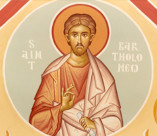 He was one of the twelve great apostles. It is
generally agreed that Bartholomew and Nathaniel are one and the same person. He was a companion
of the Apostle Philip and his sister, the virgin Mariamne. He accompanied St. John the Theologian
in preaching the Gospel in Asia. He also preached the holy Gospel in India and finally in
Armenia, where he died a martyr. In Hierapolis, the holy apostles, by their prayers, killed a
great snake which had been kept in a temple and deified by the pagans. In this same town, they
restored the sight of one Stachius, who had been blind for forty years. This roused the mob
against them, and Philip and Bartholomew were crucified—Barthlomew upside down. Suddenly a great
earthquake struck, and the earth opened up and swallowed the mayor together with all the pagan
priests and a multitude of the impious. Seeing this as a punishment from God, many ran to take
the apostles down from their crosses, but Philip was already dead although Bartholomew was still
alive. After that, Bartholomew went to India, where he preached and translated the Gospel of
Matthew into the Indian language. After that, he moved to Armenia, where he cured the
king’s daughter of madness. But the king’s envious brother, Astyages, took the
apostle of God and crucified him, then had him flayed and beheaded in the Armenian town of
Ourbanopolis. His body was buried by Christians in a leaden coffin. When many miracles had been
wrought over his relics, pagans took the coffin and threw it into the sea. But the sea carried
the coffin to the island of Lipara, where the bishop, Agathon, who had been warned by revelation
in a dream, was waiting for it and buried it in the church. St. Bartholomew appeared to St.
Joseph the Hymnographer in church one day, robed in white, and blessed him with the Gospels to
sing spiritual songs, saying: ‘Let streams of heavenly wisdom flow from thy tongue!’
He also appeared to the Emperor Anastasios (491-518), and told him that he would protect the
newly-built town of Dara. Later, the relics of this apostle were translated to Benevento, and
then to Rome. Great and wondrous miracles have been wrought over them.
He was one of the twelve great apostles. It is
generally agreed that Bartholomew and Nathaniel are one and the same person. He was a companion
of the Apostle Philip and his sister, the virgin Mariamne. He accompanied St. John the Theologian
in preaching the Gospel in Asia. He also preached the holy Gospel in India and finally in
Armenia, where he died a martyr. In Hierapolis, the holy apostles, by their prayers, killed a
great snake which had been kept in a temple and deified by the pagans. In this same town, they
restored the sight of one Stachius, who had been blind for forty years. This roused the mob
against them, and Philip and Bartholomew were crucified—Barthlomew upside down. Suddenly a great
earthquake struck, and the earth opened up and swallowed the mayor together with all the pagan
priests and a multitude of the impious. Seeing this as a punishment from God, many ran to take
the apostles down from their crosses, but Philip was already dead although Bartholomew was still
alive. After that, Bartholomew went to India, where he preached and translated the Gospel of
Matthew into the Indian language. After that, he moved to Armenia, where he cured the
king’s daughter of madness. But the king’s envious brother, Astyages, took the
apostle of God and crucified him, then had him flayed and beheaded in the Armenian town of
Ourbanopolis. His body was buried by Christians in a leaden coffin. When many miracles had been
wrought over his relics, pagans took the coffin and threw it into the sea. But the sea carried
the coffin to the island of Lipara, where the bishop, Agathon, who had been warned by revelation
in a dream, was waiting for it and buried it in the church. St. Bartholomew appeared to St.
Joseph the Hymnographer in church one day, robed in white, and blessed him with the Gospels to
sing spiritual songs, saying: ‘Let streams of heavenly wisdom flow from thy tongue!’
He also appeared to the Emperor Anastasios (491-518), and told him that he would protect the
newly-built town of Dara. Later, the relics of this apostle were translated to Benevento, and
then to Rome. Great and wondrous miracles have been wrought over them.
2. The Holy Apostle Barnabas.
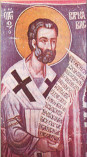 One of the
Seventy, he was born in Cyprus, of wealthy parents of the tribe of Levi, and studied with
Gamaliel together with Saul. He was first named Joseph, but the apostles called him Barnabas, Son
of Consolation, because he had a rare gift for comforting men’s souls. After Saul’s
conversion, Barnabas was the first to welcome him among the apostles. After that, with Paul and
Mark, he preached the Gospel in Antioch and other places. All accounts agree that he was the
first to preach in Rome and in Milan. He suffered at the hands of the Jews on the island of
Cyprus and was buried by Mark at the western gate of the city of Salamis, holding a copy of the
Gospel of Matthew which he had transcribed with his own hand. His grave remained unknown for
several centuries, but when many people had been healed of sickness in that place, it became
known as ‘the place of healing’. In the time of the Emperor Zeno, the apostle
appeared three times, on three successive nights, to Archbishop Anthemius of Cyprus, and revealed
the whereabouts of his grave. This revelation by the apostle took place just at the time when
Peter, the power-hungry Patriarch of Antioch, was seeking to bring the Cypriot Church under his
jurisdiction. After the revealing and finding of the miraculous relics of the holy Apostle
Barnabas, it was established that the Cypriot Church, as an apostolic foundation, should be
independent, and thus the autocephaly of the Church of Cyprus was finally confirmed.
One of the
Seventy, he was born in Cyprus, of wealthy parents of the tribe of Levi, and studied with
Gamaliel together with Saul. He was first named Joseph, but the apostles called him Barnabas, Son
of Consolation, because he had a rare gift for comforting men’s souls. After Saul’s
conversion, Barnabas was the first to welcome him among the apostles. After that, with Paul and
Mark, he preached the Gospel in Antioch and other places. All accounts agree that he was the
first to preach in Rome and in Milan. He suffered at the hands of the Jews on the island of
Cyprus and was buried by Mark at the western gate of the city of Salamis, holding a copy of the
Gospel of Matthew which he had transcribed with his own hand. His grave remained unknown for
several centuries, but when many people had been healed of sickness in that place, it became
known as ‘the place of healing’. In the time of the Emperor Zeno, the apostle
appeared three times, on three successive nights, to Archbishop Anthemius of Cyprus, and revealed
the whereabouts of his grave. This revelation by the apostle took place just at the time when
Peter, the power-hungry Patriarch of Antioch, was seeking to bring the Cypriot Church under his
jurisdiction. After the revealing and finding of the miraculous relics of the holy Apostle
Barnabas, it was established that the Cypriot Church, as an apostolic foundation, should be
independent, and thus the autocephaly of the Church of Cyprus was finally confirmed.
3. The Feast of the Icon: ‘Axion Estin,’ and the miracle that was wrought in front of it in the time of Patriarch Nicholas Chrysoverges.
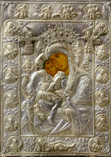 This miracle came about thus: One night a monk was
reading the canon of the Mother of God and singing: ‘More honorable than the
cherubim...’ in the Skete of the Pantocrator (now called after the icon). The monk’s elder
had gone to Karyes. Suddenly a man appeared in the church and began to sing: ‘Axion
Estin’ (It is Verily Worthy), a hymn which till that time had been unknown in the Church.
The monk, hearing this hymn, was greatly struck both by the words and the heavenly singing. The
stranger turned to the monk and said: ‘We sing it like this at home.’ The monk
desired to have it written down, and brought a marble tablet, onto which the stranger wrote the
hymn with his finger as though the tablet were made of wax, and then suddenly disappeared. This
stranger was the Archangel Gabriel. The tablet was taken to Constantinople, and the hymn is sung
to this day in the Church.
This miracle came about thus: One night a monk was
reading the canon of the Mother of God and singing: ‘More honorable than the
cherubim...’ in the Skete of the Pantocrator (now called after the icon). The monk’s elder
had gone to Karyes. Suddenly a man appeared in the church and began to sing: ‘Axion
Estin’ (It is Verily Worthy), a hymn which till that time had been unknown in the Church.
The monk, hearing this hymn, was greatly struck both by the words and the heavenly singing. The
stranger turned to the monk and said: ‘We sing it like this at home.’ The monk
desired to have it written down, and brought a marble tablet, onto which the stranger wrote the
hymn with his finger as though the tablet were made of wax, and then suddenly disappeared. This
stranger was the Archangel Gabriel. The tablet was taken to Constantinople, and the hymn is sung
to this day in the Church.
(For those who are not familiar with the text, it is as follows: ‘It is verily worthy to bless thee, the Theotokos; the ever-blessed, the entirely blameless, and Mother of our God. More honorable than the cherubim and beyond-compare more glorious than the seraphim, who didst bear without corruption God the Logos; thee, verily the Theotokos, we magnify.’ —Translator.)
FOR CONSIDERATION
A true friend prays to God for his friend. A true friend cares about the salvation of his friend’s soul. To draw a friend back from false ways and set him on the true path—that is a precious friendship. The saints of God are a man’s greatest friends.
The two young men, Barnabas and Paul, were friends and went together to Gamaliel’s school. When Barnabas became a Christian, he persistently and with tears prayed to God that He would enlighten Paul’s understanding and turn his heart, that he, too, might become a Christian. Barnabas often spoke to Paul about Christ the Lord, but Paul mocked him and thought him misguided. But the gracious Lord did not leave Barnabas’ prayer unfruitful. He appeared to Paul, turned him from the false way and set him on the way of truth. The converted Paul fell at the feet of his friend and cried: ‘O Barnabas, teacher of the truth, now I am convinced of the truth of what you said to me about Christ!’ Barnabas wept for joy and embraced his friend. The friend saved his friend’s soul by his fervent prayers. If Barnabas had succeeded in making Paul Emperor of Rome, he would have done less than he in fact did by bringing him to the truth by his prayers.
Daily Scripture Readings taken from The Orthodox New Testament, translated and published by Holy Apostles Convent, Buena Vista, Colorado, copyright © 2000, used with permission, all rights reserved.
Daily Prologue Readings taken from The Prologue of Ochrid, by Bishop Nikolai Velimirovic, translated by Mother Maria, published by Lazarica Press, Birmingham, England, copyright © 1985, all rights reserved. Edited by Dormition Skete.