

Catechism of the Holy Orthodox Church
The One Apostolic Church Founded by Jesus Christ
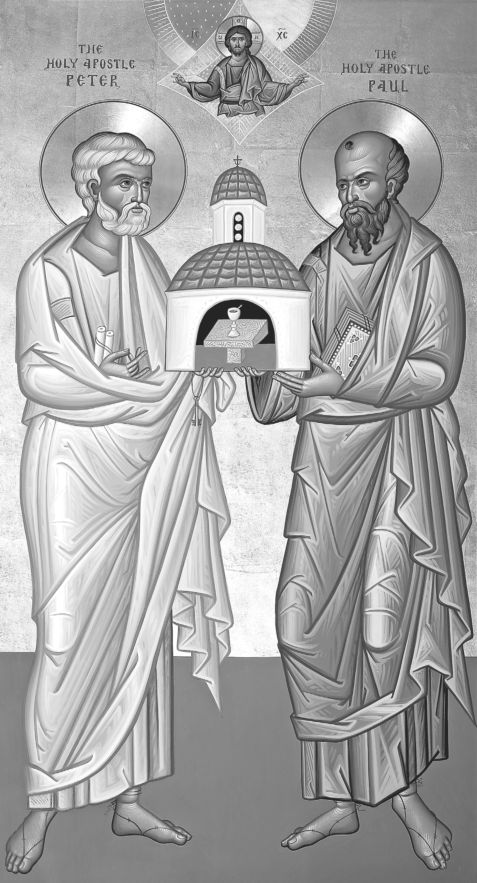
Apostolic Succession, Holy Tradition, and the Faith Once Delivered to the Saints
By Bishop Seraphim of Lagos and Nigeria
Published by Dormition Skete (Buena Vista, Colorado, USA) and Holy Cross Monastery (Akure, Nigeria), 2026, with the blessing of the Synod of Bishops of the Genuine Orthodox Church of America.
Contents#
- Preface
- Chapter 1 – The Church Founded by Jesus Christ
- Chapter 2 – The Apostles and the Birth of the Orthodox Church
- Chapter 3 – Apostolic Succession: The Continuity of the Apostolic Ministry
- Chapter 4 – Holy Scripture and Holy Tradition: The Living Transmission of the Apostolic Faith
- Chapter 5 – The Seven Ecumenical Councils: Defenders of the Apostolic Faith Against Heresy and Confusion
- Chapter 6 – Orthodox Doctrine: The Faith of the Apostles Preserved in the Church
- Chapter 7 – The Holy Mysteries: The Means of Grace in the Life of the Church
- Chapter 8 – Salvation in Orthodox Christianity: Sin, Grace, Redemption, and Theosis
- Chapter 9 – The Holy Fathers: Witnesses and Guardians of the Apostolic Faith
- Chapter 10 – The Divine Liturgy: The Worship of the Apostolic Church
- Chapter 11 – The Orthodox Church Through History: Persecution, Councils, and the Preservation of the Apostolic Faith
- Chapter 12 – The Orthodox Church and the Preservation of the Apostolic Faith
- Chapter 13 – Answering Common Questions and Objections About the Orthodox Faith
- Chapter 14 – The Orthodox Way of Life: Prayer, Fasting, Repentance, and the Journey Toward God
- Chapter 15 – The Virgin Mary and the Saints: Their Place in Orthodox Faith and Worship
- Chapter 16 – The Orthodox Hope: Resurrection, Judgment, and the Kingdom of God
- Chapter 17 – Heaven and Earth United in Orthodox Worship: The Divine Liturgy
- Chapter 18 – Monasticism and the Pursuit of Holiness: The Example of the Desert Fathers and Mothers
- Chapter 19 – Spiritual Warfare and the Healing of the Human Heart
- Chapter 20 – Holy Icons: The Visible Witness of the Invisible God
- Chapter 21 – Death, the Departed, and the Hope of Resurrection
- Chapter 22 – Marriage, Family, and the Christian Home as a Domestic Church
- Chapter 23 – The Orthodox Church: The Unbroken Witness of Apostolic Christianity in the Modern Age
- Chapter 24 – The Fullness of the Orthodox Faith: Remaining in the Apostolic Church Until the End
- Appendix – The One Church of Christ: The Ark of Salvation in the Midst of Apostasy
- Afterword
Preface#
This catechism is humbly dedicated to almighty God, the Author and Finisher of our lives and the Giver of all wisdom and understanding; to the most holy Theotokos, the Mother of God; and to all the saints, whose holy lives remain shining examples of faith, devotion, and obedience to our Lord Jesus Christ.
The Eastern Orthodox Church teaches that the apostolic Faith has been preserved without alteration through Holy Tradition. This tradition is not viewed as a collection of human customs but as the living transmission of the Gospel within the life of the Church under the guidance of the Holy Spirit.
This book invites readers to examine that claim by looking carefully at the Biblical and historical evidence. May every reader approach these pages with humility, prayer, and a sincere desire to know Christ more deeply.
I pray that this catechism may serve as a humble instrument for the instruction of the faithful, the strengthening of those newly entering the Orthodox Church, and the preservation and transmission of the sacred Orthodox Christian Faith to generations yet to come. I am grateful to all those who contributed to the publication of this book.
To almighty God be all glory, honor, and worship, both now and ever, and unto the ages of ages. Amen.
+ Bishop Seraphim
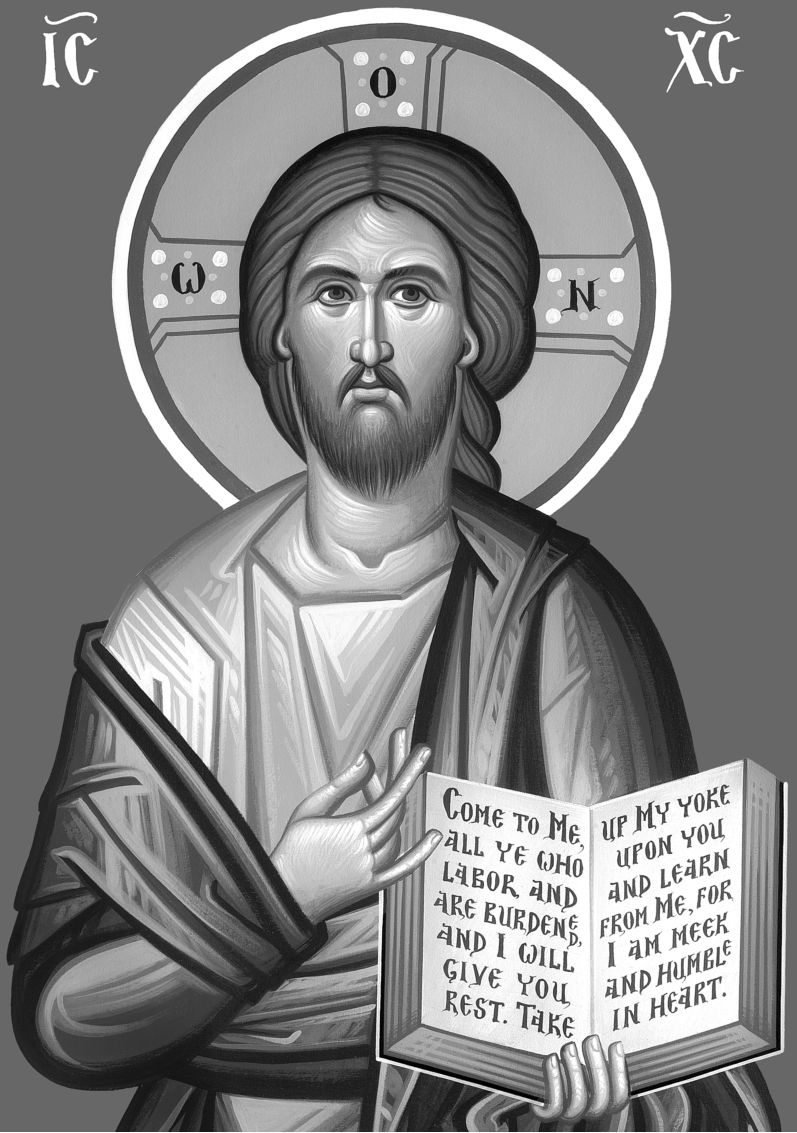
Chapter One#
The Church Founded by Jesus Christ
God’s Eternal Plan#
The Church was established by divine ordinance. Before the creation of the world, God purposed to gather humanity into communion with Himself through Jesus Christ. The Apostle Paul writes: “Blessed be the God and Father of our Lord Jesus Christ,…even as He chose us for Himself before the foundation of the world” [Ephesians 1:3–4]. Again: “To Him be the glory in the Church in Christ Jesus, to all the generations of the age of the ages. Amen” [Eph. 3:21]. From eternity, God’s plan was to establish a people united to Christ.
The Meaning of the Church#
The New Testament uses the Greek word ekklesia, meaning “the assembly” or “those who are called out.” The Church is therefore not just a building or denomination but the people of God gathered by Christ. Saint Peter writes: “Ye are a chosen race, a royal priesthood, a holy nation, a people for a possession” [1 Pet. 2:9]. The Church is the New Israel, gathered from every nation, fulfilling God’s promise to Abraham that all nations would be blessed through his offspring [Gen. 12:3; Gal. 3:16, 28–29].
Christ Establishes His Church#
The clearest declaration of Christ’s intention to establish His Church can be found in the Gospel according to Saint Matthew: “And I say also to thee that thou art Peter, and upon this rock I will build My Church, and the gates of Hades shall not prevail against her” [Matthew 16:18]. The Orthodox Church has always traditionally understood the “rock” to refer to Peter’s confession that Jesus is “the Christ, the Son of the living God” [Mt. 16:16], while also recognizing Peter’s unique role among the apostles. The Church is founded upon Christ Himself, confessed by the apostles, and proclaimed throughout the world. The Apostle Paul confirms this: “For no one is able to lay any other foundation beside the One being laid, Who is Jesus Christ” [1 Corinthians 3:11], and again: “Built up on the foundation of the apostles and prophets, Jesus Christ Himself being the cornerstone” [Eph. 2:20]. Thus, the Church rests upon Christ, with the apostles serving as the foundational witnesses to His Resurrection.
Christ as the Head of the Church#
The Church belongs to Christ because He is its Head. Saint Paul writes, “And He is the head of the body, the Church” [Colossians 1:18]. Again: “Christ also loved the Church and gave Himself up for her” [Eph. 5:25]. The Church therefore exists not by human authority but through the life of Christ present in His body.
The Promise of the Holy Spirit#
Before His Ascension, Christ promised that the Holy Spirit would guide the Church. “Whenever that One, the Spirit of the truth, should come, He will guide you into all the truth” [John 16:13]. Again: “Ye shall receive power after the Holy Spirit is come upon you” [Acts 1:8]. This promise is fulfilled at Pentecost.
Pentecost: The Manifestation of the Church#
Acts Chapter 2 records the coming of the Holy Spirit upon the apostles. “And they were all filled with the Holy Spirit” [Acts 2:4]. Following Peter’s sermon, “They indeed who gladly welcomed his words were baptized; and in that day about three thousand souls were added” [Acts 2:41]. The first Christian community immediately devoted itself to four essential elements: “They were persevering in the teaching of the apostles and in the communion, and in the breaking of the bread, and in the prayers” [Acts 2:42]. Orthodox Christians continue to recognize these four pillars: apostolic teaching, fellowship in the Church, the Holy Eucharist, and liturgical prayer.
The Church as the Body of Christ#
The Church is the mystical body of Christ, not just an earthly institution. Saint Paul teaches: “Now ye are the body of Christ, and members severally” [1 Cor. 12:27]. Christ is present in His Church through the Holy Spirit, sanctifying believers and uniting them in faith and love.
The Church as the Pillar and Stay of the Truth#
Saint Paul calls the mystical assembly of believers “the Church of the living God, pillar and stay of the truth” [1 Timothy 3:15]. Orthodox theology understands this to mean that the Church is entrusted with preserving and proclaiming the truth received from Christ through the apostles and handed down by them to the bishops.
The Witness of the Apostolic Fathers#
Saint Clement of Rome (ca. 96 AD): Writing within the lifetime of some who had known the apostles, Saint Clement described how the apostles appointed bishops and deacons and provided for successors after their deaths: “The apostles…appointed their first-fruits…to be bishops and deacons…and afterwards gave instructions that when these should fall asleep, other approved men should succeed them” (Epistle of Clement, Chapters 42–44). This testimony is among the earliest witnesses to apostolic succession.
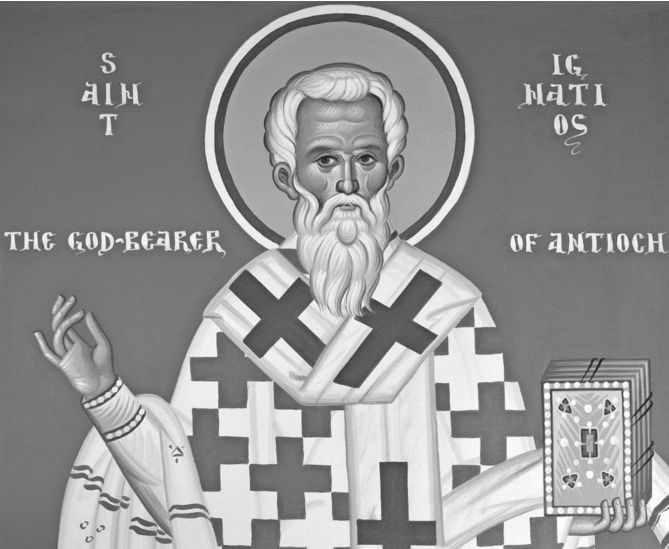
Saint Ignatius of Antioch (ca. 107 AD): On his journey to martyrdom, Saint Ignatius repeatedly emphasized the importance of unity with the bishop: “Where the bishop appears, there let the multitude be; just as where Jesus Christ is, there is the Catholic Church” (Letter to the Smyrnaeans, 8). These writings show that, within living memory of the apostles, the Church already recognized the central role of bishops in preserving unity and order.
Saint Irenaeus of Lyons (ca. 180 AD): Confronting false teachers, Saint Irenaeus argued that the true Faith could be identified by tracing the succession of bishops from the apostles: “We can enumerate those who were established by the apostles as bishops in the churches, and their successors down to our own time” (Against Heresies, Book III, Chapter 3). For Saint Irenaeus, apostolic succession served as a public witness to the continuity of the Church’s teaching.
Conclusion#
The Church founded by Jesus Christ is both divine and human. According to the witness of Scripture and the earliest Christian writers, Christ established a visible community rooted in the preaching of the apostles, nourished by the Holy Spirit, united in the Eucharist, and shepherded by bishops appointed in continuity with apostolic ministry. The Eastern Orthodox Church understands herself as standing in continuity with this apostolic community, preserving the Faith, worship, and sacramental life received from the apostles and confessed by the fathers. As Saint Jude exhorts: “Contend for the Faith which was once for all delivered to the saints” [Jude 3].
Chapter Two#
The Apostles and the Birth of the Orthodox Church
The Lord Jesus Christ did not leave behind a written book or establish a merely human institution. Instead, He chose twelve apostles, taught them for over three years, entrusted them with His Gospel, and commanded them to preach, baptize, celebrate the Holy Eucharist, and shepherd His flock. Through the coming of the Holy Spirit on the day of Pentecost, these apostles became the first leaders of the Church and laid the foundation upon which the Church has continued to grow.
Christ Chose the Apostles#
Before beginning their public ministry, Jesus called men from different backgrounds to become His disciples. “He ordained twelve, that they should be with Him, and that He might send them forth to preach” [Mark 3:14]. The number twelve was significant. It symbolized the restoration and fulfillment of the twelve tribes of Israel, demonstrating that Christ was gathering a new covenant people. The names of the Twelve are recorded in Matthew 10:2–4, Mark 3:16–19, Luke 6:13–16, and Acts 1:13. These apostles became eyewitnesses of Christ’s ministry, death, Resurrection, and Ascension. As Saint John later wrote: “That which we have heard, that which we have seen with our eyes, that which we beheld, and our hands touched, concerning the Word (Logos) of the Life” [1 Jn. 1:1]. The apostolic proclamation was rooted not in speculation but in direct experience of the risen Christ.
The Great Commission#
After His Resurrection, Christ entrusted His mission to the apostles. “Go therefore and make disciples of all the nations, baptizing them in the name of the Father, and of the Son, and of the Holy Spirit, teaching them to observe all things whatsoever I commanded you” [Mt. 28:19–20]. Several important truths emerge from this command:
- The Gospel is for all nations.
- Baptism is the entrance into the Church.
- The apostles are to teach everything Christ commanded, not just selected doctrines.
- Christ promises to remain with His Church “always, until the completion of the age” [Mt. 28:20].
Orthodox Christians understand this promise as evidence that Christ continues to guide His Church through the Holy Spirit.
The Promise of the Holy Spirit#
Before His Ascension, Jesus instructed the apostles to wait in Jerusalem. “Ye shall receive power after the Holy Spirit is come upon you; and ye shall be witnesses to Me” [Acts 1:8]. The apostles began their ministry by the strength and wisdom bestowed on them by God. Their mission depended entirely on the gift of the Holy Spirit. This fulfilled Christ’s earlier promise: “The Paraclete, the Holy Spirit…shall teach you all things, and shall remind you of what I said to you” [Jn. 14:26].
Pentecost: The Birthday of the Church#
The day of Pentecost marks the public manifestation of the Church. The Holy Spirit descended upon the apostles as distributed “tongues, as if of fire” [Acts 2:3], enabling them to proclaim the mighty works of God in many languages. Saint Peter preached the first Christian sermon, proclaiming Jesus as the crucified and risen Messiah. His hearers asked the apostles, “Men, brethren, what shall we do?” [Acts 2:37]. Peter answered: “Repent, and let each one of you be baptized in the name of Jesus Christ for remission of sins, and ye shall receive the gift of the Holy Spirit” [Acts 2:38]. And about three thousand people were baptized that day [Acts 2:41].
The Apostles Ordain Ministers#
As the Church grew, the apostles appointed others to assist in the ministry. Acts Chapter 6 describes the appointment of seven men to care for the community, “whom they set before the apostles; and having prayed, they laid their hands on them” [Acts 6:6]. The laying on of hands became a visible sign of ordination and the transmission of ecclesiastical ministry. Later, Saint Paul instructed Timothy: “Do not neglect the gift of grace in thee, which was given thee by prophecy with laying on of the hands of the presbytery” [1 Tim. 4:14]. And again he refers to this sacred rite: “Do not be laying hands quickly on anyone” [1 Tim. 5:22]. These passages demonstrate that ordained ministry was carefully entrusted and continued beyond the lives of the original apostles.
The Eucharist at the Heart of the Church#
The first Christians gathered regularly to celebrate the Eucharist. Christ had commanded: “Be doing this in remembrance of Me” [Luke 22:19]. The disciples remained faithful to this command. Acts states that they devoted themselves to “the breaking of the bread” [Acts 2:42], a phrase widely understood in early Christian tradition to refer to the Eucharistic celebration (Holy Communion). Saint Paul also teaches: “The cup of blessing which we bless, is it not communion of the blood of the Christ? The bread which we break, is it not communion of the body of the Christ?” [1 Cor. 10:16]. The Eucharist was not viewed as a mere symbol but as true participation in Christ.
Unity in the Church#
Christ prayed before His Passion “in order that all may be one, even as Thou, Father, art in Me, and I in Thee” [Jn. 17:21]. The apostles labored to preserve this unity. When disputes arose, they gathered in council. Acts Chapter 15 records the Council of Jerusalem, where the apostles and elders met to resolve questions regarding Gentile converts. After prayer and discussion, they declared, “It seemed good to the Holy Spirit and to us” [Acts 15:28]. The Orthodox Church sees this apostolic council as a model for the later ecumenical councils, in which bishops gathered under the guidance of the Holy Spirit to preserve the Faith.
The Witness of the Apostolic Fathers#
Saint Ignatius of Antioch: Writing around 107 AD, Saint Ignatius emphasized the unity of the Church around the bishop and the Eucharist. He wrote: “Take care, then, to use one Eucharist. For there is one flesh of our Lord Jesus Christ, and one cup unto unity of His blood, one altar, as there is one bishop” (Letter to the Philadelphians, 4). He also wrote: “Let no one do anything concerning the Church without the bishop” (Letter to the Smyrnaeans, 8). These writings show that belief in the Eucharist, the episcopate, and the visible unity of the Church was already firmly established at the beginning of the second century.
Saint Irenaeus of Lyons: Writing in the second century against the Gnostic sects, Saint Irenaeus argued that the true Faith is known through the succession of bishops who faithfully preserve the apostles’ teaching. He declared: “The tradition of the apostles, manifested throughout the whole world, can be clearly seen in every church by those who wish to behold the truth” (Against Heresies, III.3.1). For Saint Irenaeus, apostolic succession was inseparable from fidelity to apostolic doctrine.
The Mission to the Nations#
The apostles obeyed Christ’s command to preach throughout the world. Saint Peter preached in Jerusalem and beyond. Saint Paul established churches throughout Asia Minor, Greece, and eventually reached Rome. Saint Thomas is remembered in ancient Christian tradition as carrying the Gospel eastward. By the close of the first century, Christian communities existed across the Roman Empire and beyond, united by a common Faith, the celebration of the Eucharist, Baptism, and the hierarchal ministry of bishops, presbyters, and deacons.
Conclusion#
The birth of the Church was the foreordained fulfillment of God’s eternal plan in Christ. Through the descent of the Holy Spirit at Pentecost, the apostles were empowered to preach the Gospel, baptize believers, celebrate the holy mysteries, and establish communities of faith throughout the world. According to the understanding of the Eastern Orthodox Church, the pattern established by the apostles—faithful teaching, sacramental worship, ordained ministry, and conciliar leadership—remains the pattern of the Church today. The continuity of this apostolic life is seen not only in historical succession but also in the preservation of its unchanging Faith.
Chapter Three#
Apostolic Succession: The Continuity of the Apostolic Ministry
One defining characteristic of the Eastern Orthodox Church is her belief in apostolic succession. According to Orthodox teaching, the ministry entrusted by Jesus Christ to His apostles continued after their deaths, being handed down uninterrupted through the laying on of hands to bishops who continue to preserve the apostolic Faith, celebrate the holy mysteries, and shepherd the people of God.
Apostolic succession is more than just an unbroken chain of ordinations. It is the continuation of the apostolic ministry in both right doctrine (orthodoxy) and right practice (orthopraxy). A succession of bishops without fidelity to the correct teachings of the apostolic Faith would not, in Orthodox understanding, fulfill the purpose of apostolic succession. As Saint Paul instructed Saint Timothy: “The things which thou heardest from me in the midst of many witnesses, commit thou these things to faithful men who shall be competent also to teach others” [2 Tim. 2:2]. This verse presents four generations of transmission: Christ taught Paul. Paul taught Timothy. Timothy was to teach faithful men. Those faithful men would teach others. The Gospel was intended to be faithfully handed on from generation to generation.
Christ Gave Authority to the Apostles#
Matthias Replaces Judas#
The first example of apostolic succession appears before Pentecost. After Judas Iscariot’s death, the apostles sought to fill his vacant office. Quoting Psalm 108:7 (109:8), Saint Peter declared: “His bishopric (office) let another take” [Acts 1:20]. After prayer, Matthias was chosen and “was reckoned along with the eleven apostles” [Acts 1:26]. The Greek word sometimes translated “office” (episkopē) is closely related to the word from which “bishop” (episkopos) is derived. The replacement of Judas demonstrates that apostolic ministry was understood as an office that could be filled when vacant.
The Laying on of Hands#
Throughout the New Testament, sacred ministry is conferred by prayer and the laying on of hands. When the seven deacons were appointed to serve the Church, “They set [these men] before the apostles; and having prayed, they laid their hands on them” [Acts 6:6]. When Paul and Barnabas were sent out by the other apostles, “After they fasted and prayed, and laid their hands upon them (Paul and Barnabas), they dismissed them” [Acts 13:3]. Saint Paul told Timothy: “I remind thee to rekindle the gracious gift of God which is in thee by the laying on of my hands” [2 Tim. 1:6]. These passages show that ordained ministry was publicly entrusted through prayer and the laying on of hands.
Bishops, Presbyters, and Deacons#
The New Testament describes three enduring ministries in the life of the Church:
- Bishops (Episkopoi)—entrusted with oversight and teaching
- Presbyters (Presbyteroi)—elders who shared in pastoral care and liturgical ministry
- Deacons (Diakonoi)—ministers of service and assistance
Saint Paul greeted “all the saints in Christ Jesus, who are in Philippi, with the bishops and deacons” [Philippians 1:1]. He also listed the qualifications required of bishops [1 Tim. 3:1–7] and deacons [1 Tim. 3:8–13], indicating that these were recognized and enduring offices. By the early second century, the Church’s structure of bishop, presbyters, and deacons is clearly attested in the writings of Saint Ignatius of Antioch.
The Witness of Saint Clement of Rome#
Saint Clement, writing around 96 AD, gives one of the earliest descriptions of apostolic succession. He explains that the apostles appointed bishops and deacons and made provision for successors after their deaths because they foresaw future disputes concerning Church leadership (Epistle of Clement, Chs. 42–44). His testimony shows that succession in ministry was regarded as part of the apostolic order from the earliest generation after the New Testament.
The Testimony of Saint Ignatius of Antioch#
Around the year 107, while on his way to martyrdom, Saint Ignatius repeatedly exhorted Christians to remain united with their lawful bishop. He wrote: “Let no one do anything pertaining to the Church apart from the bishop” (Letter to the Smyrnaeans, 8). He also wrote, “Where the bishop is, there let the congregation be; just as wherever Jesus Christ is, there is the Catholic Church” (Letter to the Smyrnaeans, 8). For Ignatius, the bishop was not only an administrator but also the visible focus of unity in the local Church, presiding over the Eucharist and safeguarding apostolic teaching.
Saint Irenaeus and the Rule of Faith#
In the second century, Gnostic false teachers claimed to possess secret revelations. Saint Irenaeus answered that the authentic apostolic Faith was not hidden but publicly preserved in the churches founded by the apostles. He wrote that the apostolic tradition could be known through the succession of bishops in those churches and appealed especially to the Church of Rome because of its widely known apostolic foundation (Against Heresies, Book III, Chapter 3). For Irenaeus, apostolic succession served the preservation of the “rule of faith”—the public teaching received from the apostles—not the transmission of secret knowledge.
Saint Cyprian of Carthage on the Episcopate#
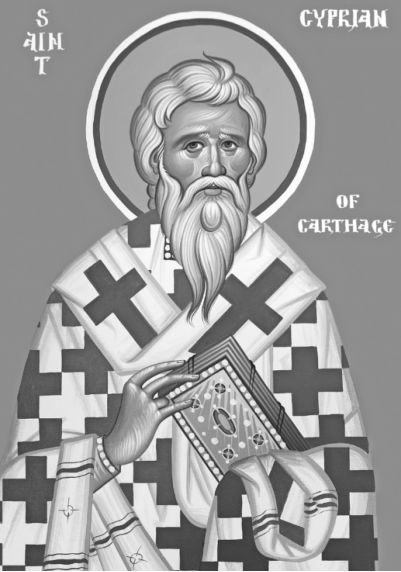
In the third century, Saint Cyprian emphasized the unity of the episcopate. He taught that bishops share in one episcopal office while each shepherds the flock entrusted to him. His treatise On the Unity of the Catholic Church stresses that schism wounds the visible unity Christ desires for His Church, and he calls Christians to remain in communion with the rightly-believing bishops of the Church.
Apostolic Succession and the Preservation of Doctrine#
The Orthodox Church teaches that apostolic succession is inseparable from fidelity to the apostolic Faith. Saint Paul warned the elders of Ephesus, “Be taking heed therefore to yourselves, and to all the flock, in which the Holy Spirit set you for Himself as bishops, to shepherd the Church of the Lord and God” [Acts 20:28]. He also warned that false teachers would arise even from within the Church [Acts 20:29–30]. Therefore, bishops were in charge of both governing and preserving sound doctrine.
Common Questions#
Q: Does apostolic succession guarantee personal holiness?
A: No. Scripture records that even Judas was chosen as an apostle, yet he betrayed Christ. Orthodox teaching distinguishes between the grace of the office and the personal holiness of the one who holds it. Bishops are called to holiness, but they are still human and remain accountable to God and to the Faith of the Church.
Q: Is succession only about an unbroken chain of ordinations?
A: No. In Orthodox theology, apostolic succession includes both the historical continuity of Ordination and fidelity to the apostolic Faith. The inherited ministry and the true Faith belong together, and both are required.
Q: Why is succession important?
A: Because the Church is not self-created. The ministry of the Church is received, not invented. Each generation receives the Gospel and the pastoral office as a sacred trust to be handed on faithfully.
Conclusion#
The New Testament presents a Church in which Christ entrusted authority to the apostles, the apostles appointed successors through prayer and the laying on of hands, and those successors were charged with preserving the Faith and shepherding the people of God. The earliest Christian writers—Saint Clement of Rome, Saint Ignatius of Antioch, Saint Irenaeus of Lyons, and Saint Cyprian of Carthage—bear witness to this pattern of continuity. The Eastern Orthodox Church understands this apostolic succession as a living reality that includes both the historic continuity of ordained ministry and steadfast faithfulness to the apostolic Gospel.
Chapter Four#
Holy Scripture and Holy Tradition: The Living Transmission of the Apostolic Faith
The Orthodox Church understands herself as a Church that has received, preserved, and faithfully transmitted the Faith delivered by Jesus Christ to His apostles. The Orthodox Church teaches that the Christian Faith is based upon the divine revelation given by God through Jesus Christ and entrusted to the apostles. This revelation, the apostolic Faith, has been preserved and transmitted through the life of the Church by two inseparable realities:
- Holy Scripture—the written word of God inspired by the Holy Spirit
- Holy Tradition—the living transmission of the apostolic Faith within the Church
Orthodox Christianity does not place Scripture and tradition in opposition to one another. Rather, Scripture is understood as existing within Holy Tradition, because the Church received, preserved, and recognized the Scriptures through the guidance of the Holy Spirit.
The Apostle Paul commands: “So then, brethren, be standing firm and holding fast the traditions which ye were taught, whether by word or by our epistle” [2 Thess. 2:15]. This verse reveals that the apostolic teaching was transmitted in two ways: first orally (“by word”) and later in writing (“by our epistle”). Holy Tradition does not mean human customs, personal opinions, or practices created by individuals. It refers to the life of the Holy Spirit in the Church, preserving and handing down the truth revealed by God. Holy Tradition is not merely the preservation of old documents or practices. It is the living work of the Holy Spirit in the Church. The Spirit preserves the Church in faithfulness to Christ.
God Reveals Himself to His People#
Christianity begins with God’s revelation, not human searching. In the Epistle to the Hebrews, we read: “God, Who of old, in many parts and in many ways, spoke to the fathers through the prophets, did in these last of days speak to us through the Son” [Heb. 1:1–2]. The fullness of God’s revelation is found in Jesus Christ Himself. The Gospel of John proclaims, “And the Logos became flesh and tabernacled among us” [Jn. 1:14]. Christ is not merely a teacher who gives information about God; He is God revealed in human flesh. The apostles, rather than inventing their own religious system, witnessed Christ and proclaimed what they had received.
The Apostles Preached Before the New Testament Was Written#
An important historical fact is that the Christian Church existed before the New Testament was completed. For many years after Pentecost, the Church lived by: the preaching of the apostles, the worship of the Church, the celebration of the Eucharist, Baptism, prayer, and the oral teaching passed from the apostles to their disciples. The Apostle Paul writes, “For I delivered to you in the first place what I also received, that Christ died for our sins according to the Scriptures, and that He was buried, and that He hath been raised” [1 Cor. 15:3–4]. The words “delivered” and “received” describe the transmission of apostolic teaching. Not everything taught by the apostles was immediately written down. Saint John writes, “And there are also many other things, which if as much as Jesus did may be written one by one, I suppose even the world itself could not contain the books that would be written” [Jn. 21:25]. The early Church preserved apostolic teaching through preaching, worship, the life of the Christian community, and oral tradition.
Scripture Comes from the Life of the Church#
The Orthodox Church teaches that the Bible is the book of the Church. The Church did not create Scripture, because Scripture is inspired by God. However, the Church received, preserved, read, and recognized the inspired writings. The Apostle Peter speaks of Paul’s writings alongside “the rest of the Scriptures”: “Our beloved brother Paul, according to the wisdom which was given to him, wrote to you,...in which are some things hard to be understood, which the unlearned and unstable twist, as they do also the rest of Scriptures” [2 Pet. 3:15–16]. This demonstrates that the early Church recognized inspired writings and guarded their correct interpretation. In the Orthodox Church, Scripture and Holy Tradition go together. The Scriptures were written within the life of the Church and preserved by the Church. Before the New Testament was completely written, the Church already existed, worshipped, celebrated the Eucharist, and preached the Gospel.
The Canon of Scripture#
The word “canon” means a rule or measure. The Church fathers understood that not every religious writing claiming authority was inspired Scripture. The Church carefully discerned which writings belonged to the apostolic deposit of faith. The New Testament canon was recognized through: apostolic origin, agreement with the rule of faith, universal acceptance among the churches, and use in Christian worship. The holy Scriptures were therefore preserved within the worshipping life of the Church. Orthodox Christianity teaches that Scripture is the heart of Holy Tradition. The Bible is read in worship, in prayer, through the teachings of the fathers, and within the Faith of the Church. The same Holy Spirit Who inspired Scripture guides the Church in understanding it. Christ promised: “That One shall teach you all things, and shall remind you of what I said to you” [Jn. 14:26].
The Authority of Holy Tradition#
Saint Basil the Great on Tradition#
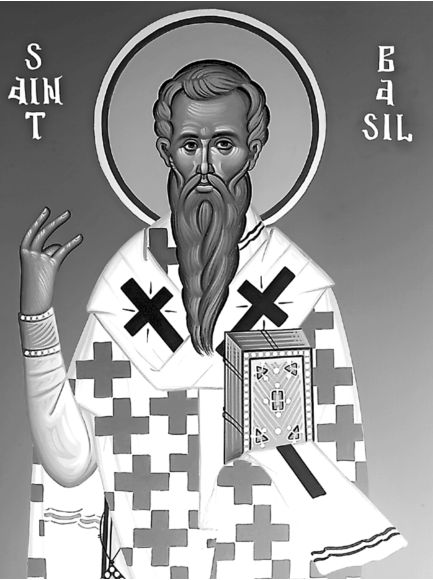
Saint Basil the Great, one of the greatest fathers of the fourth century, defended the importance of apostolic tradition. He wrote, “Of the beliefs and practices whether generally accepted or publicly enjoined which are preserved in the Church, some we possess derived from written teaching; others we have received delivered to us in a mystery by the tradition of the apostles; and both have the same force concerning piety” (On the Holy Spirit, Ch. 27). Saint Basil teaches that the Church preserves both written and unwritten apostolic teachings.
Saint John Chrysostom on Apostolic Tradition#
Saint John Chrysostom (d. 407), the Archbishop of Constantinople, commenting on Paul’s words in 2 Thessalonians 2:15, wrote: “‘So then, brethren, stand fast and hold the traditions.’ Hence it is evident that they did not deliver all things by letter but many things also without writing” (Homily 4 on Second Thessalonians). For Saint Chrysostom, apostolic teaching was not limited only to written documents but also included the living instruction preserved in the Church.
Tradition and the Interpretation of Scripture#
The Orthodox Church does not reject personal reading of Scripture but rather encourages it, with the understanding that Scripture must be interpreted within the Faith of the Church. The Apostle Peter warns: “Knowing this first, that every prophecy of Scripture cometh not out of private explanation” [2 Pet. 1:20]. The same Spirit Who inspired Scripture guides the Church in understanding Scripture. The Ethiopian eunuch provides an example of the need for guidance: “‘So then dost thou really understand what thou readest?’ But he said, ‘No. How can I, unless someone should guide me?’” [Acts 8:30–31]. Saint Philip then explained the Scriptures and led him to Christ.
The Fathers and the Faith of the Church#
The holy fathers are among the greatest witnesses to Holy Tradition, who faithfully interpreted Scripture within the apostolic tradition. Saint Vincent of Lerins (d. ca. 445) expressed this principle: “We hold that which has been believed everywhere, always, and by all” (Commonitorium). This does not mean that every opinion of every Christian is automatically authoritative. Rather, it refers to the consistent faith preserved throughout the universal Church of all ages. The fathers read Scripture within the apostolic Faith and defended the Church against false teachings. Saint Irenaeus of Lyons wrote: “The Church, having received this preaching and this Faith, although scattered throughout the whole world, yet carefully preserves it” (Against Heresies, Bk. I, Ch. 10). The Church fathers did not create a new message; they conserved the original apostolic proclamation.
Tradition Preserved Through Worship#
One of the greatest witnesses to Holy Tradition is the worship of the Church. The early Christians followed the apostolic pattern: “They were persevering in the teaching of the apostles and in the communion, and in the breaking of the bread, and in the prayers” [Acts 2:42]. The prayers, hymns, and liturgical practices safeguard the faith of generations of Christians. When the Church worships, she confesses what she believes. The ancient Christian principle says: “The rule of prayer is the rule of faith.” Orthodox worship preserves:
- Biblical prayers
- Hymns filled with Scripture
- Eucharistic worship
- The confession of the Trinity
- The celebration of Christ’s saving work
The Divine Liturgy is therefore a continuation of the Church’s ancient worship. The Liturgy is theology expressed through prayer.
Apostolic Succession and Tradition#
Holy Tradition is maintained through apostolic succession. Christ appointed the apostles, and the apostles appointed bishops to continue their ministry. Saint Paul writes to Timothy: “The things which thou heardest from me in the midst of many witnesses, commit thou these things to faithful men who shall be competent also to teach others” [2 Tim. 2:2]. This describes the passing on of the apostolic Faith from generation to generation.
The Difference Between Holy Tradition and Human Traditions#
The Orthodox Church distinguishes between Holy Tradition (the apostolic Faith preserved by the Holy Spirit) and human traditions (customs that may vary according to time and culture). Examples of Holy Tradition include:
- The doctrine of the Trinity
- The incarnation
- The Eucharist
- Apostolic worship
- The teachings of the ecumenical councils
Examples of human traditions include language of worship, local customs, and certain forms of practice. Human customs can change; apostolic Faith remains unchangeable.
Tradition as the Memory of the Church#
The Church is fully united with her past. She commemorates the apostles, martyrs, fathers, councils, and saints. This memory protects the Church from changing the Gospel according to temporary ideas. The Apostle Jude writes, “Contend for the Faith which was once for all delivered to the saints” [Jude 3].
The Saints as Living Witnesses of Tradition#
The saints demonstrate that tradition encompasses both written teachings and a transformed life. A true guardian of tradition is not someone who knows facts about Christianity but someone who lives in communion with God. Christ said: “By this shall all know that ye are My disciples, if ye be having love among one another” [Jn. 13:35].
Tradition and the Orthodox Understanding of Truth#
The Orthodox Church understands truth as a Person: Jesus Christ. Christ says: “I am the way, and the truth, and the life” [Jn. 14:6]. Holy Tradition exists to preserve communion with Christ, leading believers deeper into Him. There is no contradiction between tradition and Gospel truth.
Tradition and the Dangers of Innovation#
The Orthodox understanding of tradition is not an opposition to all development or explanation. The Church has always clarified doctrine when questions arose. The ecumenical councils did not create new revelations. They defended and expressed the Faith already received. For example, the Council of Nicaea (325) did not invent the doctrine of Christ’s divinity. It defended the apostolic confession: “In the beginning was the Logos, and the Logos was with God, and the Logos was God” [Jn. 1:1]. Throughout history, groups have appeared that rejected certain elements of the apostolic Faith. To remain faithful to Christ, the Church responded to these groups by returning to Scripture, the fathers, the councils, and the worship received from the apostles.
The Orthodox Church as Guardian of Tradition#
The Orthodox Church believes she has been entrusted with safeguarding the apostolic Faith without addition or subtraction. Not every historical expression has been identical everywhere, but nevertheless the essential Faith remains unchanged. The Apostle Paul writes: “Jesus Christ, the same yesterday and today and to the ages” [Heb. 13:8].
Conclusion#
Holy Tradition, the living inheritance of the apostolic Church, and holy Scripture are united expressions of the one apostolic Faith preserved within the Church. The Orthodox Church believes that Scripture must be read within the living tradition of the Church because the same Holy Spirit Who inspired the Scriptures continues to guide the Church into truth. As Saint Paul instructed: “Guard thou the good deposit entrusted to thee” [2 Tim. 1:14]. The apostolic Faith is not something to be reinvented by each generation. It is a sacred treasure received from Christ, handed down through the apostles, preserved by the fathers, and lived in the worship and life of the Church. Through Holy Tradition, the Orthodox Church continues to confess the same Gospel preached in the first century.
Chapter Five#
The Seven Ecumenical Councils: Defenders of the Apostolic Faith Against Heresy and Confusion
Throughout the history of the Church, the greatest threats to the Christian Faith have not always come from outside persecution. Many of the most serious challenges came from within, when misunderstandings or distortions of the apostolic teaching arose concerning the nature of God, the person of Christ, and the life of salvation. The Eastern Orthodox Church understands the ecumenical councils as gatherings of bishops from across the Christian world who assembled under the guidance of the Holy Spirit to defend and clearly express the Faith received from Christ and the apostles when serious disputes threatened the unity of the Church. These councils did not create a new faith. Rather, they protected and proclaimed the Faith already present in holy Scripture and the tradition of the Church. This became the guiding principle of the fathers: to preserve what had been received. Christ promised His Church: “Whenever that One, the Spirit of the truth, should come, He will guide you into all the truth” [Jn. 16:13]. The councils represented moments when the Church, guided by the Holy Spirit, confessed the apostolic Faith against corrupt teachings that deviated from it.
The Biblical Foundation for Councils#
The first example of an apostolic council appears in Acts Chapter 15. A dispute arose concerning whether Gentile Christians were required to follow the entire Mosaic Law. The apostles and elders gathered in Jerusalem to discuss the matter. After prayer, discussion, and the testimony of the Holy Spirit, they declared, “It seemed good to the Holy Spirit, and to us, to lay upon you no further burden than these necessary things” [Acts 15:28]. This council established a pattern:
- Bishops and leaders gathered together.
- The issue was examined in light of Scripture and apostolic teaching.
- The Holy Spirit guided the Church.
- A common confession was proclaimed.
The later ecumenical councils (synods) followed this apostolic pattern. The Church seeks not personal opinion but communion in the Holy Spirit.
The Purpose of the Ecumenical Councils#
The ecumenical councils served several purposes:
- To Defend the Truth About God: The councils protected the Biblical revelation of the Holy Trinity.
- To Preserve the Truth About Christ: They defended the teaching that Jesus Christ is truly God and truly man.
- To Maintain Church Unity: They sought to preserve the unity of faith and worship among local churches.
- To Protect the Faith of Future Generations: The decisions of the councils became a safeguard for the Church.
The First Ecumenical Council: Nicaea (325) — The Arian Controversy#
The First Ecumenical Council was called in the city of Nicaea during the reign of Emperor Constantine the Great. The central issue was the teaching of Arius, a priest from Alexandria, who claimed that the Son of God was a created being and not eternally equal with the Father. The Church rejected this teaching because it contradicted the Biblical witness concerning the divinity of Christ. The Gospel of John declares, “In the beginning was the Logos, and the Logos was with God, and the Logos was God” [Jn. 1:1]. And Christ Himself said: “I and the Father are one” [Jn. 10:30]. At this council, the holy fathers composed the Nicene Creed, which confesses that the Son is “begotten of the Father before all ages, Light of Light, true God of true God, begotten, not made, co-essential with the Father.” The Greek term homoousios (co-essential, “of the same essence”) expresses that the Son fully shares the divine nature of the Father. This protected the truth that salvation comes from God Himself. If Christ were only a creature, He could not unite humanity with God. The council was not introducing a philosophical idea into Christianity. It was defending the apostolic confession that Jesus Christ is truly God.
The Second Ecumenical Council: Constantinople (381) — The Full Divinity of the Holy Spirit#
After Nicaea, another controversy arose concerning the Holy Spirit. Some taught that the Holy Spirit was not fully divine but merely a created power. The Council of Constantinople affirmed the full divinity of the Holy Spirit. Scripture teaches, “The Spirit searcheth all things, even the deep things of God” [1 Cor. 2:10]. And: “Where the Spirit of the Lord is, there is freedom” [2 Cor. 3:17]. The council completed the Nicene Creed, confessing faith in the Father, the Son, and the Holy Spirit. “And in the Holy Spirit, the Lord, the Giver of Life, Who proceedeth from the Father, Who with the Father and the Son together is worshipped and glorified.” The Church’s confession of the Holy Trinity was thus clearly expressed, affirming the Biblical teaching that the Holy Spirit is truly divine.
The Third Ecumenical Council: Ephesus (431) — The Person of Christ and the Title “Theotokos”#
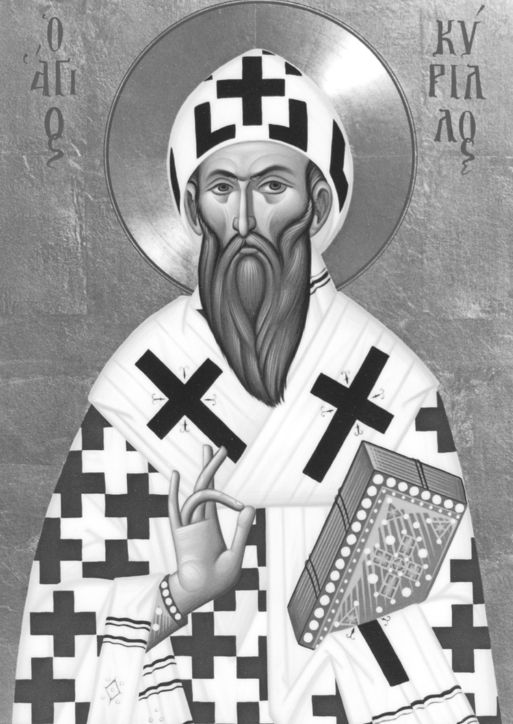
The Council of Ephesus in 431 AD addressed the teaching of Nestorius, who objected to calling the Virgin Mary “Theotokos” (God-bearer or Mother of God). The issue was not simply a title for Mary. The deeper question concerned the identity of Christ. The Church confessed that the One born from Mary is truly God the Word (Logos in Greek) Who became flesh. The Gospel declares: “The Logos became flesh and tabernacled among us” [Jn. 1:14]. Because Jesus Christ is one Person, the Church affirmed that Mary may rightly be called Theotokos because the Child she bore is the eternal Son of God incarnate. Saint Kyril of Alexandria, the great defender of the faith at Ephesus, wrote: “We confess one Christ, one Son, one Lord.” The council defended the unity of Christ’s divine and human natures in one Person.
The Fourth Ecumenical Council: Chalcedon (451) — The Two Natures of Christ#
The Council of Chalcedon addressed confusion concerning Christ’s humanity and divinity. The council proclaimed that Jesus Christ is truly God, truly man, perfect in divinity, and perfect in humanity. The famous Chalcedonian Definition stated that Christ is recognized “in two natures, without confusion, without change, without division, without separation.”
This preserved the Biblical teaching that “the Logos became flesh” [Jn. 1:14], and “In Him dwelleth all the fullness of the divinity bodily” [Col. 2:9]. Christ is not half God and half man. He is fully God and fully man, the Savior of humanity. His incarnation is central to salvation. The Son of God became man so that humanity could be restored to communion with God. The Apostle Paul writes, “For there is one God, and one Mediator between God and man, the Man Christ Jesus” [1 Tim. 2:5]. Only the God-man can reconcile humanity with God.
The Fifth Ecumenical Council: Constantinople II (553)#
This council reaffirmed the teachings of the earlier councils and defended the proper understanding of Christ’s incarnation by condemning certain writings that taught erroneously about the Person of Christ. The fathers of the council emphasized that salvation requires the true union of God and humanity in Christ. As Saint Gregory the Theologian (4th C.) famously expressed: “That which is not assumed is not healed.” This means that Christ had to truly assume human nature in order to restore and heal human nature.
The Sixth Ecumenical Council: Constantinople III (680–681) Christ’s Two Wills#
This council addressed the question of Christ’s human will. Some claimed that Christ had only one will because He was one Person. The council affirmed that because Christ is truly God and truly man, He possesses both divine and human wills. This was necessary because Christ became fully human, and a truly human nature includes a human will. This is consistent with His prayer in Gethsemane: “Not My will, but Thine be done” [Lk. 22:42]. His human will was not opposed to God but perfectly united with the divine will.
The Seventh Ecumenical Council: Nicaea II (787) — The Restoration of Holy Icons#
The final ecumenical council addressed the controversy concerning holy icons. Some rejected icons, believing that painted images were idolatrous and incompatible with Christian worship. The council distinguished between worship (latreia), which is owed only to God, and veneration (proskynesis) given to saints and holy things. The foundation of Christian iconography is the incarnation itself. Because the Son of God truly became visible in the flesh, Christians may depict Him. Christ said, “The one who hath seen Me hath seen the Father” [Jn. 14:9]. The council affirmed that holy icons proclaim the reality of the incarnation. When an Orthodox Christian kisses an icon, the honor given to the icon passes to the person represented.
The Councils and Holy Tradition#
The ecumenical councils demonstrate how the Church preserves the apostolic Faith. They relied upon holy Scripture, the writings of earlier fathers, the worship and confession of the Church, and the guidance of the Holy Spirit. The fathers often appealed to the Faith of previous generations, not to personal innovation. Saint Athanasius the Great wrote: “What our fathers taught, this we teach.” The Orthodox understanding is that authentic theology is a faithful expression of the apostolic inheritance. The fathers of the councils did not create a different faith from the apostles. Rather, they explained and defended the apostolic Faith when it was challenged. As the Apostle Paul writes, “Keep on holding fast an outline of sound words which thou heardest from me” [2 Tim. 1:13].
The Councils and the Holy Spirit#
Christ promised, “Whenever that One, the Spirit of the truth, should come, He will guide you into all the truth” [Jn. 16:13]. The Orthodox Church understands the councils as examples of this promise working within the Church. The Holy Spirit does not reveal a different Gospel in each age. He preserves the one Gospel given by Christ.
The Councils and the Life of the Church#
The councils were not simply academic gatherings. They concerned worship, prayer, theology, Christian identity, and the understanding of salvation. The Church’s doctrine shapes the worship and spiritual life of believers. The fathers of the councils approached theological disputes with prayer, fasting, and humility, endeavoring to be faithful to Christ rather than to attain personal glory. Therefore, the truth of the Church is not separated from love, as Saint Paul writes: “Speaking the truth in love” [Eph. 4:15].
Conclusion#
The seven ecumenical councils stand as great witnesses to the Church’s commitment to preserve the apostolic Faith. They defended the truth about the Holy Trinity, the divinity and humanity of Christ, the incarnation, the proper worship of God, and the Christian life. For the Eastern Orthodox Church, the councils are not moments when the Church created new beliefs but occasions when the Church clarified and defended what had already been received from Christ through His apostles. The Faith confessed at Nicaea, Constantinople, Ephesus, Chalcedon, and the other councils is understood as the same Faith proclaimed by the apostles: “One Lord, one Faith, one Baptism” [Eph. 4:5]. And here again, the words of Apostle Paul are relevant: “The Church of the living God, pillar and stay of the truth” [1 Timothy 3:15].
Chapter Six#
Orthodox Doctrine: The Faith of the Apostles Preserved in the Church
The Orthodox Church understands doctrine as the living confession of the truth revealed by God. Christian doctrine exists because God has revealed Himself through Jesus Christ, and the Church preserves this revelation through the guidance of the Holy Spirit. The purpose of doctrine, which is more than just abstract knowledge about God, is to lead humanity into communion with the Creator. Christ prayed to the Father: “And this is the eternal life, that they may know Thee, the only true God, and Jesus Christ Whom Thou didst send forth” [Jn. 17:3]. The Orthodox Faith is therefore a life of knowing, loving, and participating in the life of the Holy Trinity.
The Holy Trinity: The One God in Three Persons — The Biblical Revelation of the Trinity#
The foundation of Orthodox theology is the confession of one God Who exists eternally as Father, Son, and Holy Spirit. The Old Testament reveals the oneness of God: “Hear, O Israel: The Lord our God, the Lord is one” [Deuteronomy 6:4]. The New Testament reveals that this one God is Father, Son, and Holy Spirit. At Christ’s Baptism, all three Persons are revealed: The Son is baptized; the Spirit descends like a dove; the Father speaks from heaven, “This is My Son, the Beloved, in Whom I am well pleased” [Mt. 3:17]. Christ commands Baptism to be performed “in the name of the Father, and of the Son, and of the Holy Spirit” [Mt. 28:19]. The singular word “name” reveals the unity of the three divine Persons.
The Father: The Source and Fountain of Divinity#
The Orthodox Church confesses the Father as the eternal source (arche) within the Trinity. The Father is not older than the Son or the Spirit. There was never a time when the Father existed without His Word (Logos) and Spirit. Christ says: “Before Abraham came to be, I am” [Jn. 8:58]. The Apostle John writes, “In the beginning was the Logos, and the Logos was with God, and the Logos was God” [Jn. 1:1]. The Son is eternally begotten of the Father, and the Spirit proceeds from the Father [Jn. 15:26].
The Son: The Eternal Logos of God#
The Orthodox Church confesses Jesus Christ as true God and true man. The Nicene Creed proclaims Him “Light of Light, true God of true God, begotten, not made, co-essential with the Father.” This confession protects the truth that salvation is accomplished by God Himself entering into human life. Christ said, “The one who hath seen Me hath seen the Father” [Jn. 14:9]. The Son reveals the Father because He shares the same divine nature.
The Holy Spirit: The Giver of Life#
The Holy Spirit is confessed as fully divine and worthy of worship together with the Father and the Son. The Creed declares: “And in the Holy Spirit, the Lord, the Giver of Life, Who proceedeth from the Father, Who with the Father and the Son together is worshipped and glorified.” The Spirit gives life to creation and sanctifies believers. Saint Paul writes, “The Spirit Himself beareth witness with our spirit, that we are children of God” [Rom. 8:16].
The Incarnation: God Becomes Man#
The central mystery of Christianity is the incarnation: the eternal Son of God becoming truly human while remaining truly God. The Gospel of John declares: “And the Logos became flesh and tabernacled among us” [Jn. 1:14]. The Son did not merely appear human. He truly assumed human nature. The Apostle Paul writes, “Christ Jesus,...existing in the form of God,...emptied Himself and took the form of a slave, and came to be in the likeness of men” [Phil. 2:5–7]. Why did God become man? The fathers taught that the purpose of the incarnation was the healing and restoration of humanity. Humanity was created for communion with God, but sin brought corruption and death. Christ came to restore human nature. Saint Athanasius (d. 373) wrote: “He became man so that we might become god” (On the Incarnation, Ch. 54). This does not mean humans become God by nature. Rather, through grace, humanity participates in God’s life. This is called theosis.
The Virgin Mary and the Incarnation#
The Orthodox Church honors the Virgin Mary because of her role in God’s saving plan. The angel Gabriel proclaimed: “The Holy Spirit shall come upon thee, and the power of the Highest shall overshadow thee” [Lk. 1:35]. Mary responded, “Behold, the slave of the Lord; may it be to me according to thy word” [Lk. 1:38]. Through her obedience, the Son of God entered the world. Elisabeth called her “the Mother of my Lord” [Lk. 1:43]. The title Theotokos (Birthgiver of God) protects the truth that the Child born from Mary is truly God incarnate.
Salvation: Healing and Restoration#
The Orthodox understanding of salvation goes far beyond legal forgiveness. Salvation is the restoration of humanity, through the healing of sinful passions, into communion with God. Christ came to restore fallen human nature and destroy death: “Death, the last enemy, is to be abolished” [1 Cor. 15:26]. Through Christ’s Resurrection, human nature is renewed.
The Cross of Christ#
The Cross is the central act of God’s love. Christ said, “Greater love hath no one than this, that one should lay down his life for his friends” [Jn. 15:13]. The Apostle Paul writes: “God commendeth His own love to us, in that while we were yet sinners, Christ died for us” [Rom. 5:8]. The Cross reveals both God’s justice and His mercy.
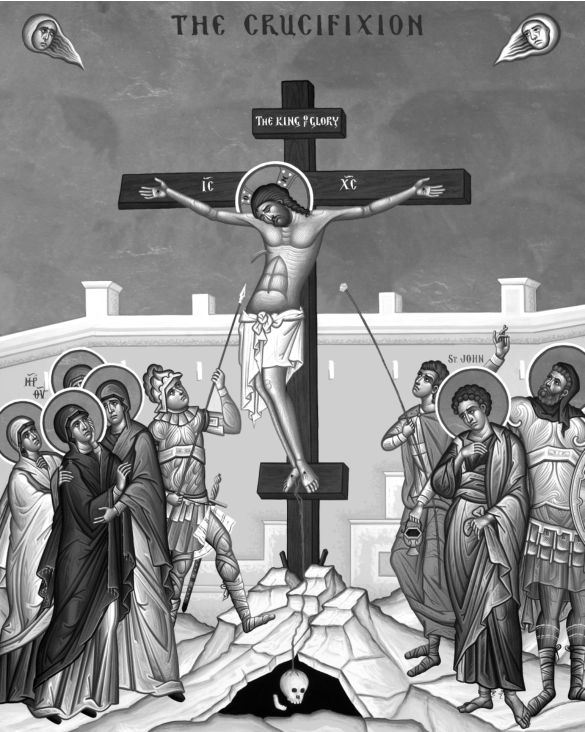
The Resurrection of Christ#
Without the Resurrection, Christianity has no foundation. Saint Paul writes: “If Christ hath not been raised, your faith is vain; ye are yet in your sins” [1 Cor. 15:17]. The Resurrection transforms death into the path to eternal life. Christ declares: “I am the resurrection and the life” [Jn. 11:25].
Theosis: Participation in Divine Life#
One of the central teachings of Orthodox theology is theosis, the transformation of humanity by God’s grace. The Apostle Peter writes, “That...ye might become partakers of the divine nature…” [2 Pet. 1:4]. Theosis does not mean humans become God by essence. Only God is God by nature. Rather, believers participate in God’s life through grace. The fathers often described salvation as becoming by grace what God is by nature.
Saint Gregory Palamas and Divine Grace#
Saint Gregory Palamas (ca. 1296–1359), a great Byzantine theologian, defended the Orthodox understanding that humans can truly experience God while God’s essence remains beyond human comprehension. He distinguished between God’s unknowable essence and God’s divine energies, through which He communicates Himself. This teaching protects both God’s transcendence and humanity’s real communion with Him.
The Church as the Place of Salvation#
Salvation takes place within the body of Christ, the Church. Saint Paul writes, “Now ye are the body of Christ, and members severally” [1 Cor. 12:27]. The Church is not just an association of believers. It is the living communion of those united to Christ. Through Baptism, Chrismation, the Eucharist, prayer, and Repentance believers grow into communion with God.
The Preservation of Doctrine#
The Orthodox Church believes that doctrine must remain faithful to the apostolic witness. Saint Paul writes, “Keep on holding fast an outline of sound words which thou heardest from me” [2 Tim. 1:13]. The fathers and councils preserved doctrine because they understood themselves as servants of the apostolic Faith.
Conclusion#
The Orthodox Faith is the confession of the triune God revealed in Jesus Christ. It proclaims:
- One God in three Persons
- The eternal Son becoming truly human
- Salvation through Christ’s death and Resurrection
- Humanity’s calling to communion with God through theosis
These doctrines came from Christ and were handed down by the apostles into later centuries, being carefully guarded as the one saving Faith in the one Church. As Saint Paul writes: “One Lord, one Faith, one Baptism; one God and Father of all” [Eph. 4:5–6].
Chapter Seven#
The Holy Mysteries: The Means of Grace in the Life of the Church
The Orthodox Church acknowledges that the Christian life is a participation in the life of God through Jesus Christ by the power of the Holy Spirit. This participation is made possible through the holy mysteries, through which Christ continues His saving work within His Church.
The Greek word for sacrament is mysterion, meaning a sacred mystery. It refers not to something hidden in the sense of being unknown, but to the reality of God’s incomprehensible saving work that is revealed and experienced through the Church. The Apostle Paul writes: “...the mystery which hath been hidden from the ages and from the generations, but now is made manifest to His saints” [Col. 1:26]. Each mystery is composed of both a visible action and an invisible reality.
The mysteries are not merely symbolic ceremonies or religious traditions. They are encounters with the living God. Through them, believers receive the grace of Christ, are united to His body, and are transformed into His likeness. The Apostle Paul writes, “As many as were baptized into Christ, ye put on Christ” [Gal. 3:27]. And again: “We have been planted together in the likeness of His death, certainly also we shall be of the Resurrection” [Rom. 6:5]. The holy mysteries are the continuation of Christ’s saving presence in the Church.
Christ as the Source of All Grace#
The Orthodox Church teaches that Christ Himself is the source of every mystery. The Gospel of John declares: “And of His fullness we all received, and grace for grace” [Jn. 1:16]. The Church does not possess grace independently of Christ. Rather, she is the vessel through which Christ shares His divine life with His people. Christ said, “I am the vine, ye are the branches. The one who abideth in Me, and I in him, this one beareth much fruit” [Jn. 15:5]. The mysteries unite believers to this divine life. Christ is not merely the founder of religious ceremonies. He is the living source of salvation. The Apostle Paul writes, “For in Him dwelleth all the fullness of the divinity bodily” [Col. 2:9]. Because Christ took human nature, visible signs can communicate invisible divine grace. Through the incarnation, God entered the physical world to restore humanity.
The Church as the Place of the Mysteries#
The holy mysteries are celebrated within the Church because the Church is the body of Christ. Saint Paul writes, “By one Spirit were we all baptized into one body” [1 Cor. 12:13]. The mysteries unite believers to Christ and to one another. They are not private spiritual experiences separated from the community of faith. They are the life of the whole Church.
The Number of the Mysteries#
The Orthodox Church traditionally speaks of seven principal mysteries:
- Holy Baptism
- Holy Chrismation
- Holy Eucharist
- Holy Confession (Repentance)
- Holy Unction
- Holy Matrimony
- Holy Orders (Ordination)
However, Orthodox theology does not limit God’s grace only to these seven. The entire life of the Church is sacramental because Christ sanctifies His creation.
1. Holy Baptism: Entrance into the Life of Christ#
The Command of Christ. Before His Ascension, Christ commanded: “Go therefore and make disciples of all the nations, baptizing them in the name of the Father, and of the Son, and of the Holy Spirit” [Mt. 28:19]. Baptism is not merely an outward sign of belonging to Christianity. It is the means by which a person enters into the death and Resurrection of Christ. Saint Paul writes, “Are ye ignorant that as many as were baptized into Christ Jesus were baptized into His death?” [Rom. 6:3]. And “Therefore we were buried with Him by the baptism into the death, that even as Christ was raised from the dead,...thus also we should walk in newness of life” [Rom. 6:4].
Baptism and New Birth. Christ taught Nicodemus, “Unless one should be born of water and of the Spirit, he is not able to enter into the Kingdom of God” [Jn. 3:5]. The Orthodox Church understands Baptism as the new birth in Christ. Through Baptism, the old life of sin is buried, the person is united to Christ, and the believer becomes a member of the Church. The Orthodox Church baptizes by immersion as a sign of dying and rising with Christ, the catechumen being buried under the water three times.
2. Holy Chrismation: Receiving the Gift of the Holy Spirit#
Chrismation corresponds to what some Christians call “Confirmation.” In the New Testament, the apostles laid hands upon believers so they might receive the Holy Spirit. In Samaria, “Then were they laying their hands on them, and they were receiving the Holy Spirit” [Acts 8:17]. The Apostle Paul writes: “Ye were sealed with the Holy Spirit of promise” [Eph. 1:13]. Chrismation completes Baptism by granting the newly baptized the gift of the Holy Spirit and making them full participants in the life of the Church, fortified with the strengthening presence of the Holy Spirit. The Church understands Chrismation as a personal participation in Pentecost. When the Holy Spirit descended upon the apostles, “They were all filled with the Holy Spirit” [Acts 2:4]. The same Spirit continues to sanctify and strengthen believers.
3. The Holy Eucharist: Communion with Christ#
The Eucharist is the central mystery of the Orthodox Church. Christ declared: “Take, eat; this is My body” [Mt. 26:26], and: “Drink of it, all of you; for this is My blood, that of the new covenant” [Mt. 26:27–28]. The Eucharist unites believers with Christ and with the entire Church. Christ teaches, “The one who partaketh of My flesh and drinketh My blood hath eternal life; and I will raise him up in the last day” [Jn. 6:54]. The Eucharist is a participation in the life of the risen Christ. However, the faithful must be prepared before communicating of these fearful mysteries, as the Apostle Paul warns: “Whosoever may eat this bread or drink the cup of the Lord unworthily shall be guilty of the body and of the blood of the Lord” [1 Cor. 11:27].
4. Holy Confession and Repentance#
The Orthodox Church recognizes Confession as the mystery of the healing and restoration of the soul. Christ gave authority to His apostles: “If ye forgive the sins of any, they are forgiven to them” [Jn. 20:23]. Through sincere repentance, believers receive forgiveness and restoration. The Parable of the Prodigal Son reveals the heart of God. The son returns saying: “Father, I sinned against Heaven and before thee and am no longer worthy to be called thy son” [Lk. 15:21]. The father responds with mercy and restores him. Confession, therefore, is a return to the Father’s house.
5. Holy Unction: The Sacrament of Healing#
Holy Unction is the prayer of the Church for the healing of body and soul, using holy oil of anointment, and it may be performed at any time. The Apostle Iakovos writes, “Is anyone among you infirm? Let him call for the presbyters of the Church; and let them pray over him, having anointed him with oil in the name of the Lord” [Jas. 5:14]. Christ is the true healer. During His earthly ministry, “He cured them all” [Mt. 12:15].
6. Holy Matrimony: The Mystery of Christian Marriage#
Marriage is understood as a sacred union blessed by God. The Apostle Paul compares marriage to the relationship between Christ and the Church: “Husbands, be loving your own wives, even as the Christ also loved the Church, and gave Himself up for her” [Eph. 5:25]. Christian marriage becomes a path of holiness, sacrifice, and love. The husband and wife are called to reflect: Christ’s love, the Church’s faithfulness, mutual service, and self-giving love. Marriage is not only a human agreement but a spiritual calling.
7. Holy Ordination: The Apostolic Ministry#
Ordination continues the ministry given by Christ to His apostles. The Apostle Paul writes, “Do not neglect the gift of grace in thee, which was given thee by prophecy with laying on of the hands of the presbytery” [1 Tim. 4:14]. Through bishops, priests, and deacons, the apostolic ministry continues in the Church. Orthodox Christianity understands priesthood as a ministry of service, not personal power. Christ said, “Whosoever doth wish to become great among you shall be your servant” [Mt. 20:26]. The priest serves by proclaiming the Gospel, celebrating the mysteries, and caring for God’s people.
The Mysteries and Theosis#
All the mysteries have one purpose: to unite humanity with God. Through Baptism, believers are born into Christ. Through Chrismation, they receive the Spirit. Through the Eucharist, they receive communion with Christ. Through Repentance, they are healed. Through the life of the Church, they grow toward holiness. This is the journey of theosis.
The Fathers on the Mysteries#
The fathers taught that the Mysteries are not empty symbols but encounters with divine grace. Saint Kyril of Jerusalem (d. 386) wrote: “Do not regard the bread and wine as simply that, for they are, according to the Master’s declaration, the body and blood of Christ” (Mystagogical Catecheses). The fathers consistently taught that Christ acts through the life of the Church.
Conclusion#
The holy mysteries are the living means through which Christ shares His divine life with His people. They reveal that Christianity is not only a belief about God but communion with God. Through the mysteries, the Church continues the apostolic life: baptizing into Christ, receiving the Holy Spirit, celebrating the Eucharist, forgiving sins, healing the sick, blessing families, continuing the apostolic ministry. The Orthodox Church sees the mysteries as the path by which humanity is restored and transformed by God’s grace.
Chapter Eight#
Salvation in Orthodox Christianity: Sin, Grace, Redemption, and Theosis
The message of the Christian Gospel is the proclamation that God has acted to save humanity through His Son, Jesus Christ. The Orthodox Church understands salvation as the restoration of communion between God and humanity, a healing of human nature, and a transformation into the likeness of Christ.
Salvation does not mean the cancellation of a debt or the removal of punishment; instead, it is the restoration of the relationship for which humanity was created: participation in the life and love of God. Christ declares, “I came that they may have life, and may have it abundantly” [Jn. 10:10]. The purpose of salvation is life in Christ.
Humanity Created for Communion with God#
The Orthodox view of salvation begins with the truth that humanity was formed in the image and likeness of God. The Book of Genesis says: “So God created man in His own image; in the image of God He created him; male and female He created them” [Gen. 1:27]. Human beings were designed with a unique calling: to know God, love God, and participate in His divine life. The fathers taught that humanity was created with the possibility of becoming like God by grace. This calling is fulfilled through Christ.
The Fall and the Wound of Sin#
The Fall of Adam and Eve introduced sin, corruption, and death into human existence. God warned Adam, “For in the day that ye eat of it ye shall surely die” [Gen. 2:17]. The death spoken of was not only physical death but separation from the life of God. Sin wounded human nature and weakened humanity’s communion with the Creator. The Apostle Paul writes, “Through one man sin entered into the world, and death through sin, and thus death passed to all men” [Rom. 5:12]. The Orthodox Church understands this as the inheritance of mortality and corruption, not the idea that every person is individually guilty of Adam and Eve’s personal action.
Sin as Sickness of the Soul#
The Orthodox fathers often describe sin as a sickness of the soul that requires healing. Christ Himself said, “They who are strong have no need of a physician, but they who are ill” [Mt. 9:12]. Humanity needs to be freed of its sinful inclinations: anger, envy, lust, greed, laziness—evil passions which plague the soul. Christ is the divine Physician Who heals the brokenness caused by sin by introducing new, grace-filled, holy intentions into human hearts who are receptive to His divine will.
The Incarnation: God Comes to Heal Humanity#
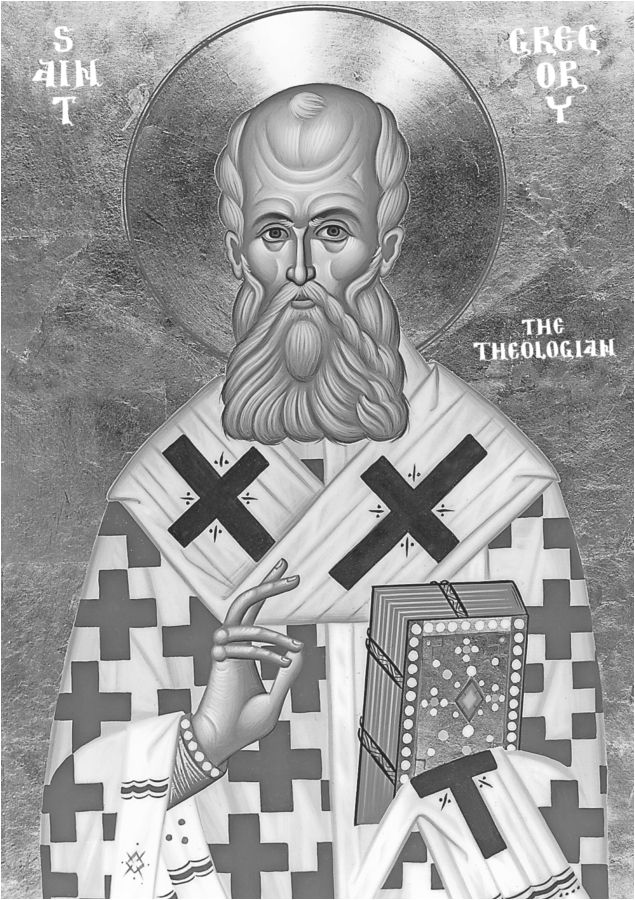
The salvation of humanity required God Himself to enter human history. The eternal Son became man: “And the Logos became flesh and tabernacled among us” [Jn. 1:14]. By taking human nature, Christ united humanity to God in His own Person. Saint Gregory the Theologian expressed this truth: “That which is not assumed is not healed.” Because Christ assumed true humanity, He healed true humanity.
Christ’s Victory Over Death#
The central victory of Christ is His Resurrection. The Orthodox Church proclaims at Pascha: “Christ is risen from the dead; by death hath He trampled down death, and on those in the graves hath He bestowed life.” The Resurrection reveals that death no longer has the final word. Saint Paul writes, “O death, where is thy sting? O Hades, where is thy victory?” [1 Cor. 15:55]. Through Christ’s victory, humanity receives the hope of resurrection.
The Cross: The Revelation of Divine Love#
The Cross is the supreme revelation of God’s love. Christ says, “Greater love hath no one than this, that one should lay down his life for his friends” [Jn. 15:13]. On the Cross, Christ willingly offered Himself for the salvation of the world. The Apostle Paul writes: “God was reconciling the world to Himself in Christ” [2 Cor. 5:19]. The Cross is not defeat. It is the victory of divine love.
Grace: God’s Gift of Salvation#
Orthodox Christianity teaches that salvation is impossible without God’s grace. Human beings cannot save themselves by their own strength. Christ says, “Apart from Me ye are not able to do anything” [Jn. 15:5]. Grace is God’s freely given gift, enabling humanity to respond to Him. The Apostle Paul writes, “For by grace are ye saved through faith, and this not of yourselves; the gift is of God” [Eph. 2:8].
Faith and Cooperation with Grace#
The Orthodox Church teaches that salvation involves both God’s grace and human response. God initiates salvation, but human beings are called to cooperate with His grace. The Apostle Paul writes, “Be working out your own salvation with fear and trembling; for God is the One Who energizeth in you” [Phil. 2:12–13]. This reveals a mystery: God works within us, and we freely respond to Him. This cooperation is called synergy.
Baptism: Participation in Christ’s Death and Resurrection#
Through Baptism, believers are united to Christ. Saint Paul writes, “We were buried with Him by the baptism into the death, that even as Christ was raised from the dead,...thus also we should walk in newness of life” [Rom. 6:4]. Baptism is entrance into the life of the Church and participation in Christ’s saving work.
The Eucharist: Receiving the Life of Christ#
The Eucharist nourishes Christians with the life of Christ. Jesus teaches: “The one who eateth My flesh and drinketh My blood abideth in Me, and I in him” [Jn. 6:56]. The Eucharist strengthens the believer’s union with Christ and the Church.
Repentance and Transformation#
Salvation is a lifelong journey of transformation. Christ begins His ministry with: “Repent ye and believe ye in the Gospel” [Mk. 1:15]. Repentance is not simply regret. It is a turning of the whole person toward God. Through repentance, the human heart is healed and renewed.
Theosis: Becoming Partakers of Divine Life#
The ultimate goal of salvation in Orthodox theology is theosis (divinization). The Apostle Peter writes: “That...ye might become partakers of the divine nature” [2 Pet. 1:4]. Human beings cannot become God by nature. Only God is God by essence. Rather, through grace, humanity participates in God’s life. Saint Athanasius the Great wrote: “The Logos was made flesh in order that we might be enabled to be made divine” (On the Incarnation).
The Example of the Saints#
The saints are witnesses that theosis is possible through God’s grace. They demonstrate victory over passions, growth in love, communion with God, and transformation of life. The Apostle Paul says: “I have been crucified with Christ; and I no longer live, but Christ liveth in me” [Gal. 2:20]. This is the goal of every Christian.
Salvation and the Renewal of Creation#
Orthodox Christianity teaches that salvation is not only about individual souls but about the renewal of all creation. Saint Paul writes, “The creation itself also shall be freed from the bondage of corruption into the glorious freedom of the children of God” [Rom. 8:21]. Christ came to restore all things.
Conclusion#
The Orthodox understanding of salvation is the story of God’s love restoring humanity. Humanity was created for communion with God. Sin brought corruption and death. Christ entered the world, took human nature, conquered death through His Resurrection, and opened the way for humanity to share in divine life. Salvation is therefore: healing from sin, victory over death, communion with Christ, transformation by grace, and participation in the life of God. The words of Christ remain the foundation: “Abide in Me, and I in you” [Jn. 15:4].
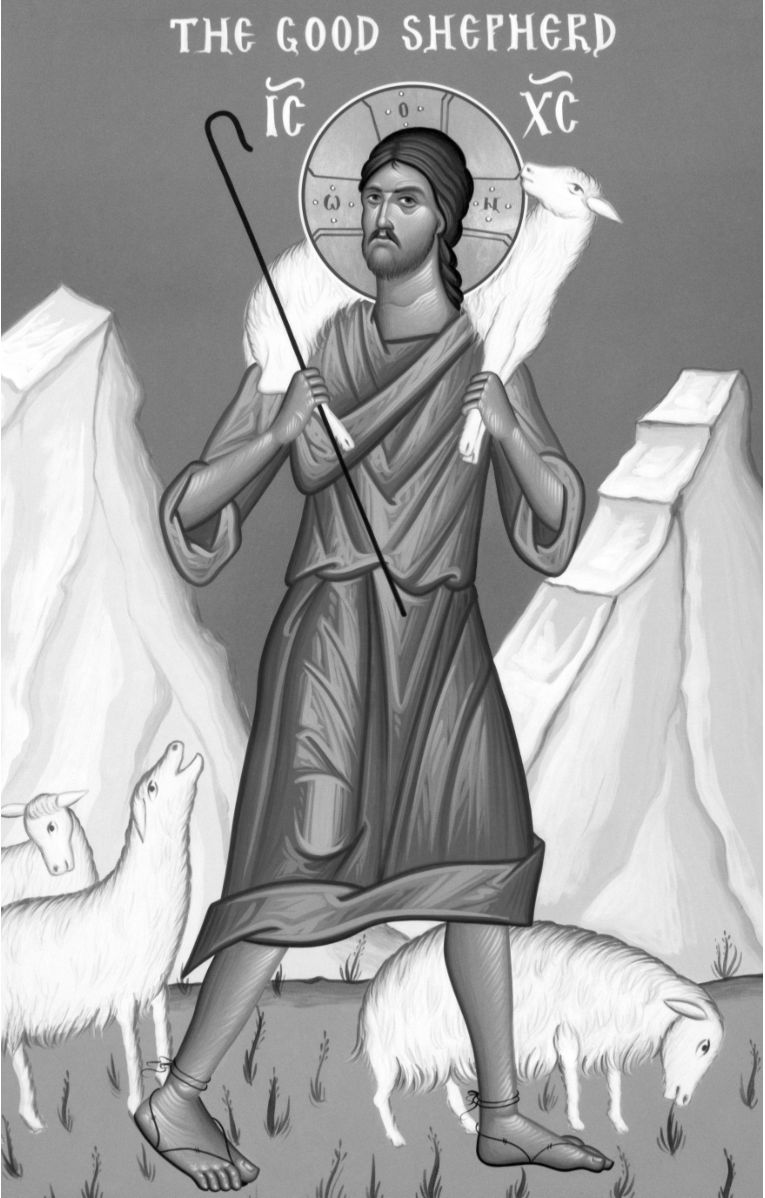
Chapter Nine#
The Holy Fathers: Witnesses and Guardians of the Apostolic Faith
The Orthodox Church holds the holy fathers in great honor because they are faithful witnesses to the life, teaching, and worship of the Church received from Christ and His apostles. The fathers are not considered creators of a new faith; rather, they are servants of the apostolic tradition who preserved, explained, and defended the Faith entrusted to the Church. The Apostle Paul instructed the faithful: “Be remembering those who lead you, who spoke to you the word of God, whose faith keep on imitating, observing attentively the end of their conduct” [Heb. 13:7]. The fathers are honored because they followed the apostles, defended the truth against false teachings, and passed the apostolic inheritance to future generations. The Orthodox Church understands true theology not as human speculation but as the experience of God preserved within the life of the Church.
What Is a Church Father?#
A Church father is a teacher of the Christian Faith whose life, doctrine, and witness have been recognized by the Church as faithful to the apostolic tradition. The fathers are known for their faithfulness to holy Scripture, defense of the apostolic teaching, holiness of life, service to the Church, and guidance of believers toward Christ. These individuals did not place themselves above Scripture. Rather, they interpreted Scripture within the same Faith in which it was received.
The Fathers and Holy Scripture#
The fathers loved Scripture because they understood it as the inspired word of God. Saint Paul writes: “Every Scripture is God-inspired and profitable for teaching, for reproof, for correction, for instruction which is in righteousness” [2 Tim. 3:16]. However, the fathers also recognized that Scripture must be interpreted within the Church guided by the Holy Spirit. Saint Peter warns, “Every prophecy of Scripture cometh not out of private explanation” [2 Pet. 1:20]. The fathers therefore sought the mind of the Church rather than personal opinions. They received the apostolic teaching, from those who came before, and passed it to succeeding generations. This is why Orthodox Christianity speaks of the “Faith of the fathers.”
The Early Apostolic Fathers#
The earliest Christian writers after the apostles are often called the apostolic fathers because they lived close to the apostolic age. Among them were Saint Clement of Rome, Saint Ignatius of Antioch, Saint Polycarp of Smyrna, and Saint Justin Martyr. Their writings reveal the Faith and worship of the early Church.
Saint Clement of Rome: Disciple of the Apostles#
Saint Clement was Bishop of Rome in the first century. His letter to the Corinthians demonstrates the early Church’s understanding of apostolic succession, church order, Christian unity, and obedience to God. He wrote: “The apostles received the Gospel for us from the Lord Jesus Christ; Jesus Christ was sent forth from God” (Epistle of Clement, Ch. 42). Clement connects the Church directly to Christ through the apostles.
Saint Ignatius of Antioch: The Witness of the Apostolic Age#
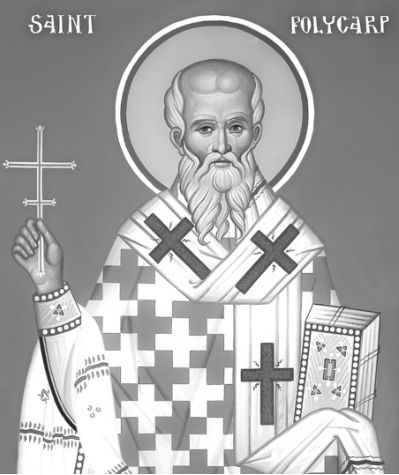
Saint Ignatius, Bishop of Antioch, was martyred around the beginning of the second century. He lived close to the apostolic age and wrote letters while being taken to Rome for execution. His writings provide some of the earliest evidence of Christian belief concerning the Eucharist, the bishop, Church unity, and the incarnation of Christ. He wrote: “Wherever the bishop appears, there let the people be; just as wherever Jesus Christ is, there is the Catholic Church” (Letter to the Smyrnaeans, 8). For Ignatius, the bishop represented the unity of the local Church, and union with him signified union with Christ, because the bishop served as the visible guardian of apostolic order. Regarding the Eucharist, he wrote: “They abstain from the Eucharist and prayer because they do not confess that the Eucharist is the flesh of our Savior Jesus Christ” (Letter to the Smyrnaeans, 7). His testimony shows that early Christians held a high view of the Eucharist and the sacramental life of the Church.
Saint Polycarp of Smyrna: Faithful Till Death#
Saint Polycarp (d. 155) was a disciple of Saint John the Apostle according to early Christian tradition. He was martyred for refusing to deny Christ. Before his death, he declared: “For eighty-six years I have served Him, and He has done me no wrong. How can I blaspheme my King Who saved me?” His life became an example of Christian faithfulness.
Saint Irenaeus of Lyons: Defender of Apostolic Tradition#
Saint Irenaeus lived in the second century and wrote against Gnosticism, a heretical movement that claimed to possess secret knowledge superior to the public teaching of the Church. Irenaeus argued that the true Faith was publicly preserved through the churches founded by the apostles. He wrote, “The tradition of the apostles has been manifested throughout the whole world; and it can be seen in every church by those who wish to behold the truth” (Against Heresies, III.3.1). For Saint Irenaeus, the apostolic Faith was not hidden. The Church proclaimed the Faith openly through Scripture, preaching, worship, and the succession of bishops.
Saint Athanasius the Great: Defender of the Divinity of Christ#
Saint Athanasius of Alexandria was one of the greatest defenders of the Orthodox confession of Christ’s divinity during the Arian controversy. The Arians denied that the Son was eternally God, claiming that Christ was a created being. Athanasius defended the Biblical confession: “In the beginning was the Logos, and the Logos was with God, and the Logos was God” [Jn. 1:1]. He taught that only God Himself could save humanity: “The Logos of God Himself came among us, that He might sanctify and divinize them” (Against the Arians, Bk. 3, Ch. 34). If Christ were not truly God, humanity could not truly be united with God. Saint Athanasius wrote, “He became man so that we might become god” (On the Incarnation, Ch. 54). This famous statement expresses the Orthodox teaching of theosis—humanity’s participation in the divine life by grace.
The Great Cappadocian Fathers#
The fourth century produced some of the greatest defenders of Orthodox theology: Saint Basil the Great, Saint Gregory the Theologian, and Saint Gregory of Nyssa. They safeguarded the truth of the Holy Trinity against false teachings.
Saint Basil the Great: Defender of the Holy Spirit#
Saint Basil the Great (ca. 330–379), Archbishop of Caesarea, helped to shape early monastic life in Asia Minor and defended the divinity of the Holy Spirit during the fourth century. Some denied that the Holy Spirit was fully divine. Basil demonstrated from Scripture and tradition that the Spirit belongs to the same divine life as the Father and the Son. He wrote: “The Holy Spirit is truly Spirit, coming forth from God, and is not created…. Through the Holy Spirit comes our restoration to Paradise, our ascension into the Kingdom of Heaven, our return to the adoption of sons” (On the Holy Spirit, Ch. 15). For Basil and the other holy fathers, the Holy Spirit is not a created power but the divine Person Who gives life and sanctification. Saint Basil also emphasized care for the poor and the responsibility of Christians to love their neighbor.
Saint Gregory the Theologian: The Theologian of the Trinity#
Saint Gregory the Theologian defended the mystery of the Holy Trinity. He taught that the Father, Son, and Holy Spirit are one God in three Persons. He famously wrote, “No sooner do I conceive of the One than I am illumined by the splendor of the Three; no sooner do I distinguish Them than I am carried back to the One” (“Oration 40”). Gregory emphasized that Christian theology must preserve both the unity of God and the distinction of Persons. He wrote: “When I contemplate the Three together, I see one torch, and I cannot divide or measure out the undivided Light” (“Oration 40”). His writings remain among the greatest explanations of Trinitarian theology.
Saint Gregory of Nyssa: Teacher of God’s Glory#
Saint Gregory of Nyssa (d. ca. 395) taught deeply about the spiritual journey toward God. He emphasized that the Christian life is continual growth into communion with God. The human person is created for endless participation in divine life.
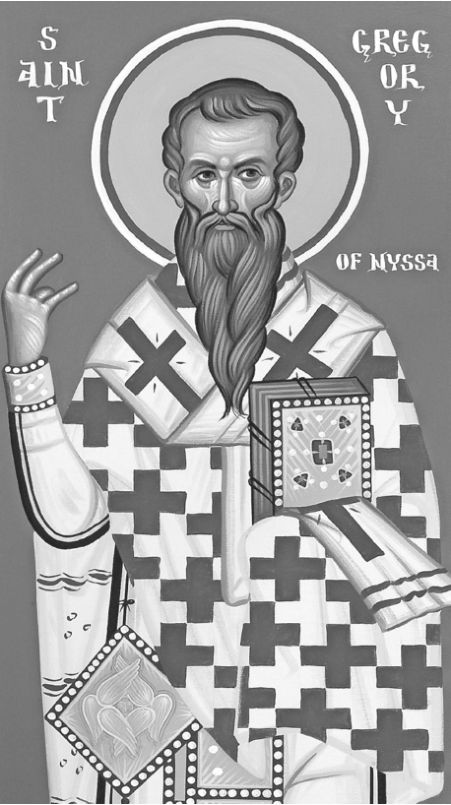
Saint John Chrysostom: The Golden-Mouthed Preacher#
Saint John Chrysostom, Archbishop of Constantinople, is one of the greatest preachers in Christian history. His sermons reveal his deep love for Scripture, the Eucharist, prayer, care for the poor, and Christian holiness. He taught: “The poor are not simply people in need; they are Christ Himself waiting to be served.” Chrysostom constantly reminded Christians that worship must lead to transformation of life. The Divine Liturgy bearing his name continues to be celebrated throughout the Orthodox world.
Saint Kyril of Alexandria: Defender of the Incarnation#
Saint Kyril (378–444) upheld the truth that Jesus Christ is one Person, the eternal Son of God made flesh: fully God and fully man. Against Nestorius, he defended the title Theotokos (Birthgiver of God) for the Virgin Mary because the One born from her is truly God incarnate. He wrote, “We confess one Christ, one Son, one Lord.” His writings were influential at the Council of Ephesus in 431, which affirmed this Christological teaching.
Saint Maximus the Confessor: Proponent of Christ’s Two Wills#
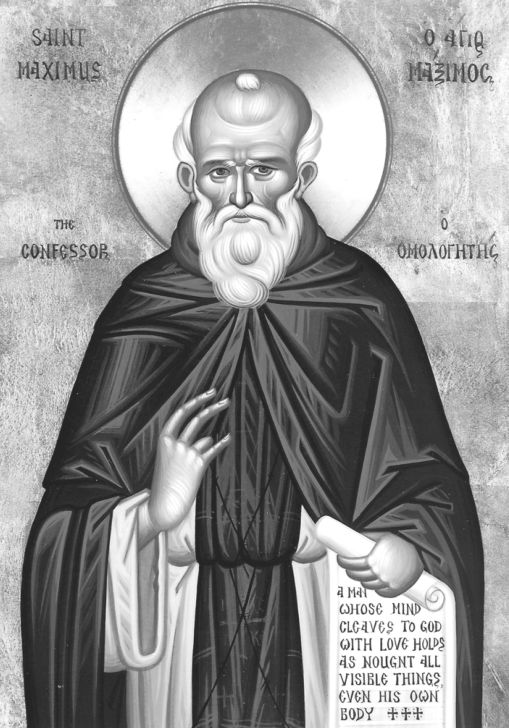
Saint Maximus the Confessor (d. 662) protected the teaching that Christ possesses both a divine and human will. Because Christ truly became human, He assumed the fullness of human existence and restored human obedience to God. Saint Maximus taught that humanity’s purpose is union with God. His teaching helped guide the Church toward the confession of the Sixth Ecumenical Council. For Maximus, salvation means the healing and transformation of the whole human person through union with Christ.
Saint John of Damascus: Defender of Holy Icons#
Saint John of Damascus maintained the use of holy icons during the iconoclast controversy (8th C.). He argued that because God became visible in the flesh through the incarnation, Christians may depict Christ. He wrote: “I do not worship matter, I worship the Creator of matter, Who became matter for my sake” (On the Divine Images, Bk. I, Ch. 16). Icons proclaim the reality that the Son of God truly became man.
Saint Gregory Palamas and the Uncreated Energies#
Saint Gregory Palamas (14th C.) defended the Orthodox teaching concerning the experience of God through divine grace. He taught the distinction between God’s essence, which remains beyond human understanding, and God’s energies, through which humanity truly participates in His life. God’s uncreated energies (His grace, love, mercy, etc.) are inseparable from His Person and are the means by which He interacts with His creatures. Saint Gregory’s teaching became central to the Orthodox understanding of theosis.
The Fathers and the Interpretation of Scripture#
The Orthodox Church reads Scripture with the mind of the fathers. This does not mean that every statement by every father has equal authority. Nevertheless, the Church recognizes a harmony among the fathers when they faithfully express apostolic teaching. Saint Vincent of Lerins summarized this principle: “What has been believed everywhere, always, and by all” (Commonitorium, Ch. 2, §3). This principle expresses the Orthodox understanding that authentic doctrine remains connected to the universal witness of the Church. The fathers serve the Church by preserving the apostolic deposit. They remind every generation that Christianity is not a religion that changes according to human preference but a life received from Christ.
The Fathers as Models of Holiness#
The Church fathers were not merely scholars. They were men and women transformed by prayer, repentance, and communion with God; their theology came from a life of holiness. Orthodox Christianity teaches that true knowledge of God requires purification of the heart. Christ says, “Blessed are the pure in heart, for they shall see God” [Mt. 5:8].
Conclusion#
The holy fathers are treasured living witnesses to the continuity of the Church’s Faith. They preserved the apostolic Faith and showed how that Faith transforms human life. From the apostolic age through the Byzantine fathers and beyond, they defended the truth of Christ, explained holy Scripture, preserved worship, and guided believers toward communion with God. The Orthodox Church honors the holy fathers not because they surpassed Christ or the apostles but because they faithfully served them. They clearly explained the Holy Trinity, the incarnation of Christ, the mysteries, the Church, the worship of God, and the calling of humanity to holiness. Far from creating a new Christianity, they faithfully guarded the one received from Christ and the apostles. Their voices continue to call the Church to remain faithful to the command of Saint Jude: “Contend for the Faith which was once for all delivered to the saints” [Jude 3].
Chapter Ten#
The Divine Liturgy: The Worship of the Apostolic Church
The Divine Liturgy stands at the center of Orthodox Christian life. This gathering of believers participates in the Church’s living worship of the Holy Trinity. The Divine Liturgy unites Heaven and earth, the Church on earth and the saints in glory, the present generation and all generations of faithful Christians who have worshipped God before us.
The Orthodox Church knows the Liturgy as the continuation of the worship offered by the apostles and the early Christians. Through the Eucharistic celebration, the faithful enter into communion with Jesus Christ and experience a foretaste of the heavenly Kingdom. In this service, the Scriptures are proclaimed, prayers of thanksgiving are offered, and the Eucharistic sacrifice allows the faithful, gathered together in one body, to participate in Holy Communion, the very body and blood of Christ.
The earliest description of Christian worship in Scripture is found in Acts: “They were persevering in the teaching of the apostles and in the communion, and in the breaking of the bread, and in the prayers” [Acts 2:42]. These four elements remain central to Orthodox worship: apostolic teaching, fellowship (communion) in the Church, the Eucharist (“the breaking of the bread”), and prayer.
Worship in the Old Covenant and Its Fulfillment in Christ#
The worship of Israel prepared humanity for the coming of Christ. The Old Testament contained the priesthood, the Temple, sacrifices, hymns and prayers, and festivals. These were not meaningless rituals. They were foreshadowing Christ and His sacrifice. The Apostle Paul explains: “The Law, having a shadow of the coming good things, not the very image of the things...” [Heb. 10:1]. Christ fulfills and completes the worship of the Old Covenant. He is the true High Priest [Heb. 4:14], the true Temple [Jn. 2:19–21], and the true Sacrifice [Heb. 9:26]. Hence, Christian worship does not return to the old sacrifices but enters into the eternal sacrifice of Christ.
Christ Establishes the Eucharist#
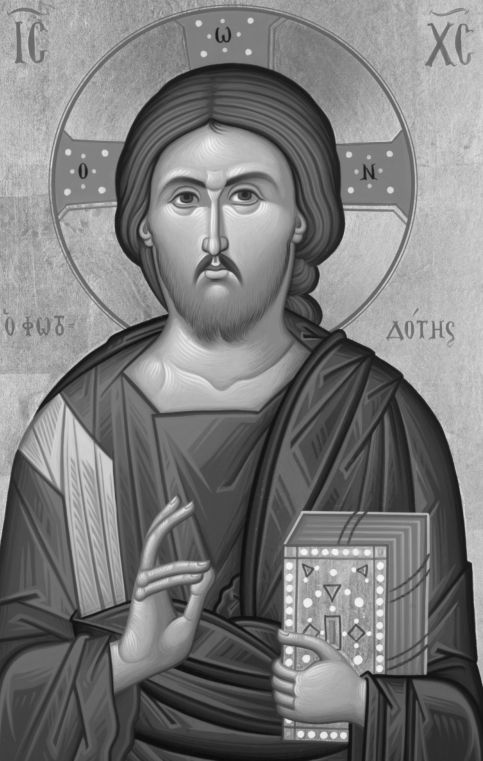
The foundation of the Divine Liturgy is the Mystical Supper. On the night before His Passion, Christ took bread and wine and gave them to His disciples. The Gospel records: “And He took bread and gave thanks and broke it, and gave to them, saying, ‘This is My body which is being given for you; be doing this in remembrance of Me’” [Lk. 22:19]. And concerning the cup: “This cup is the new covenant in My blood, which is being poured out for you” [Lk. 22:20]. The Eucharist, thus, has been part of the tradition of the Church from the beginning, having been instituted by Christ Himself.
The Meaning of “Remembrance”#
When Christ said “Be doing this in remembrance of Me,” He did not mean a simple mental recollection. The Biblical understanding of remembrance (anamnesis) involves making present and participating in God’s saving acts. The Passover meal did not merely remind Israel about the Exodus; it brought the worshipper into participation in God’s saving work. In the Eucharist, the Church proclaims and participates in Christ’s death and Resurrection. Saint Paul writes, “As often as ye may eat this bread and drink this cup, ye proclaim the Lord’s death until He should come” [1 Cor. 11:26].
The Eucharist as True Communion with Christ#
The Apostle Paul gives one of the clearest teachings about the Eucharist: “The cup of blessing which we bless, is it not communion of the blood of the Christ? The bread which we break, is it not communion of the body of the Christ?” [1 Cor. 10:16]. The Orthodox Church understands these words literally: the Eucharist is true participation in Christ. Christ Himself declared, “Unless ye should eat the flesh of the Son of Man and drink His blood, ye are not having life in yourselves” [Jn. 6:53], and “The one who eateth My flesh and drinketh My blood abideth in Me, and I in him” [Jn. 6:56].
The Witness of the Early Church#
The belief that the Eucharist is truly the body and blood of Christ is found throughout early Christian writings. In the early second century, Saint Ignatius of Antioch criticized those who denied the reality of Christ’s humanity and the Eucharist. He wrote: “They abstain from the Eucharist and prayer because they do not confess that the Eucharist is the flesh of our Savior Jesus Christ, which suffered for our sins and which the Father raised up by His goodness” (Letter to the Smyrnaeans, 7). This demonstrates that belief in the mystery of the Lord’s body and blood was present among Christians since the apostolic age.
The Structure of Apostolic Worship#
The earliest Christian worship contained elements that remain recognizable in the Orthodox Liturgy. These include:
- The gathering of the Church — Christians gathered together as one body, “not forsaking the assembling of ourselves together” [Heb. 10:25].
- Reading of Scripture — The Scriptures were publicly read. Saint Paul commanded: “Be giving attention to the reading, to the exhortation, to the teaching” [1 Tim. 4:13].
- Teaching and homilies —The word was explained and applied to the life of believers.
- Prayers — The Church offered prayers for the world, the Church, civil leaders, and all people.
- Eucharistic thanksgiving — The Church gave thanks (eucharistia) and received Communion.
The Liturgy of Heaven#
Orthodox worship is understood as participation in heavenly worship. The Book of Revelation presents a heavenly Liturgy: elders around the throne [Rev. 4:4], angels praising God [Rev. 5:11], and hymns of adoration [Rev. 5:13]. The earthly Liturgy joins this heavenly worship. The Church sings, “Holy, Holy, Holy, Lord God of hosts” [Isa. 6:3; cf. Rev. 4:8]. The same hymn is offered by both angels and the Church.
Saint John Chrysostom and the Divine Liturgy#
The Divine Liturgy commonly celebrated in Orthodox churches bears the name of Saint John Chrysostom, Archbishop of Constantinople. Saint John Chrysostom emphasized that the Eucharistic gathering is truly a participation in heavenly worship. He taught that during the Liturgy, Christ Himself is present as the true High Priest.
Saint Basil the Great and Salvation Through the Eucharist#
The Liturgy of Saint Basil the Great, celebrated especially during major feasts and the season of Great Lent, reflects the deep theological tradition of the Church. Saint Basil emphasized the mystery of salvation: The Father sends the Son, the Son becomes incarnate, and the Holy Spirit sanctifies and gives life. The Liturgy, by its symbolic actions, expresses this entire economy of salvation.
The Role of the Priesthood#
The Orthodox priesthood does not replace Christ’s unique priesthood. Christ alone is the true High Priest. “For there is one God, and one Mediator between God and man, the Man Christ Jesus” [1 Tim. 2:5]. The ordained priest serves as a minister of Christ within the Church. The priest presides over the Eucharistic assembly not by personal power but through the grace received in Ordination.
The Church as One Eucharistic Body#
The Eucharist reveals the unity of the Church. Saint Paul writes, “We, who are many, are one bread, one body; for we all partake of the one Bread” [1 Cor. 10:17]. The Church is more than a gathering of individuals with similar beliefs. Through communion with Christ, believers become one body.
The Continuity of Orthodox Worship#
The Orthodox Church sees continuity between the worship of the apostles, the worship described by early Christian writers, the Divine Liturgies of the fathers, and the worship of Orthodox Christians today. This continuity is expressed through Scripture-filled prayers, Eucharistic worship, hymns of the fathers, the liturgical calendar, and the celebration of the holy Mysteries.
Conclusion#
The Divine Liturgy, the heart of Orthodox Christian life, is the event in which the Church gathers as the body of Christ, hears the word of God, offers thanksgiving, and receives Communion in the life of the risen Lord. The Orthodox Church understands her worship as the continuation of the apostolic pattern: “They were persevering in the teaching of the apostles and in the communion, and in the breaking of the bread, and in the prayers” [Acts 2:42]. Through the Divine Liturgy, the Church remains united with Christ, the apostles, the fathers, and all generations of faithful Christians who have worshipped the Holy Trinity.
Chapter Eleven#
The Orthodox Church Through History: Persecution, Councils, and the Preservation of the Apostolic Faith
The history of the Church is the story of the faithfulness of God working through human weakness. From the day of Pentecost until today, the Church has experienced persecution, internal struggles, political changes, theological controversies, and cultural challenges. Yet, according to the Orthodox understanding, Christ’s promise has remained true: “I will build My Church, and the gates of Hades shall not prevail against her” [Mt. 16:18]. The Orthodox Church sees her history as a continuation of the apostolic community: preserving the Gospel, maintaining sacramental life, guarding the truth of the councils, and witnessing to Christ in every generation.
The Apostolic Church in the First Century#
The first Christians lived as a community centered on Christ, the apostles, prayer, and the Eucharist. The Book of Acts describes the early Church: “They were persevering in the teaching of the apostles and in the communion, and in the breaking of the bread, and in the prayers” [Acts 2:42]. The apostles established Christian communities throughout the Roman Empire and beyond. Major apostolic centers included Jerusalem, Antioch, Alexandria, Rome, Constantinople, and other churches throughout Asia Minor and Greece. These communities shared one Faith, one Baptism, and one Eucharistic Communion.
The Age of Persecution: The Roman Empire and Christianity#
For the first three centuries, Christians often faced opposition from the Roman Empire. The reason for persecution was not simply political. Christians refused to worship the Roman emperor as divine because they confessed: “Thou shalt make obeisance to the Lord thy God, and Him alone shalt thou worship” [Mt. 4:10]. Thus, many Christians chose martyrdom rather than to deny Christ.
The Witness of the Martyrs#
The martyrs became powerful witnesses to the truth of Christianity. The word “martyr” comes from the Greek word martys, meaning “witness.” The martyrs did not seek suffering, but when faced with the choice between faithfulness to Christ and renouncing Him, they remained steadfast. Christ taught, “Whosoever shall deny Me before men, him will I also deny before My Father Who is in the heavens” [Mt. 10:33].
Saint Ignatius of Antioch: The Martyr Bishop#
Saint Ignatius, Bishop of Antioch, was arrested during the reign of Emperor Trajan and sent to Rome for execution. On his journey, he composed letters encouraging Christians to remain united with Christ and the Church. He described his coming martyrdom: “I am God’s wheat, and I am being ground by the teeth of beasts, that I may be found pure bread of Christ” (Letter to the Romans, 4). His witness demonstrates the early Christian understanding that union with Christ included participation in His suffering.
The Conversion of Constantine#
A major turning point came in the fourth century under Emperor Constantine the Great. Before the Battle of the Milvian Bridge in 312, Constantine experienced a vision associated with the sign of the Cross. After his victory, Christianity received legal recognition within the empire. The Edict of Milan in 313 granted religious freedom to Christians. This did not make Christianity a political tool; the emperor sincerely converted to the truth and ended centuries of official persecution.
The First Ecumenical Council and the Defense of the Faith#
With the persecution ended, the Church faced another challenge: internal theological divisions. The Council of Nicaea in 325 defended the apostolic Faith concerning Christ’s divinity. The fathers confessed: “True God of true God, begotten, not made, co-essential with the Father.” This confession protected the Biblical truth: “The Logos was God” [Jn. 1:1].
The Byzantine Christian World#
After Constantine, Christianity became deeply connected with the culture of the Eastern Roman Empire, often called the Byzantine Empire. The Byzantine Church became a major center of theology, Christian art, monasticism, missionary activity, and liturgical development. However, the Orthodox understanding is that the Church’s identity was never based on political power but on faithfulness to Christ.
The Rise of Christian Monasticism#
Monasticism developed as a movement seeking complete devotion to God. The desert fathers and mothers withdrew from worldly distractions to pursue prayer, repentance, and holiness. Important early monastic figures include Saint Anthony the Great, Saint Pachomius, and Saint Basil the Great. Saint Basil organized monastic communities that emphasized prayer, work, service to the poor, and community life. Monasticism became one of the great guardians of Orthodox spirituality.
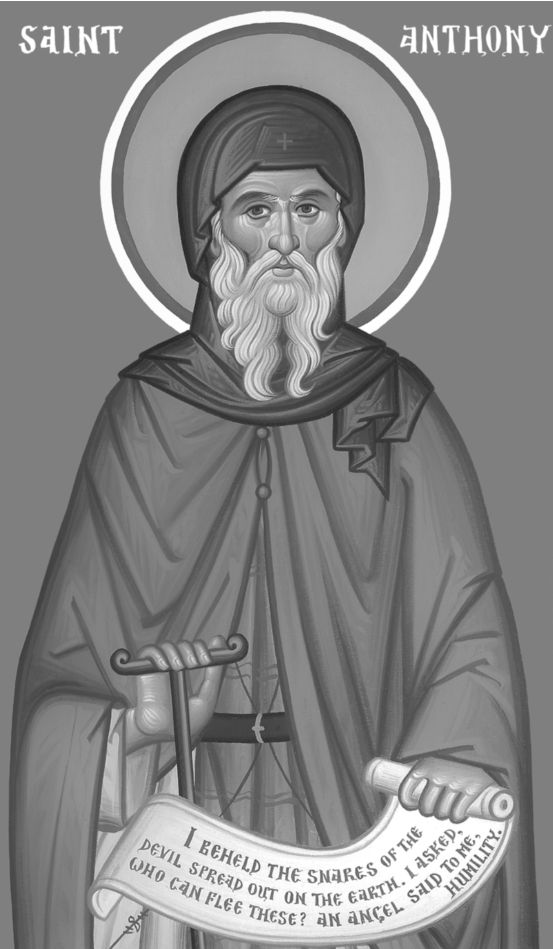
Missionary Expansion of Orthodoxy#
The Orthodox Church carried the Gospel to many nations. In the ninth century, Saints Kyril and Methodius brought Christianity to the Slavic peoples in the Balkans. They developed the Slavonic written tradition and translated Scripture and liturgical texts so people could worship in their own language. Afterwards Orthodox Christian missionaries also reached the land of Russia, where the Grand Prince Vladimir of Kiev converted his whole nation in 988. These missions demonstrated the Church’s commitment to bringing Christ to every nation. Christ commanded: “Go therefore and make disciples of all nations” [Mt. 28:19].
The Preservation of the Faith Through Councils#
The ecumenical councils served as guardians of doctrine. When controversies arose, the Church gathered to examine the questions in the light of Scripture, apostolic tradition, and the witness of the fathers. The councils defended the Holy Trinity, the incarnation, the two natures of Christ, and the veneration of holy icons.
The Great Schism and Historical Separation#
The Orthodox Church teaches that the Great Schism of 1054 resulted from a gradual implementation of heretical teachings by the Church of Rome, separating it from the unity of the one, holy, catholic, and apostolic Church. The true Church rejects doctrines that depart from the Faith received from the holy apostles and preserved by the holy fathers, including the infallibility and universal supremacy of one bishop over the entire Church and the unilateral addition of the Filioque to the Nicene-Constantinopolitan Creed. The Orthodox Church maintains that authentic Christian doctrine must be rooted in holy Scripture, Holy Tradition, the teachings of the holy fathers, and the Faith of the seven ecumenical councils. The Church does not claim the authority to alter the apostolic Faith according to later innovations, but seeks to preserve the Faith once for all delivered to the saints [Jude 3].
The Fall of Constantinople#
In 1453, Constantinople fell to the Ottoman Empire. This was a profound historical tragedy for the Byzantine Christian world. Yet Orthodox Christianity continued through monasteries, local bishops, parish communities, and Christian families. The life of the Church continued despite political changes.
Orthodox Christianity in Times of Persecution#
Throughout history, Orthodox Christians have experienced persecution under various governments and regimes. Many believers suffered because they remained faithful to Christ. The words of Christ remained a source of strength: “Keep on becoming faithful until death, and I will give to thee the crown of life” [Rev. 2:10].
The Modern Witness of Orthodoxy#
Today, the Orthodox Church exists throughout the world. Orthodox communities continue to preserve the Divine Liturgy, the holy mysteries, the writings of the fathers, the decisions of the councils, and the apostolic Faith. Yet the main issue confronting the Church today is the proliferation of innumerable Christian heresies, since every man today desires to follow only his own opinion, disregarding the ancient teachings of Orthodoxy in favor of his own self-devised religion. But it is impossible to please Christ in such a self-willed manner, and Christians are supposed to submit themselves only to that Faith which has never changed and has always been believed since the apostolic era. The spirit of relativism, which denies the necessity of absolute truth, is foreign to Orthodox Christianity, and it has led to the greatest heresy that has ever existed: Ecumenism. Ecumenism teaches that there is not just one Church and one path to salvation (which is the Orthodox Church) but that Roman Catholics and Protestants are also part of the Church. This grave error leads to the conclusion that the pure and spotless Faith that Christ gave to the apostles has been transformed into a multi-headed monster composed of thousands of contradictory false teachings and that Christ has failed to preserve His one true Church from perversion. The holy fathers never believed in this heresy, and they consistently teach that there is only one set of dogmas, that which is taught by the Orthodox Church, which can lead to salvation and that any false teachers who reject the right Faith are heretics who are enemies of God. This is why the remnant of the true and canonical Orthodox Church today has no communion with anyone who participates in the heresy of Ecumenism.
Conclusion#
The history of the Orthodox Church is a history of endurance and faithfulness. Through persecution, theological controversies, political changes, and cultural transformations, the Church has continued to proclaim the Gospel received from Christ and the apostles. The Orthodox Church understands her survival not as the result of human strength but as the fulfillment of Christ’s promise: “I am with you all the days until the completion of the age” [Mt. 28:20].
Chapter Twelve#
The Orthodox Church and the Preservation of the Apostolic Faith
The central claim of the Eastern Orthodox Church is that she has preserved the Faith delivered by Jesus Christ to His apostles and handed down through the generations of the Church. This claim is not based upon the age of the institution alone, nor upon historical survival, but upon the conviction that the Holy Spirit continues to guide the Church in preserving the truth of the Gospel.
The Apostle Paul entrusted Timothy with this sacred responsibility: “Guard thou the good deposit entrusted to thee” [2 Tim. 1:14]. The Faith of the Church is understood as a treasure received, something of divine origin. Every generation is called to receive it with humility, live it faithfully, and transmit it to those who come after.
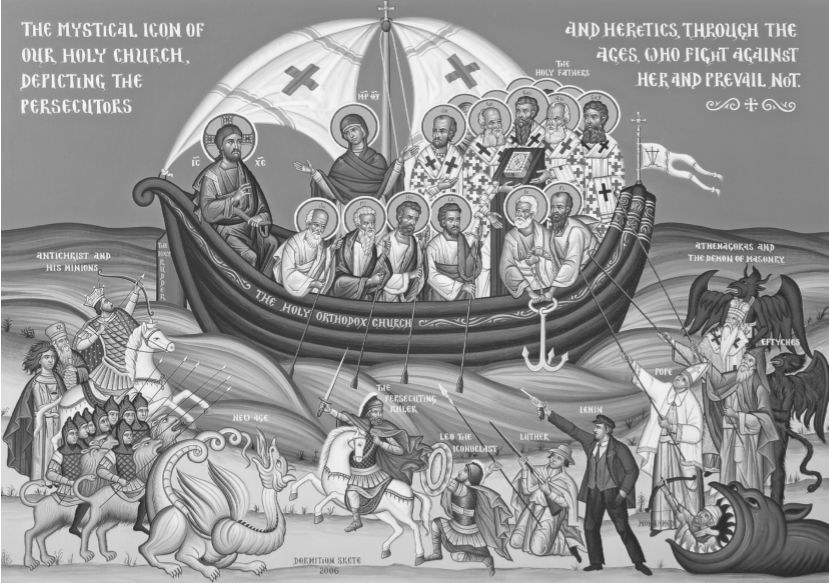
The Faith Once Delivered to the Saints#
The foundation of Orthodox self-understanding is the teaching of Saint Jude: “Contend for the Faith which was once for all delivered to the saints” [Jude 3]. The word “delivered” indicates that the Christian Faith is something received from God. The apostles proclaimed what they had received from Christ; their religion was not based on personal ideas. Saint Paul writes, “For I delivered to you in the first place what I also received” [1 Cor. 15:3]. This pattern of receiving and handing on defines the life of the Church.
The Church as the Guardian of Truth#
The Apostle Paul describes the Church as “the Church of the living God, pillar and stay of the truth” [1 Timothy 3:15]. The Orthodox Church understands this passage to mean that Christ entrusted His Church with the responsibility of preserving and proclaiming the truth. The Church, subservient to divine truth, serves this truth revealed by God. The holy fathers repeatedly taught that the Church must remain faithful to what she has received from the apostles.
Apostolic Succession and Continuity#
A central element of Orthodox continuity is apostolic succession. The apostles appointed bishops and other ministers to continue their pastoral responsibility. Saint Clement of Rome wrote, “The apostles…appointed their first-fruits…to be bishops and deacons…and afterwards gave instructions that, when these should fall asleep, other approved men should succeed them” (Epistle of Clement, 42–44). The Orthodox Church understands this succession as preserving the apostolic ministry, the sacramental life, the teaching authority of the Church, and unity among believers. However, succession is not understood merely as a historical chain of ordinations. It must remain united with faithfulness to apostolic teaching.
Scripture Within the Life of the Church#
The Orthodox Church has always honored holy Scripture as the inspired word of God. The Apostle Paul writes, “Every Scripture is God-inspired” [2 Tim. 3:16]. The Church does not place Scripture and tradition against each other. Rather, Scripture is preserved and interpreted within the living tradition of the Church. The same Church that received the apostolic preaching preserved the apostolic writings. Holy Scripture is therefore read in worship, in the teachings of the fathers, through the decisions of the councils, and within the life of prayer.
Holy Tradition as the Living Memory of the Church#
Holy Tradition is the life of the Holy Spirit within the Church, preserving the apostolic Faith from generation to generation. Saint Paul writes: “Be standing firm and holding fast the traditions which ye were taught, whether by word or by our epistle” [2 Thess. 2:15]. Orthodox tradition includes the teachings of the apostles, the decisions of the ecumenical councils, the writings of the fathers, the ancient worship of the Church, and the spiritual experience of the saints. Tradition is the faithful transmission of the Gospel, not just human custom.
The Witness of the Holy Fathers#
The fathers are important because they demonstrate that the Orthodox Faith is not a modern development. They lived in different centuries and cultures, yet they confessed the same essential truths:
- The Holy Trinity
- The divinity and humanity of Christ
- The Eucharistic presence of Christ
- The importance of bishops
- The necessity of unity in the Church
Saint Irenaeus of Lyons wrote: “The Church, though dispersed throughout the whole world, carefully preserves this preaching and this Faith” (Against Heresies, I.10.2). For Saint Irenaeus, the universal agreement of the churches demonstrated the preservation of apostolic truth.
The Eucharist and the Unity of the Church#
The Orthodox Church sees the Eucharist as the center of Christian unity. Saint Paul teaches, “We, who are many, are one bread, one body; for we all partake of the one Bread” [1 Cor. 10:17]. The Church is therefore a communion united in Christ. The Eucharist expresses the unity of faith, worship, and apostolic life.
The Role of the Ecumenical Councils#
The ecumenical councils defended the apostolic Faith when it was challenged. They clarified who God is, who Jesus Christ is, how salvation is accomplished, and how the Church worships rightly. The councils defended the ancient Christian confession. The Nicene Creed remains a universal confession of the Church: “I believe in one God, the Father Almighty,…and in one Lord Jesus Christ,…and in the Holy Spirit.”
The Spiritual Life of the Orthodox Church#
Preserving the apostolic Faith involves more than preserving doctrines. It involves living communion with God. Orthodox spirituality emphasizes prayer, fasting, repentance, humility, love, and participation in the mysteries. Christ said: “By this shall all know that ye are My disciples, if ye be having love among one another” [Jn. 13:35]. The purpose of the Church is not merely to preserve information about God but to lead humanity into union with God.
The Saints as Witnesses of the Faith#
The saints demonstrate that the Gospel is not merely a theory but a transformed life. Saint Paul writes, “Keep on becoming imitators of me, even as I also am of Christ” [1 Cor. 11:1]. The saints are honored because they reveal what happens when human beings fully cooperate with God’s grace. Their lives testify that the apostolic Faith produces holiness.
The Orthodox Understanding of “Unchanging Faith”#
The Orthodox Church does not claim that every external expression has remained identical throughout history. Languages, music, architecture, and customs have developed in different cultures. What the Orthodox Church seeks to preserve is the essential apostolic Faith:
- The worship of the Holy Trinity
- The confession of Jesus Christ as God and man
- The sacramental life
- The apostolic ministry
- The teachings of the fathers
- The communion of the Church
The Church changes in expression but remains faithful in substance.
Conclusion#
The Eastern Orthodox Church understands herself as preserving the apostolic Faith because she continues the life received from Christ through the apostles. This continuity is expressed through apostolic succession, holy Scripture, Holy Tradition, the ecumenical councils, the Divine Liturgy, the holy mysteries, and the witness of the fathers and saints. The Orthodox Christian confession is that the Church remains rooted in the words of Christ: “The one who heareth you heareth Me” [Lk. 10:16]. The mission of the Church remains unchanged: to proclaim Christ, preserve His Gospel, and invite all humanity into communion with the Holy Trinity.
Chapter Thirteen#
Answering Common Questions and Objections About the Orthodox Faith
Throughout history, the Orthodox Church has been asked many questions concerning her teachings, practices, and understanding of the Christian Faith. Some questions arise from honest desire to understand, while others come from differences in theological interpretation that developed throughout Christian history.
The Orthodox Church responds to these questions by returning to the sources that have guided her life from the beginning: holy Scripture, the teaching of the apostles, the witness of the fathers, the decisions of the ecumenical councils, and the worship and spiritual life of the Church. The Apostle Peter instructs Christians: “Be ready always to give a defense to everyone who asketh you a reason concerning the hope in you” [1 Pet. 3:15]. The purpose of defending the Faith is the humble proclamation of the truth in love, not argument for its own sake.
Question One: Is the Orthodox Church Based on the Bible?#
Answer: It must be clearly understood that the Bible was written by the Church and for the Church. In this sense, the Orthodox Church rests upon the divinely inspired works of the Bible. However, without the Church, it is not possible to understand the real meaning of the Scriptures or participate in any meaningful way in the ideals expressed in the Bible.
The Orthodox Church does not disregard Scripture or place human teachings above Scripture. Rather, she understands Scripture within the living Faith of the Church that received and preserved it. The Apostle Paul writes, “Every Scripture is God-inspired” [2 Tim. 3:16]. The Orthodox Church believes that the Bible is the inspired word of God and the highest written authority of the Christian Faith. However, Scripture itself was given within the Church. The New Testament was written by members of the apostolic Church, preserved by the Church, and read in the worship of the Church. Therefore, the Orthodox approach is not “Bible versus Church,” but the Bible within the Church.
Question Two: Why Does the Orthodox Church Emphasize Tradition?#
Answer: Because Scripture itself commands the preservation of apostolic tradition. Some people understand tradition only as human customs. However, the Bible uses the word “tradition” (paradosis) to describe the teaching handed down by the apostles. Saint Paul writes, “Be standing firm and holding fast the traditions which ye were taught, whether by word or by our epistle” [2 Thess. 2:15]. The Orthodox Church distinguishes between human traditions (which are are customs that may change) and Holy Tradition (the apostolic Faith handed down through the Church). Holy Tradition includes:
- The apostolic teaching
- The ancient worship of the Church
- The decisions of the councils
- The writings of the holy fathers
Question Three: Why Does the Orthodox Church Have Bishops and Priests?#
Answer: Because the apostolic ministry continues in the Church. Christ appointed the apostles and gave them authority to teach and shepherd His people. He said, “Even as the Father hath sent Me forth, I also send you” [Jn. 20:21]. The apostles appointed successors to continue this ministry. Saint Paul instructed Timothy: “The things which thou heardest from me in the midst of many witnesses, commit thou these things to faithful men who shall be competent also to teach others” [2 Tim. 2:2]. The Orthodox Church understands bishops as successors of the apostles who preserve the unity and teaching of the Church.
Question Four: Why Does the Orthodox Church Honor the Saints?#
Answer: Because God is glorified through His saints. The Orthodox Church does not worship saints as gods. Worship belongs to God alone. The saints are honored because God’s grace has transformed their lives. Scripture says, “Precious in the sight of the Lord is the death of His saints” [Ps. 115:6]. The saints are examples of faithful Christian living. The Apostle Paul writes: “Be remembering those who lead you, who spoke to you the word of God, whose faith keep on imitating” [Heb. 13:7]. Honoring the saints is ultimately honoring the work of God in human beings.
Question Five: Why Does the Orthodox Church Ask the Saints for Their Prayers?#
Answer: Because Christians believe the Church is united beyond death. The Orthodox Church believes that those who are in Christ are alive in Him. Christ said, “God is not the God of the dead, but of the living” [Mt. 22:32]. Christians regularly ask one another for prayer. Asking the saints to pray is understood as asking members of the same body of Christ to pray. Saint Iakovos (James) writes, “Keep on...praying for one another” [Jas. 5:16]. The saints are not replacing Christ, the one Mediator between God and humanity. They pray with us and for us in Christ.
Question Six: Why Does the Orthodox Church Use Icons?#
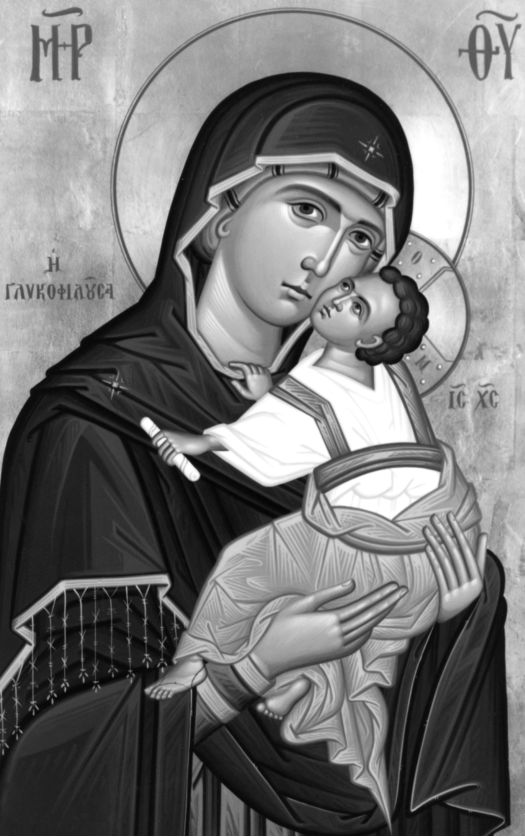
Answer: Because God became visible in the incarnation. The Orthodox Church does not worship icons as idols. The honor shown to an icon passes to the person represented. The foundation of Christian icons is Jesus Christ becoming man. The Apostle John writes: “That which we have heard, that which we have seen with our eyes, that which we beheld, and our hands touched, concerning the Logos of the Life” [1 Jn. 1:1]. The invisible God became visible in the flesh. Christ said, “The one who hath seen Me hath seen the Father” [Jn. 14:9]. Icons proclaim the truth of the incarnation.
Question Seven: Why Does the Orthodox Church Call Mary “Theotokos”?#
Answer: To defend the truth about Christ. The title Theotokos means “God-bearer” or “Birthgiver of God.” It does not mean that Mary existed before God or created God. It means that the Person born from her is truly God the Word Who became flesh. Elisabeth said, “And whence is this to me, that the Mother of my Lord should come to me?” [Lk. 1:43]. The title protects the truth that Jesus Christ is fully God and fully man.
Question Eight: Why Does the Orthodox Church Believe in the Mystery of the Lord’s Body and Blood in the Eucharist?#
Answer: Because Christ Himself taught it. At the Mystical Supper Christ said: “This is My body” [Mt. 26:26]. And “This is My blood, that of the new covenant” [Mt. 26:28]. The Apostle Paul teaches: “The bread which we break, is it not communion of the body of the Christ?” [1 Cor. 10:16]. The Orthodox Church receives these words as a mystery of faith: Christ truly gives Himself to His people in the Eucharist.
Question Nine: Why Does the Orthodox Church Reject Doctrinal Innovation?#
Answer: Because the Church seeks faithfulness to Christ’s revelation. The Orthodox Church believes that Christianity is not something invented by each generation. Saint Paul warns: “If anyone preach a gospel to you besides what ye received, let such a one be anathema (accursed)” [Gal. 1:9]. The Church may express the Faith in different languages and cultures, but the apostolic truth remains unchanged.
Question Ten: Does the Orthodox Church Believe It Is the Only True Church?#
Answer: Yes, because the Orthodox Church alone has preserved the fullness of the apostolic Faith. The Orthodox understanding is that the Church is the body of Christ, called to unity, truth, and holiness. Christ prayed: “In order that all may be one, even as Thou, Father, art in Me, and I in Thee” [Jn. 17:21]. The Orthodox Church seeks to remain faithful to this unity through the Faith, worship, and life received from the apostles. At the same time, Orthodox Christians are called to humility, love, and prayer for all people.
Conclusion#
The Orthodox Faith is not based upon rejecting Scripture, history, or reason. It is based upon receiving the revelation of God as preserved through the life of the Church. The Orthodox Church believes that the same Faith proclaimed by the apostles continues through the holy Scriptures, the holy mysteries, the Divine Liturgy, the councils, the fathers, and the witness of the saints. The words of Saint Paul remain the calling of every Christian generation: “Be standing firm and holding fast the traditions which ye were taught” [2 Thess. 2:15].
Chapter Fourteen#
The Orthodox Way of Life: Prayer, Fasting, Repentance, and the Journey Toward God
The Orthodox Church teaches that Christianity is a way of life in communion with God. The purpose of the Christian life is not only to know about God and hold a certain set of beliefs but to be transformed by His grace and become united with Him. The Apostle Paul describes this transformation: “But we all, with unveiled face reflecting as a mirror the glory of the Lord, are being transformed into the same image from glory to glory” [2 Cor. 3:18]. The Orthodox spiritual life is a journey of healing, purification, and participation in the life of Christ. This journey includes prayer, fasting, repentance, humility, love, participation in the holy mysteries, and growth in holiness.
The Goal of the Christian Life: Communion With God#
The Orthodox fathers teach that humanity was created for communion with God. In Genesis, God created humanity in His image: “Then God said, ‘Let Us make man in Our image, according to Our likeness’” [Gen. 1:26]. The image of God remains within humanity, but sin wounds human nature. Christ came to restore this image and bring humanity back into communion with God. Saint Athanasius the Great wrote: “God became man so that man might become god.” This teaching, known as theosis, means that humanity is called to participate in God’s life through grace.
Prayer: A Relationship With the Living God#
Prayer in Orthodox Christianity is not merely asking God for things. It is communion between the human person and the living God. Christ taught, “Whenever thou art praying, enter into thy chamber, and after thou shuttest thy door, pray to thy Father Who is in secret” [Mt. 6:6]. Prayer transforms the heart and opens the person to God’s presence.
The Jesus Prayer#
One of the most important prayers in Orthodox spirituality is the Jesus Prayer: “Lord Jesus Christ, Son of God, have mercy on me, a sinner.” This prayer, repeated frequently by Orthodox Christians every day, is based upon the Biblical confession of Christ’s identity and the humility of the repentant heart. The blind man cried: “Jesus, Son of David, have mercy on me!” [Lk. 18:38]. And the tax collector prayed, “God, be gracious to me the sinner” [Lk. 18:13]. The Jesus Prayer joins these Biblical prayers together.
Prayer of the Heart#
Orthodox spiritual writers speak of the “prayer of the heart,” meaning the transformation of the whole person through continual remembrance of God. The Apostle Paul commands: “Be praying unceasingly” [1 Thess. 5:17]. This does not mean speaking audible words every moment of the day but living with the awareness of God’s presence.
Fasting: Training the Soul — The Biblical Foundation of Fasting#
Fasting has always been part of the life of God’s people. Moses fasted before receiving the Law: “And he was there with the Lord forty days and forty nights; he neither ate bread nor drank water” [Exodus 34:28]. The Prophet Joel called God’s people to repentance: “Turn to Me with all your heart, with fasting, with weeping, and with mourning” [Joel 2:12]. Christ Himself fasted: “And having fasted forty days and forty nights, afterwards He hungered” [Mt. 4:2].
The Purpose of Fasting#
Orthodox fasting involves avoiding certain foods on particular days. Its purpose is spiritual transformation. Fasting teaches self-control, humility, dependence on God, and compassion for others. Isaiah the Prophet explains true fasting: “Is this not the fast that I have chosen: to loose the bonds of wickedness, to undo the heavy burdens, to let the oppressed go free?” [Isa. 58:6]. Fasting without love and repentance has no spiritual value.
Repentance: Returning to God#
The word repentance in Greek is metanoia, meaning a change of mind and turning of the whole person toward God. Christ began His ministry with the command: “Repent ye and believe ye in the Gospel” [Mk. 1:15]. Repentance is the opening of the heart to God’s mercy, without despairing.
Confession and Spiritual Healing#
The Orthodox Church understands confession as a healing mystery. Christ gave authority to forgive sins: “If ye forgive the sins of any, they are forgiven to them” [Jn. 20:23]. Confession is more than a legal declaration. It is a medicine for the soul. Through sincere repentance, the believer receives God’s mercy and begins renewal.
Humility: The Foundation of Spiritual Growth#
The Orthodox fathers teach that humility is the foundation of all virtue. Christ Himself said, “Learn from Me, for I am meek and humble in heart” [Mt. 11:29]. The humble person recognizes dependence upon God and receives His grace. The Apostle Iakovos writes: “God setteth Himself against the proud, but giveth grace to the humble” [Jas. 4:6].
Love: The Fulfillment of the Christian Life#
The goal of spiritual struggle is love. The Apostle Paul teaches, “And there now abideth faith, hope, love, these three things; but the greatest of these is love” [1 Cor. 13:13]. Orthodox spirituality is not complete without love toward God and neighbor. Christ said: “By this shall all know that ye are My disciples, if ye be having love among one another” [Jn. 13:35].
The Spiritual Battle#
The Orthodox Church recognizes that the Christian life involves spiritual struggle. The Apostle Paul writes, “For us the wrestling is not against blood and flesh, but against the principalities, against the powers” [Eph. 6:12]. The weapons of this struggle are prayer, fasting, Scripture, repentance, the Mysteries, and faith in Christ.
The Role of the Monastic Tradition#
Monasticism has played a significant role in preserving Orthodox spirituality. Monks and nuns dedicate their lives to prayer, repentance, service, and seeking union with God. The desert fathers taught that the struggle against sin begins within the human heart. Saint Anthony the Great taught: “The life and death of the soul depends on our neighbor.” This expresses the Orthodox understanding that love is central even in the solitary life.
The Orthodox Understanding of Holiness#
Holiness and moral perfection cannot be achieved solely by human effort. Sanctity requires participation in God’s grace. God tells His people in the Old Testament: “Become holy, for I am holy” [cf. Lev. 11:44; 1 Pet. 1:16]. The saints are examples of people transformed by God’s grace.
The Christian Life as Preparation for Eternity#
The Orthodox Christian life prepares the soul for eternal communion with God. Christ promised: “In My Father’s house are many abodes” [Jn. 14:2], many levels of different rewards that depend on our efforts. The goal of salvation is not merely escape from punishment but participation in the eternal life of the Kingdom of God.
Conclusion#
The Orthodox way of life is the practical expression of the apostolic Faith. The believer who receives the teachings of the Church is called to live them through prayer, fasting, repentance, love, and communion with Christ. The Christian journey is a movement from darkness to light, from sin to holiness, from death to life, from separation from God to communion with Him. As Christ promised, “Abide in Me, and I in you” [Jn. 15:4]. The Orthodox life is the lifelong journey of abiding in Christ and becoming transformed by His grace.
Chapter Fifteen#
The Virgin Mary and the Saints: Their Place in Orthodox Faith and Worship
The Orthodox Church honors the Virgin Mary and the saints because they reveal the work of God’s grace in human beings. Their honor is not separate from the worship of God; rather, it points toward the glory of God Who transforms His creation. The Orthodox Church makes a clear distinction between:
- Worship (latreia)—which belongs to God alone
- Honor and veneration (proskynesis)—which may be offered to God’s servants and holy things
The saints are honored not as gods but as faithful members of Christ’s body who have become examples of obedience, holiness, and communion with God. The Apostle Paul writes, “The saints shall judge the world” [1 Cor. 6:2], and “Ye are no longer strangers and sojourners, but fellow citizens of the saints and of the household of God” [Eph. 2:19].
The Virgin Mary’s Place Among the Saints#
The Virgin Mary is honored above all other saints because of her unique relationship with Christ. The Gospel records her prophetic words: “For behold, from henceforth all generations shall call me blessed” [Lk. 1:48]. The Orthodox Church fulfills this Biblical prophecy by honoring the Theotokos in every generation. However, her honor always directs believers toward Christ. At the wedding of Cana, the Virgin Mary tells the servants: “Whatsoever He saith to you, do it” [Jn. 2:5]. Her entire life points toward obedience to her Son.
Mary as the New Eve#
The fathers often compared Mary with Eve. Through Eve’s disobedience, humanity experienced separation and death. Through the Virgin Mary’s obedience, humanity received Christ, the source of salvation. Saint Irenaeus of Lyons (ca. 130–ca. 200) wrote: “The knot of Eve’s disobedience was loosed by the obedience of Mary” (Against Heresies, III.22.4). This teaching emphasizes that God’s grace works through human cooperation.
The Saints as Friends of God#
The Orthodox Church believes that the saints remain alive in Christ. Jesus said: “He is not the God of the dead, but of the living” [Lk. 20:38]. Those who have died in faith are not separated from the body of Christ. The Apostle Paul teaches: “Whether we live or die, we are the Lord’s” [Rom. 14:8]. The Church on earth and the Church in Heaven are united in Christ.
The Communion of Saints#
The Apostles’ Creed confesses: “I believe in…the communion of saints.” This means that all believers in Christ share a spiritual unity. The Apostle Paul compares the Church to a body: “For even as the body is one, and hath many members,...so also is the Christ” [1 Cor. 12:12]. Death does not destroy this unity, because Christ has conquered death. Orthodox Christians ask saints to pray for them in the same way Christians ask one another for prayer. The prayers of the saints are understood as the prayers of members of Christ’s body. The Book of Revelation presents the saints in heaven offering prayers before God: “The smoke of the incense with the prayers of the saints ascended before God” [Rev. 8:4].
The Saints as Examples of Christian Life#
The saints are honored because their lives demonstrate the power of God’s grace. The Apostle Paul says, “Keep on becoming imitators of me, even as I also am of Christ” [1 Cor. 11:1]. The saints show that holiness is possible through cooperation with God’s grace. They include:
- Martyrs who gave their lives for Christ
- Holy fathers who defended the Faith
- Monastics who pursued prayer and holiness
- Ordinary believers who lived lives of love and faithfulness
The Saints and the Mission of the Church#
The saints, although they lived long ago, remain examples and witnesses for Christians today. Saint Paul explains in his Epistle to the Hebrews: “We also, having so great a cloud of witnesses which is set around us, and having laid aside every weight and sin that is easily circumvented” [Heb. 12:1]. The saints encourage believers to continue the journey toward Christ.
The Feasts of the Saints#
The Orthodox liturgical year remembers the saints because the Church celebrates God’s victory in their lives. The feasts are celebrations of human achievement when empowered by divine grace. Every saint reveals what God can accomplish in a person who freely responds to Him.
The Virgin Mary and the Saints Point to Christ#
The greatest misunderstanding about Orthodox devotion is the idea that honoring the Virgin Mary and the saints takes attention away from Christ. The opposite is true. The saints constantly direct believers toward Christ. Mary’s message remains: “Whatsoever He saith to you, do it” [Jn. 2:5]. The saints are like windows through which the light of Christ shines.
Conclusion#
The Orthodox Church honors the Virgin Mary and the saints because God has glorified them through His grace. Their veneration, far from detracting from God’s glory, is a testimony to what God accomplishes in those who love Him. The Theotokos reveals perfect obedience to God. The saints reveal the possibility of transformation through Christ. Together, they proclaim the victory of God’s grace over human weakness. Therefore the Orthodox Church continues to confess: “Wonderful is God in His saints” [Ps. 67:33].
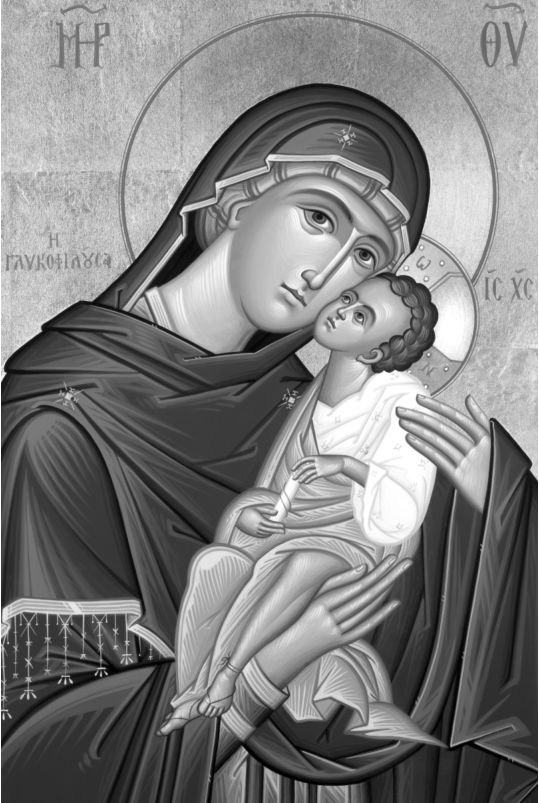
Chapter Sixteen#
The Orthodox Hope: Resurrection, Judgment, and the Kingdom of God
The Orthodox Christian Faith looks beyond what God has done in the past and what He is doing in the present, and we look forward with hope to the fulfillment of all things in Christ. The Christian life is directed toward the coming Kingdom of God, the resurrection of the dead, and eternal communion with the Holy Trinity.
The Church proclaims every Divine Liturgy: “Blessed is the Kingdom of the Father and of the Son and of the Holy Spirit, both now and ever and unto the ages of ages.” The Kingdom of God is not just a future reality; it has already begun through Christ’s incarnation, death, and Resurrection. Yet it awaits its complete fulfillment at the end of the age. Christ teaches us to pray: “Let Thy Kingdom come; let Thy will be done also on the earth, as in heaven” [Mt. 6:10].
The Second Coming of Christ: The Promise of Christ’s Return#
The Orthodox Church confesses that Jesus Christ will return in glory to judge the living and the dead. After Christ’s Ascension, the angels proclaimed: “This Jesus, the One Who was taken up from you into the heaven, so shall He come in the manner ye beheld Him going into the heaven” [Acts 1:11]. The Second Coming is therefore understood literally as the promised return of the risen Lord Who will bring history to its fulfillment.
Christ Will Come in Glory#
At His first coming, Christ came in humility: born in a manger, taking the form of a servant, suffering on the Cross. At His Second Coming, He will come in glory. Christ said: “They shall see the Son of Man coming on the clouds of the heaven with power and great glory” [Mt. 24:30]. The Church awaits this coming with reverential fear, hope, and expectation.
The Resurrection of the Dead: The Christian Hope#
The Orthodox Church believes in the bodily resurrection of all humanity. True Christianity has never taught that the body is meaningless or that salvation is escape from creation. God created human beings as body and soul, and Christ came in a true human body. Therefore, redemption includes the restoration of the whole person. Christ says, “An hour is coming in which all those in the graves shall hear His voice, and shall go forth” [Jn. 5:28–29].
Christ’s Resurrection as the First Fruits#
The Resurrection of Christ is the foundation of the Christian hope. Saint Paul writes: “But now Christ hath been raised from the dead, the first-fruits of those who have fallen asleep did He become” [1 Cor. 15:20]. Because Christ has risen, those united to Him will also rise. The Resurrection is the beginning of the renewal of creation.
The Transformation of the Human Body#
The general resurrection will not mean simply returning to earthly life as before. The Apostle Paul explains, “The dead shall be raised incorruptible, and we shall be changed” [1 Cor. 15:52]. The resurrected body will share in the victory of Christ over corruption and death. The human person will be restored in the fullness intended by God.
The Particular Judgment#
The Orthodox Church teaches that after death, the soul enters into a state of awaiting the final resurrection and Judgment. The New Testament teaches: “It is laid up for men to die once, but after this, judgment” [Heb. 9:27]. The Church prays for the departed because God’s mercy extends beyond our understanding.
The Last Judgment: Christ the Judge#
The final Judgment will reveal the truth of every human life. Christ says, “Whenever the Son of Man should come in His glory,...then shall He sit upon the throne of His glory” [Mt. 25:31]. God already knows all things and lacks knowledge of nothing, but the Judgment will reveal the true condition of human hearts.
The Judgment of Love#
In Matthew 25, Christ describes the judgment of humanity according to love and mercy. He says, “I hungered and ye gave Me to eat; I thirsted and ye gave Me to drink” [Mt. 25:35]. The Lord identifies Himself with those in need. The Orthodox Church teaches that love for God must be expressed through love for others. Saint John writes, “The one not loving his brother whom he hath seen, how is he able to love God Whom he hath not seen?” [1 Jn. 4:20].
Heaven and Hell in Orthodox Understanding#
Orthodox theology understands Heaven and hell (Gehenna) primarily in relation to humanity’s encounter with God. God is love and light. For those who love God, His presence is joy and life. For those who reject love, the same divine presence becomes experienced as suffering. Saint Isaac of Nineveh wrote extensively about God’s mercy and the transformative power of divine love, yet he also wrote that those who shall suffer in hell shall be “scourged by the scourges of love” (Ascetical Homilies, Part 1, “Homily 28”).
The Kingdom of God#
The Kingdom of God is the fulfillment of God’s purpose for creation. Christ began His ministry by proclaiming: “The Kingdom of God hath drawn near; repent ye and believe ye in the Gospel” [Mk. 1:15]. Through Christ, the Kingdom has entered history. It is experienced now through the Church, the Eucharist, prayer, and the work of the Holy Spirit. It will be revealed fully at the end of the age.
The New Creation#
The final hope of Christianity is not the destruction of creation but its renewal. The Book of Revelation declares, “And I saw a new heaven and a new earth, for the first heaven and the first earth went away” [Rev. 21:1]. God restores creation to its original purpose, and the curse of sin and death is overcome.
The Heavenly Jerusalem#
The Book of Revelation describes the eternal dwelling of God with humanity: “Behold, the tabernacle of God is with men, and He shall tabernacle with them” [Rev. 21:3]. The ultimate hope of humanity is communion with God. The purpose of creation is fulfilled when God and His people dwell together eternally.
The Eucharist as a Foretaste of the Kingdom#
The Divine Liturgy is understood as participation in the heavenly Kingdom. When Orthodox Christians gather for the Eucharist, they experience a foretaste of the age to come. The Lord Jesus Christ says, “In no wise will I drink of the fruit of the vine until the Kingdom of God should come” [Lk. 22:18]. The Eucharist points toward the eternal banquet of God’s Kingdom.
Living in Expectation of Christ’s Return#
The hope of the Second Coming should not produce laziness or fear but faithfulness. Christ commands: “Be watching then, for ye know not in what hour your Lord cometh” [Mt. 24:42]. Christians prepare for the Kingdom by repentance, prayer, love, faithfulness, and works of mercy.
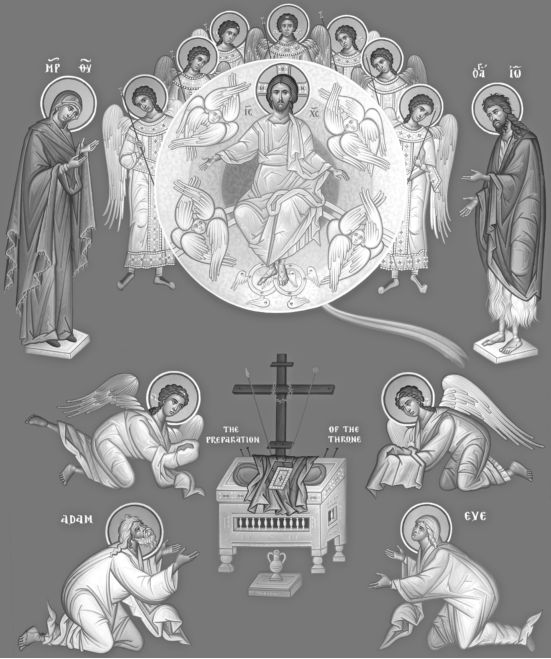
The Orthodox Funeral Hope#
Death is not the end of existence. The funeral prayers of the Orthodox Church express hope in the Resurrection: “Blessed is the way in which thou dost walk today, O soul, for a place of rest hath been prepared for thee.” The Church entrusts the departed to God’s mercy while proclaiming the victory of Christ over death.
Conclusion#
The Orthodox Christian hope is the victory of Christ over sin, death, and corruption. The Church looks forward to the return of Christ, the resurrection of the dead, the Last Judgment, the renewal of creation, and eternal communion with God. The final word of Scripture is not death but life: “‘Yes, I am coming quickly.’ Amen; yes, come, Lord Jesus” [Rev. 22:20]. The Orthodox Faith is therefore a faith of hope: hope in the risen Christ, hope in the resurrection, and hope in the eternal Kingdom of the Father, Son, and Holy Spirit.
Chapter Seventeen#
Heaven and Earth United in Orthodox Worship: The Divine Liturgy
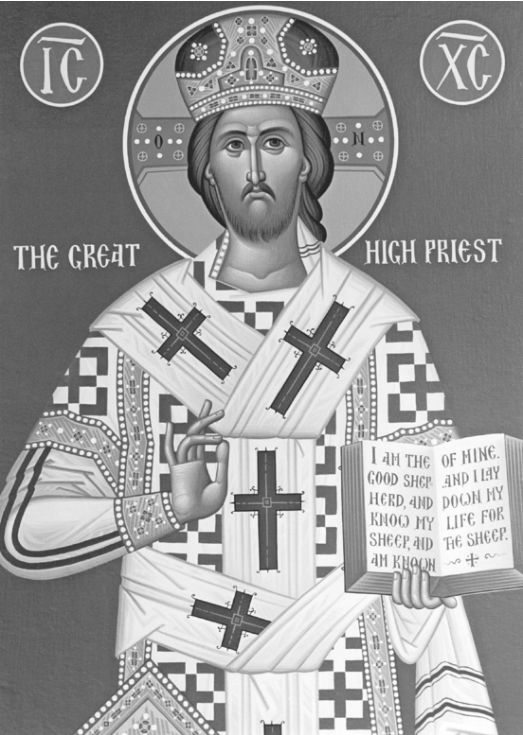
The word “Liturgy” comes from the Greek word leitourgia, meaning “a common work of the people” or “a public service.” In Orthodox understanding, the Divine Liturgy is the work of the whole Church: Christ the eternal High Priest, the bishop or priest who serves in His name, the deacons and ministers, the gathered people of God, and the angels and saints worshipping together. The Liturgy is not a performance watched by spectators. All believers participate in the worship of God.
The words of Christ uttered on the night before His Passion establish the foundation of this mystery: “Be doing this in remembrance of Me” [Lk. 22:19]. The Divine Liturgy is the Church’s faithful response to this command, and they act in unity. The priest, deacon, choir, and faithful participate together as the body of Christ. The Apostle Peter writes, “Ye also, as living stones, are being built up a spiritual house, a holy priesthood” [1 Pet. 2:5].
Christ: The True High Priest#
The Divine Liturgy is centered upon Jesus Christ, the eternal High Priest. The Letter to the Hebrews declares: “We have such a High Priest, Who sat down on the right of the throne of the Majesty in the Heavens” [Heb. 8:1] Christ is both the One Who offers, and the Offering itself. Through Him, humanity is brought into communion with God.
The Structure of the Divine Liturgy#
The Orthodox Divine Liturgy has developed through centuries of prayer and worship, while preserving its apostolic foundation. The main parts include:
- The Proskomedia (Preparation of the Gifts)
- The Liturgy of the Catechumens
- The Liturgy of the Faithful
- The Eucharistic Prayers (Anaphora and Epiclesis)
- Holy Communion
- Thanksgiving and Dismissal
Each part reveals the work of salvation accomplished by Christ.
The Proskomedia: The Preparation of the Offering#
Before the Liturgy begins, the bread and wine are prepared. The bread (Lamb) placed on the paten represents Christ, the Bread of life. Christ said, “I am the bread of life; the one who cometh to Me in no wise shall hunger” [Jn. 6:35]. The particles placed around the Lamb represent the Virgin Mary, the saints, the living members of the Church, and the departed faithful. This reveals that the Eucharist is the offering of the whole Church.
The Liturgy of the Catechumens#
The first part of the Liturgy focuses on the proclamation of God’s word. It includes prayers, hymns, Scripture readings, and the Gospel proclamation. The reading of Scripture reminds the Church that faith comes through hearing God’s word. The Apostle Paul writes: “Faith cometh by hearing, and hearing by that which is said of God” [Rom. 10:17].
The Gospel as the Presence of Christ#
In the Orthodox Liturgy, the Gospel book is treated with great honor because it represents Christ teaching His people. The priest or deacon proclaims during the Little Entrance: “Wisdom! Upright!” This reminds believers that they stand before the living Word of God. Christ says, “The words which I have spoken to you are spirit and life” [Jn. 6:63].
The Liturgy of the Faithful#
The second part of the Divine Liturgy is centered on the offering of the Eucharist. Only those fully united with the Church through Baptism and Confession may participate in Holy Communion. This expresses the ancient Christian understanding that the Eucharist is the sign of full communion.
The Great Entrance#
During the Great Entrance, the gifts of bread and wine are carried in procession to the altar. This movement recalls Christ’s journey toward His voluntary sacrifice. The Church at this time calls to mind Christ’s incarnation, His suffering, His death, and His Resurrection. The choir chants: “Let us who mystically represent the cherubim and who sing the thrice-holy hymn to the life-giving Trinity…” This reminds believers that the Church worships together with the heavenly hosts. Earth and heaven are united in praise.
The Creed: The Confession of Faith#
Before the Eucharist is consecrated, the Church confesses the Nicene-Constantinopolitan Creed. This expresses the Faith received from the apostles and defended by the ecumenical councils. The Liturgy is inseparable from true doctrine. Right worship depends upon right faith, meaning that those who do not hold the right Faith (Orthodoxy) cannot perform a true Liturgy.
The Eucharistic Prayers#
The Eucharistic prayers are the heart of the Divine Liturgy. The Church gives thanks to God for creation, salvation, Christ’s incarnation, His Passion, His Resurrection, and His Ascension. The word “Eucharist” itself means “thanksgiving.”
The Invocation of the Holy Spirit#
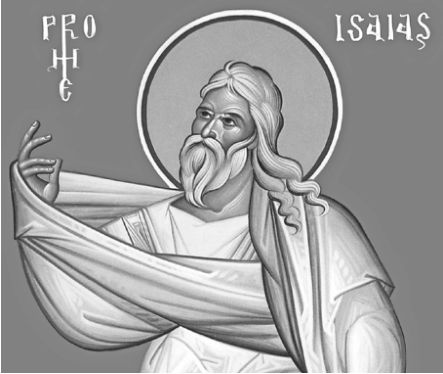
The Orthodox Church calls upon the Holy Spirit to sanctify the gifts and change them into the very body and blood of the Lord. This prayer is known as the Epiclesis. The Church follows the Biblical truth that the Holy Spirit gives life. The psalm says: “Thou wilt send forth Thy Spirit, and they will be created; and Thou wilt renew the face of the earth” [Ps. 103:31].
The Heavenly Worship of the Liturgy#
Orthodox worship understands the earthly Liturgy as united with heavenly worship. The Prophet Isaiah saw the heavenly worship: “Holy, holy, holy is the Lord of hosts; the whole earth is full of His glory!” [Isa. 6:3]. The Book of Revelation describes heavenly worship around God’s throne: “The angels…and the elders…worshipped God” [Rev. 7:11]. The Divine Liturgy is a participation in this eternal worship.
The Saints and the Liturgy#
The Orthodox Church remembers the saints during the Eucharistic celebration because the Church is one in Christ. Those in Heaven and those on earth are united in the worship of God. The Apostle Paul writes: “We also, having so great a cloud of witnesses which is set around us…” [Heb. 12:1]. The Liturgy reveals the unity of the entire body of Christ.
The Liturgy and Transformation#
The purpose of worship is not simply to fulfill a religious obligation. The Liturgy transforms those who participate. Through communion with Christ, believers are strengthened to live according to the Gospel. The Apostle Paul writes, “I no longer live, but Christ liveth in me” [Gal. 2:20].
The Liturgy as the Foretaste of the Kingdom#
Every Divine Liturgy points toward eternity. The Church experiences a foretaste of the coming Kingdom, in which Christ reigns, death is defeated, and humanity is united with God. Christ promised, “I appoint to you a Kingdom, even as My Father appointed to Me” [Lk. 22:29].
The Importance of Reverence and Participation#
The Orthodox Church teaches that participation in the Liturgy requires faith, attention, repentance, prayer, and love. The believer who attends the Liturgy enters into the mystery of salvation. The Divine Liturgy does not end when Christians leave the church building. The faithful are sent into the world to live the Gospel. The final blessing sends believers to serve God through love, mercy, forgiveness, and holiness. Worship must transform life.
The Liturgy as the Source of Christian Unity#
The Eucharist reveals the unity of the Church. Saint Paul writes, “We, who are many, are one bread, one body; for we all partake of the one Bread” [1 Cor. 10:17]. The Eucharist creates communion among believers.
The Divine Liturgy and Theosis#
The ultimate purpose of the Liturgy is the transformation of humanity through communion with God. Through participation in Christ, believers are invited into divine life. The fathers called this theosis—becoming like God by participation in God’s grace.
Conclusion#
The Divine Liturgy is the heart of Orthodox Christianity because it gathers the Church into communion with Christ. It is:
- The continuation of apostolic worship
- The participation of earth in heavenly praise
- The proclamation of the Gospel
- The celebration of Christ’s saving work
- The offering of thanksgiving
- The communion of the Church with God
- Participation in the Eucharistic mystery
- A foretaste of the Kingdom of God
Through the Divine Liturgy, Heaven and earth are united, and the Church fulfills her calling to worship the Father, through the Son, in the Holy Spirit. As the psalmist declares: “I was glad on account of those having said to me, ‘Let us go into the house of the Lord’” [Ps. 121:1]. Through the Divine Liturgy, the Orthodox Church continues to proclaim: “We have seen the true Light; we have received the heavenly Spirit; we have found the true Faith.”
Chapter Eighteen#
Monasticism and the Pursuit of Holiness: The Example of the Desert Fathers and Mothers
From the earliest centuries of Christianity, some believers felt a special calling to dedicate their entire lives to prayer, repentance, and communion with God. These men and women became known as monks and nuns, and their way of life became one of the great expressions of Orthodox spirituality. Orthodox monasticism is a witness that God alone is the ultimate purpose of human existence. The monastic does not view the world or creation as evil, but he seeks to fulfill the commandment of Christ: “Thou shalt love the Lord thy God with all thy heart, and with all thy soul, and with all thy mind” [Mt. 22:37]. The monastery became a place where Christians pursued the healing of the soul and the transformation of life through God’s grace.
The Biblical Foundation of Monastic Life#
Although the organized monastic movement developed after the apostolic age, its roots are found in Scripture. Christ Himself called people to complete devotion: “If anyone is willing to come after Me, let him deny himself, and take up his cross, and keep on following Me” [Mt. 16:24]. The Gospel also speaks of those who leave everything for the Kingdom of God: “Everyone who leaveth houses, or brothers, or sisters, or father, or mother, or wife, or children, or lands, on account of My name, shall receive a hundredfold, and shall inherit life everlasting” [Mt. 19:29]. Monasticism seeks to live these words with complete dedication.
The Beginning of Christian Monasticism#
The great movement of monasticism began in the deserts of Egypt, Syria, and Palestine during the third and fourth centuries. As persecution against Christians ended and Christianity became accepted within the Roman Empire, some believers sought another form of martyrdom: the sacrifice of the passions and complete dedication to God. These spiritual warriors became known as “white martyrs” because they offered their whole lives to Christ.
Saint Anthony the Great: The Father of Monasticism#
One of the most famous figures in Orthodox monastic history is Anthony the Great (251–356). After hearing the words of Christ “Go and sell thy possessions and give to the poor, and thou shalt have treasure in Heaven; and come and keep on following Me” [Mt. 19:21], Anthony distributed his possessions and entered the desert to seek God. His life became an example of prayer, humility, spiritual struggle, and victory over temptation. His biography, written by Saint Athanasius the Great, inspired countless Christians to pursue holiness.
The Desert Fathers and Mothers#
The desert fathers and mothers were men and women who sought God through prayer, fasting, silence, and repentance. They were not escaping responsibility; they were fighting against the inner passions that separate humanity from God. They taught that the greatest battlefield is the human heart. Christ says, “For out of the heart cometh forth evil thoughts” [Mt. 15:19]. The desert became a place of spiritual transformation.
The Three Foundations of Monastic Life#
Orthodox monasticism is traditionally built upon three major commitments:
- Obedience: The monk learns humility by submitting his own will to God and the spiritual guidance of his elder. Christ Himself showed obedience: “Not My will, but Thine be done” [Lk. 22:42].
- Poverty: The monk renounces attachment to possessions in order to seek the riches of God. Christ warns: “Ye are not able to serve God and mammon” [Mt. 6:24].
- Chastity: The monk remains unmarried and dedicates his whole love to God and the service of His Kingdom.
The Jesus Prayer#
One of the most beloved practices of Orthodox spirituality is the Jesus Prayer: “Lord Jesus Christ, Son of God, have mercy on me.” This prayer is based upon the Biblical confession “Jesus Christ is Lord” [Phil. 2:11] and the cry of the blind man: “Jesus, Son of David, have mercy on me!” [Lk. 18:38]. Through continual prayer, the believer seeks to unite the mind and heart with God.
Hesychasm: The Practice of Inner Stillness#
The Orthodox tradition speaks of hesychia, meaning stillness or inner peace. Hesychasm is the pursuit of purification of the heart through prayer and the grace of God. Christ teaches: “The kingdom of God is within you” [Lk. 17:21]. The goal is not merely silence of speech but freedom from sinful thoughts and passions.
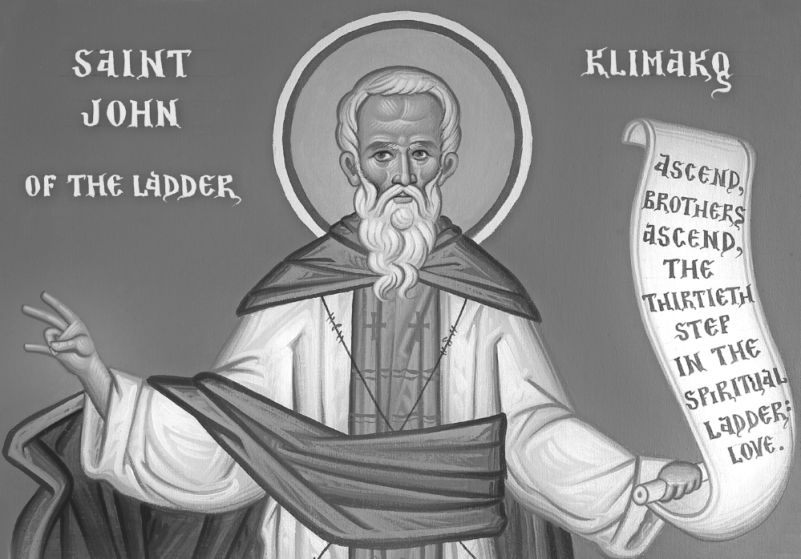
Saint John Climacus and the Ladder of Divine Ascent#
The holy John Climacus (d. 649) wrote The Ladder of Divine Ascent, one of the great works of Orthodox spiritual teaching. He describes the spiritual journey as a climb toward God through virtues such as repentance, humility, love, and prayer. He writes, “Love is, by its quality, a likeness of God.” The purpose of spiritual struggle is transformation into the likeness of God.
Saint Mary of Egypt: A Witness of Repentance#
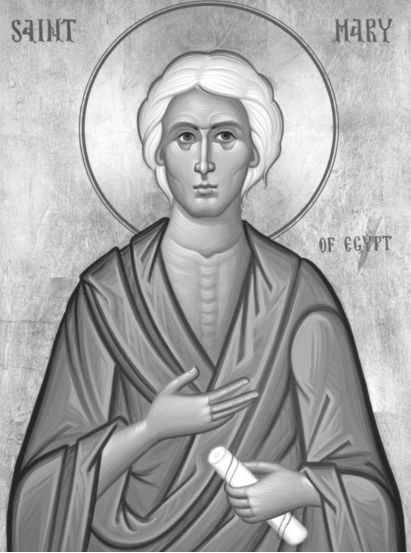
The life of Saint Mary of Egypt (6th C.), a former harlot, is remembered in the Orthodox Church as a powerful example of repentance. Her life teaches that no person is beyond God’s mercy when the heart truly turns toward Him. The prophet writes: “A heart having been made contrite and humble God will not treat with contempt” [Ps. 50:17].
Monasticism and the Church#
Monks and nuns are not separated from the life of the Church. They participate in the Divine Liturgy, the holy mysteries, prayer for the whole world, and service to others. The monastery exists not only for the salvation of the monk but as a place of prayer for all humanity.
The Monastery as a Spiritual Infirmary#
The fathers often described the Church as an infirmary where souls are healed. The monastery is a place where this healing is pursued through repentance, fasting, prayer, and spiritual guidance. The goal of moral perfection and personal transformation can only be achieved by God’s grace.
The Saints as the Fruit of Monasticism#
Many Orthodox saints came from monastic life because the monastery provided a dedicated environment for spiritual growth. However, holiness is not limited to monks. Every Christian is called to holiness. The Apostle Peter quotes the Old Testament: “Become holy, for I am holy” [1 Pet. 1:16]. Monasticism reminds the entire Church of this universal calling.
The Witness of Monasticism Today#
Orthodox monasteries throughout the world continue the ancient tradition of prayer and worship. They preserve ancient hymns, spiritual writings, iconography, liturgical traditions, and the practice of unceasing mental prayer. They remain witnesses that communion with God is the true purpose of human life.
Conclusion#
Orthodox monasticism is a living testimony to the call of Christ to seek first the Kingdom of God. The monks and nuns remind the world that:
- God is the highest treasure.
- Prayer transforms the heart.
- Repentance brings healing.
- Holiness is possible through grace.
The words of Christ remain the foundation: “Be seeking first the Kingdom of God and His righteousness” [Mt. 6:33].
Chapter Nineteen#
Spiritual Warfare and the Healing of the Human Heart
The Orthodox Church understands the Christian life as a spiritual journey toward communion with God. This journey involves a struggle against everything that separates humanity from the love, truth, and holiness of God. This struggle is called spiritual warfare. Spiritual warfare does not mean hatred toward other people or physical conflict. It is the battle within the human heart against sin, temptation, pride, and the powers that seek to draw humanity away from God. The Apostle Paul writes, “For us the wrestling is not against blood and flesh, but against the principalities, against the powers, against the cosmic rulers of the darkness of this age” [Eph. 6:12]. The Christian struggle is ultimately a struggle for perfect communion with God.
Humanity’s Original Calling#
To understand spiritual warfare, we must first understand humanity’s purpose. God created humanity in His image and likeness: “Let Us make man in Our image, according to Our likeness” [Gen. 1:26]. Human beings were created to know God, love Him, and participate in His divine life. Sin did not destroy the image of God in humanity, but it wounded human nature and disturbed communion with the Creator. The work of salvation is the restoration of this communion.
The Human Heart as the Battlefield#
In Orthodox spirituality, the heart is understood as the deepest center of the human person. It is the place where thoughts, desires, and choices are united. Christ teaches, “Blessed are the pure in heart, for they shall see God” [Mt. 5:8]. The goal of spiritual life is the purification of the heart so that it may become a dwelling place for God.
The Origin of Temptation#
The Orthodox Church teaches that temptation begins when humanity turns away from trust in God. The first temptation occurred in Paradise when the serpent deceived Eve. The serpent said: “Ye will be like God, knowing good and evil” [Gen. 3:5]. The temptation involved more than just eating fruit. It was about seeking life apart from God.
Christ’s Victory Over Temptation#
Jesus Christ entered human life and experienced temptation, yet He remained without sin, as the apostle says, “One Who hath been tempted in all respects according to our likeness, without sin” [Heb. 4:15]. In the wilderness, Christ overcame the temptations of Satan through obedience to the Father. Where Adam failed through disobedience, Christ restored humanity through perfect obedience.
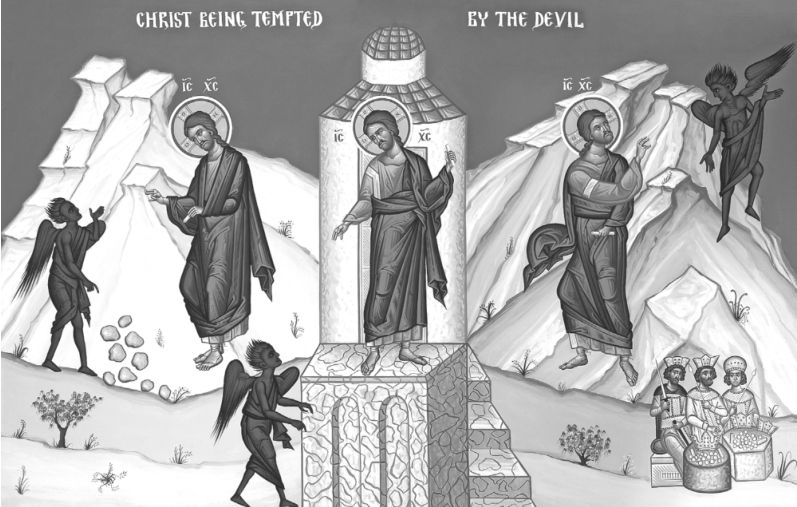
The Enemy of Salvation#
Orthodox Christianity recognizes the reality of the devil and spiritual forces opposed to God. However, the Church does not teach that evil has equal power with God. God alone is eternal and almighty. The devil is a created being who has turned away from God. The Apostle Iakovos writes, “Stand against the devil, and he will flee from you” [Jas. 4:7].
The Passions: The Wounds of the Soul#
The fathers of the Church often spoke about the passions. Passions are not simply human emotions. They are desires that have become disordered and enslave the person. Examples include pride, laziness, greed, anger, envy, lust, despair, and hatred. The purpose of spiritual struggle is to restore human desires to their proper order under God.
Pride: The Root of Spiritual Illness#
The fathers of the Church frequently identify pride as one of the greatest spiritual dangers. Pride separates humanity from God because it places the self above the Creator. The Book of Proverbs says: “Pride goeth before destruction, and a haughty spirit before a fall” [Prov. 16:18]. Humility is the medicine against pride. Christ Himself teaches, “Learn from Me, for I am meek and humble in heart” [Mt. 11:29].
Humility: The Path to Healing#
Orthodox spirituality sees humility as a recognition of the truth, not as a weakness. The humble person sees his dependence upon God and receives His grace. The Virgin Mary expresses this humility: “My soul doth magnify the Lord, and my spirit hath rejoiced in God my Savior” [Lk. 1:46–47]. Through humility, the heart becomes open to God.
Prayer as Spiritual Warfare#
Prayer is one of the greatest weapons in the spiritual struggle. Christ instructs His disciples: “Be watching and praying, that ye enter not into temptation” [Mt. 26:41]. Prayer unites the human heart with God and strengthens the soul against temptation.
Fasting and the Renewal of the Person#
Fasting is an ancient Christian practice of self-control and spiritual discipline. Christ Himself fasted: “And having fasted forty days and forty nights, afterwards He hungered” [Mt. 4:2]. Orthodox fasting entails training the whole person to seek God above earthly desires.
Repentance: The Door of Healing#
Repentance (metanoia) means a change of mind and a turning toward God. The Christian does not repent because God desires punishment but because God desires healing. Christ begins His preaching, “Repent ye and believe ye in the Gospel” [Mk. 1:15]. Repentance restores the relationship between God and humanity.
Confession and Spiritual Guidance#
The Orthodox Church understands Confession as a healing encounter with God’s mercy. Through Confession, believers acknowledge their sins, receive forgiveness, receive spiritual guidance, and begin again in the life of grace. The Apostle John writes, “If we be confessing our sins, faithful is He and righteous to forgive us our sins” [1 Jn. 1:9].
The Jesus Prayer and Watchfulness#
The practice of the Jesus Prayer helps Christians guard the heart: “Lord Jesus Christ, Son of God, have mercy on me.” The fathers teach the importance of nepsis, or spiritual watchfulness. The Apostle Peter says: “Be sober, watch; because your adversary, the devil, as a roaring lion, walketh about, seeking whom he might devour” [1 Pet. 5:8].
The Armor of God#
Saint Paul describes the spiritual protection given to believers: “Put on the full armor of God” [Eph. 6:11]. This armor includes truth, righteousness, faith, salvation, the word of God, and prayer.
The Role of the Holy Spirit#
Human beings cannot overcome sin by their own strength alone. Victory comes through the grace of the Holy Spirit. Saint Paul writes, “Be walking in the Spirit, and in no wise shall ye fulfill the lust of the flesh” [Gal. 5:16]. The Spirit transforms the heart and produces spiritual fruit: “love, joy, peace, long-suffering, kindness, goodness, faith, meekness, self–control” [Gal. 5:22–23].
The Goal: Purification, Illumination, and Theosis#
The Church fathers describe the spiritual journey in three stages:
- Purification: The healing of the heart from sinful passions.
- Illumination: The growth of spiritual understanding through God’s grace.
- Theosis: Participation in the life of God through communion with Christ. This is humanity’s original calling.
The Saints as Witnesses of Victory#
The saints demonstrate that spiritual transformation is possible. They were not people without struggles. They were people who surrendered their struggles to God’s grace. Their lives reveal the words of Saint Paul: “I can do all things in Christ, the One Who empowereth me” [Phil. 4:13].
Conclusion#
Spiritual warfare is the Christian struggle to restore the heart to communion with God. The Orthodox Church teaches that victory comes through prayer, repentance, humility, fasting, the holy mysteries, and the grace of the Holy Spirit. Christ has already conquered sin and death, so the Christian does not fight alone. The final hope of the believer is the promise: “To him, the one overcoming, shall be these things, and I will be God to him and he himself shall be to Me a son” [Rev. 21:7].
Chapter Twenty#
Holy Icons: The Visible Witness of the Invisible God
Among the most distinctive features of Orthodox Christianity is the presence of holy icons in churches and homes. Icons are more than religious decorations or artistic expressions. They are a theological witness to one of the greatest mysteries of Christianity: God has truly become man in Jesus Christ. The Orthodox Church honors icons because the Son of God entered history, took human flesh, and became visible to humanity. The Apostle John preaches “that which was from the beginning, that which we have heard, that which we have seen with our eyes, that which we beheld, and our hands touched, concerning the Logos of the Life” [1 Jn. 1:1]. The incarnation makes Christian images possible.
The Invisible God Revealed Through Christ#
In the Old Testament, God commanded Israel not to make images of Him because He had not yet revealed Himself in visible form. The commandment states: “Thou shalt not make for thyself a carved image” [Ex. 20:4]. This command protected Israel from idolatry because the fullness of God’s revelation had not yet been manifested. However, in the fullness of time, God revealed Himself through His Son. Saint Paul writes that Christ “is the image of the invisible God, the firstborn of all creation” [Col. 1:15]. Christ Himself is the true image of the Father.
The Incarnation as the Foundation of Icons#
The foundation of Orthodox iconography is the mystery of the incarnation. The eternal Logos (Word) became flesh: “And the Logos became flesh and tabernacled among us” [Jn. 1:14]. Because Christ took a visible human body, Christians may depict Him. An icon of Christ confesses:
- He truly became man.
- He entered history.
- He can be seen and known.
- Humanity has been united with God.
To reject the possibility of depicting Christ would deny the reality of His incarnation.
Icons Are Not Idols#
A central teaching of the Orthodox Church is the distinction between an icon and an idol. An idol represents a false god and receives worship belonging only to God. An icon is a representation that directs honor toward the person depicted. The Church worships only the Holy Trinity: Father, Son, and Holy Spirit. Icons receive honor because they testify to God’s saving work.
The Teaching of the Seventh Ecumenical Council#
The Seventh Ecumenical Council, held at Nicaea in the year 787, defended the proper use of holy icons. The council affirmed that icons could be honored because Christ became visible in the flesh. The fathers declared: “The honor paid to the image passes to the prototype.” This means that the respect shown to an icon of Christ is directed to Christ Himself.
The Difference Between Worship and Veneration#
The Orthodox Church distinguishes between latreia, the worship owed to God alone, and proskynesis, the veneration (honor) shown to holy persons and sacred things. The Virgin Mary and the saints are honored because of God’s grace working in them, but they are never worshipped as gods.
The Biblical Witness of Holy Images#
Some people ask whether icons have any place in Biblical faith. Scripture itself provides examples of sacred images. God commanded Moses to make cherubim upon the Ark of the Covenant: “And thou shalt make two cherubim of gold” [Ex. 25:18]. The Temple of Solomon also contained images: “He carved all the walls of the house all around with carved figures of cherubim, palm trees, and open flowers” [3 Kings 6:29]. The problem was never the existence of images; the problem was worshipping created things instead of the Creator.
The Purpose of Icons#
Icons serve several spiritual purposes:
- Icons Teach the Faith: Many people in ancient times could not read, but icons revealed the stories of salvation. They proclaimed the birth of Christ, His miracles, His Crucifixion, His Resurrection, and the lives of the saints.
- Icons Lead the Heart to Prayer: Icons help believers focus their attention on God. They remind Christians that they are surrounded by the communion of saints. The Apostle Paul writes: “We also, having so great a cloud of witnesses which is set around us” [Heb. 12:1].
- Icons Reveal the Transformation of Humanity: Icons of saints show human beings transformed by God’s grace. They testify that holiness is possible and achievable. The saint in an icon is not presented as a worldly hero but as someone who has become a dwelling place of divine grace.
The Icon of Christ#
The icon of Christ is the most important icon because it confesses the truth about the Lord Jesus. Christ is portrayed as the eternal Son of God, the Savior of humanity, the King of glory, and the One Who conquered death. The icon proclaims, “God became man so that man might participate in the life of God.”
The Icon of the Virgin Mary#
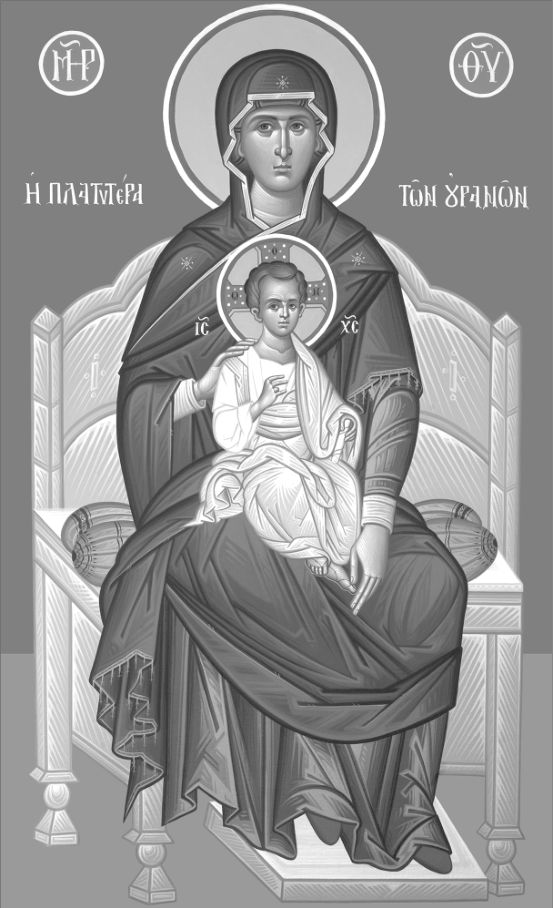
The Orthodox Church gives special honor to icons of the Virgin Mary because she is the Mother of God. Many of her icons have become famous because they work miracles of healing. The Virgin’s icons always point toward Christ. One of the most common images is the Virgin holding Christ, showing that salvation comes through the incarnation of the Son. Mary’s words remain: “Whatsoever He saith to you, do it” [Jn. 2:5].
Icons and the Communion of Saints#
Icons express the unity of the Church in Heaven and on earth, since the saints are not forgotten members of history. They are in fact alive in Christ. Christ says, “God is not the God of the dead, but of the living” [Mt. 22:32]. Icons remind believers that the Church is one body in Christ.
The Icon as a Window into the Kingdom#
The holy fathers often described icons as opening the believer’s heart toward heavenly realities. They direct the mind toward God. An icon invites prayer, contemplation, and communion with Christ.
The Beauty and Theology of Orthodox Iconography#
Orthodox icons follow a spiritual style that differs from ordinary portrait art, attempting to display more than just the subject’s physical appearance. They reveal the person transformed by grace, and features are often portrayed with symbolic meaning.
The Icon and the Human Person#
Because humanity is created in God’s image, every human person has sacred dignity. The icon reminds Christians that salvation is the restoration of the image of God within humanity. Saint Paul writes, “Ye have put off the old man with his practices, and have put on the new that is being renewed toward full knowledge according to the image of the One Who created him” [Col. 3:9–10].
The Defense of Icons and the Victory of Orthodoxy#
The struggle over icons in the eighth and ninth centuries was not simply about art. It concerned the dogmatic truths of Christianity. The question was: If Christ truly became man, can He be depicted? The Orthodox answer was yes. The victory of the defenders of icons is celebrated as the Sunday of Orthodoxy, proclaiming the triumph of the true Faith.
Icons in Orthodox Worship#
Icons surround the worshipper in the Orthodox Church. They are found on the iconostasis, on the walls of the church, in homes, and in places of prayer. They remind believers that worship joins earth with Heaven.
Conclusion#
Holy icons are a profound witness to the central mystery of Christianity: the Logos became flesh. They proclaim that God has revealed Himself in Christ, that matter can be sanctified by God’s grace, that humanity is called to transformation, and that the saints live in communion with God. The Orthodox Church honors icons, fashioned from wood and paint, because they testify to the living reality of Christ and His saints. As Saint John of Damascus (ca. 675–ca. 749) wrote, “I do not worship matter; I worship the Creator of matter, Who became matter for my sake.”
Chapter Twenty-One#
Death, the Departed, and the Hope of Resurrection
The Christian Faith begins with the victory of Jesus Christ over death. The Orthodox Church confesses that death is not the end of human existence but is an enemy that has been defeated through the Resurrection of Christ. Death entered human experience through sin and separation from God, but Christ entered into death Himself and destroyed its power. The Church proclaims: “Christ is risen from the dead; by death hath He trampled down death, and on those in the graves hath He bestowed life.” This is the foundation of the Orthodox hope.
The Origin of Death#
Human beings were created by God for life and communion with Him. The Book of Genesis reveals that death entered the world through humanity’s turning away from God. God warned Adam, “For in the day that ye eat of it ye shall surely die” [Gen. 2:17]. The death caused by sin was the cause of both physical death and, more importantly, spiritual separation from the Source of life. Yet God did not abandon humanity. From the beginning, He prepared the way for salvation.
Christ: The Conqueror of Death#
The central message of Christianity is that death has been defeated by Christ. The Son of God took human nature, entered into death, and rose victorious. The Apostle Paul declares: “Death is swallowed up in victory” [1 Cor. 15:54]. Christ did not simply teach about eternal life; He destroyed the power of death through His own Resurrection.
The Resurrection of Christ as the Foundation of Hope#
The Orthodox Church places the Resurrection at the center of faith. Saint Paul writes: “If Christ hath not been raised, your faith is vain; ye are yet in your sins” [1 Cor. 15:17]. Without the Resurrection, Christianity has no foundation. Because Christ has risen, believers have hope that death is not the final reality.
The Christian Understanding of the Human Person#
Orthodox Christianity understands the human being as a unity of body and soul. The body is not evil or a prison for the soul. God created the human person as a whole. The incarnation confirms the dignity of the body because the Son of God Himself took human flesh. Therefore, salvation includes the resurrection and restoration of the body.
The Separation of Body and Soul at Death#
Death involves the temporary separation of body and soul. The body returns to the earth: “For earth thou art, and to earth thou shalt return” [Gen. 3:19]. But the soul remains in God’s care. The Church prays for the departed because the person continues existing before God.
The Communion Between the Living and the Departed#
The Orthodox Church believes that the unity of the Church continues after death. The Church consists of those living on earth as well as those who have departed this life in faith. Those who belong to Christ remain alive in Him. Thus, from ancient times, Christians have prayed for those who have fallen asleep in the Lord. This practice expresses love for the departed, faith in God’s mercy, and hope in the resurrection. Prayer reflects the continuing love of the Church.
The Memorial Services of the Orthodox Church#
The Orthodox Church remembers the departed through prayers and memorial services. These services are offered shortly after death, at specific periods after burial, and during special days of remembrance. The purpose is not to suggest that God’s judgment can be manipulated but to entrust the departed to His mercy and love.
The Hope of the General Resurrection#
The Orthodox Church teaches that all humanity will experience the resurrection at the end of the age. Christ says, “All those in the graves shall hear His voice, and shall go forth” [Jn. 5:28–29]. The resurrection is not only spiritual survival. It is the restoration of the whole human person. The resurrected body will not simply be a return to earthly weakness. Saint Paul explains, “It is sown an animal body, it is raised a spiritual body” [1 Cor. 15:44].
The Last Judgment#
The Orthodox Church teaches that humanity will stand before Christ at the final Judgment. Christ says: “Before Him shall be gathered all the nations” [Mt. 25:32]. The Judgment reveals the truth of each person’s life and the condition of the heart. God judges with perfect justice and perfect love.
Heaven and Hell: Encounter With God#
Orthodox theology understands Heaven and hell in relation to humanity’s encounter with God’s fiery presence. God is eternal love and light. Those who have been transformed by love experience God’s presence as joy. Those who reject love experience the same presence as suffering. The difference is not that God changes but that human hearts respond differently to Him. Eternal torment is a self-inflicted punishment.
The Mercy and Love of God#
The Orthodox Church emphasizes that God desires the salvation of all. The Apostle Peter writes: “The Lord is not slow as to the promise, as some deem slowness, but is long-suffering toward us, not willing to have any perish” [2 Pet. 3:9]. God’s judgment is always connected with His righteousness and mercy. Yet ultimately, a person’s eternal destiny depends on his free will.
The Funeral Service of the Orthodox Church#
The Orthodox funeral service is filled with hope. It does not deny the sorrow of death, but it places sorrow within the victory of Christ. The Church prays, “Grant rest, O Lord, to the soul of Thy departed servant.” The faithful entrust the departed to God’s compassion while proclaiming the Resurrection.
The Saints and the Departed#
The saints are examples of those who have entered into deeper communion with God. Their lives testify that death cannot separate humanity from Christ. Saint Paul writes, “Neither death nor life...shall be able to separate us from the love of God, which is in Christ Jesus our Lord” [Rom. 8:38–39].
Preparing for Death#
Orthodox spirituality teaches that remembrance of death should lead not to despair but to repentance and wisdom. The psalmist prays: “Make known to me mine end, O Lord, and the number of my days” [Ps. 38:4]. Remembering death helps Christians focus on what is eternal.
The Resurrection as the Final Victory#
The final Christian hope is the renewal of all creation. The Book of Revelation declares, “There shall no longer be death, nor mourning, nor crying” [Rev. 21:4]. God will restore all things through Christ.
Conclusion#
The Orthodox understanding of death is shaped by the Resurrection of Jesus Christ. Death is real, but it is not victorious. The Church proclaims:
- Christ has conquered death.
- The departed remain in God’s care.
- The Church continues to pray for her members.
- All humanity awaits the resurrection.
- God’s Kingdom will have the final word.
The Christian hope is expressed in the words of Christ: “I am the resurrection and the life. The one who believeth in Me, though he die, he shall live” [Jn. 11:25].
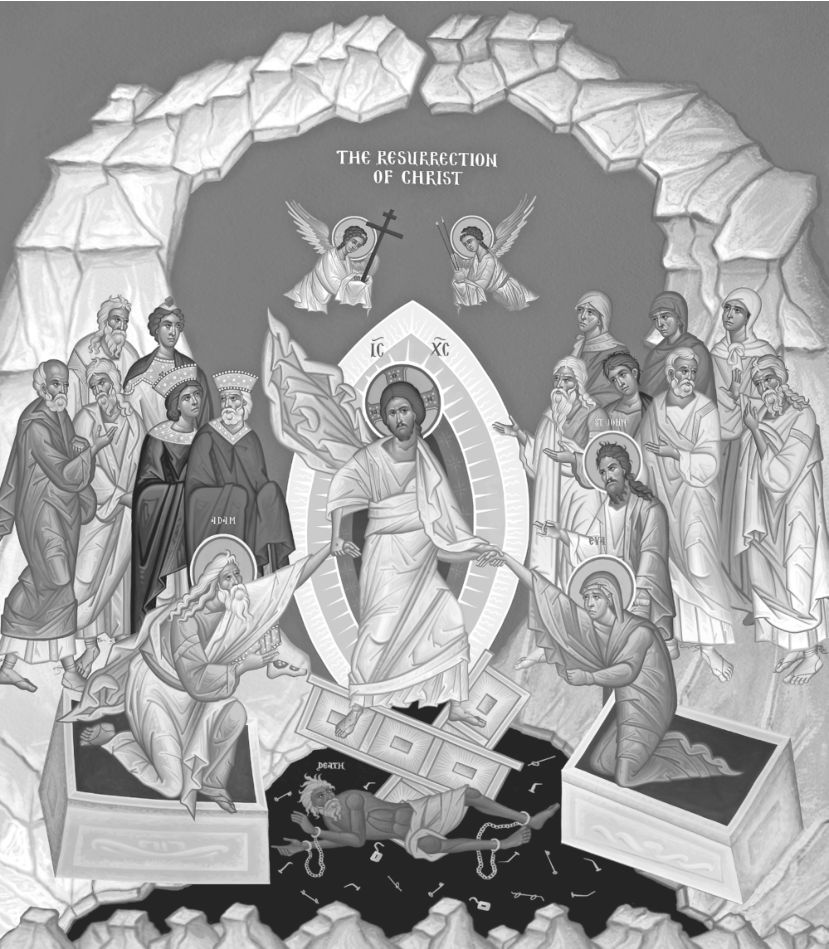
Chapter Twenty-Two#
Marriage, Family, and the Christian Home as a Domestic Church
The Orthodox Church understands marriage and family life as sacred gifts from God. The Christian home is not merely a place where people live together; it is called to become a place where God is worshipped, love is practiced, and faith is passed from one generation to another. The family is often described by the fathers as a domestic church because the home becomes a small expression of the life of the Church. The Apostle Paul explains, “I write in order that thou mayest know how one ought to be conducting oneself in the house of God, which is the Church of the living God” [1 Tim. 3:15]. The Christian family is called to reflect the love and holiness of God’s household.
Marriage in the Beginning of Creation#
Marriage was established by God from the beginning of creation. The Lord says in the Book of Genesis: “It is not good that man should be alone; I will make him a helper suitable for him” [Gen. 2:18]. God created man and woman for communion, love, and mutual support. The union of husband and wife reveals that human beings are created for relationship.
The Mystery of One Flesh#
Genesis teaches: “Therefore a man shall leave his father and mother and be joined to his wife, and they shall be into one flesh” [Gen. 2:24]. Marriage is more than a legal agreement or social arrangement. It is a mysterious union in which two persons are joined together in love before God. Christ confirms this teaching: “Therefore they are no longer two, but one flesh. What therefore God yoked together, let not man separate” [Mt. 19:6].
Christ Blesses Marriage#
The first miracle performed by Christ took place at a wedding in Cana of Galilee. The Gospel says: “This did Jesus in Cana of Galilee as the beginning of the signs, and it made manifest His glory” [Jn. 2:11]. By attending the wedding and transforming water into wine, Christ revealed the sanctity and dignity of marriage.
Marriage as a Sacrament of the Church#
In Orthodox Christianity, marriage is one of the holy mysteries because it becomes a means through which God’s grace works in the lives of husband and wife. The goal of marriage is not only companionship but mutual growth in holiness. A husband and wife are called to help each other become closer to God.
The Image of Christ and the Church#
The Apostle Paul gives the deepest Christian understanding of marriage: “Husbands, be loving your own wives, even as the Christ also loved the Church and gave Himself up for her” [Eph. 5:25]. Christian marriage reflects the relationship between Christ and His Church. The husband is called to sacrificial love. The wife is called to faithful love and cooperation. Both are called to humility and self-giving.
Love as Sacrifice#
The foundation of Christian marriage is sacrificial love, not simply affectionate feelings. Christ teaches, “Greater love hath no one than this, that one should lay down his life for his friends” [Jn. 15:13]. Marriage becomes a path of salvation when spouses learn patience, forgiveness, humility, and service.
The Role of Prayer in Marriage#
A Christian marriage cannot be sustained by human strength alone. Prayer invites God into the relationship. The couple is called to pray together, for one another, and with their children. A home without prayer easily becomes centered only on earthly concerns, while a praying home becomes oriented toward God’s Kingdom.
The Christian Family as a School of Virtue#
The family is the first place where children learn love, forgiveness, compassion, faith, and responsibility. Parents have a sacred responsibility to guide their children toward God. The Apostle Paul writes, “Be nurturing them in the instruction and admonition of the Lord” [Eph. 6:4].
Raising Children in the Faith#
Orthodox Christianity teaches that children are gifts entrusted by God. Parents are called to introduce children to prayer, Scripture, the Divine Liturgy, the holy mysteries, and the lives of the saints. Faith is taught both by words and by example.
The Christian Home as a Place of Prayer#
Traditionally, Orthodox homes contain holy icons, a prayer corner, Scripture, and a place for daily prayer. The purpose is to remind the family that Christ is present in their daily life. The Lord says: “Where two or three are gathered together in My name, there am I in the midst of them” [Mt. 18:20].
Family and Forgiveness#
No family is free from difficulties. The Christian family will also have problems, but these should be overcome by patience and forgiveness. Christ teaches, “Keep on acquitting, and ye shall be acquitted” [Lk. 6:37]. Forgiveness protects love from becoming wounded by pride and resentment.
The Family and the Wider Church#
The Christian family exists in and with the Church. The family participates in the Divine Liturgy, Communion, Confession, feasts, and service to others. The home and the Church strengthen one another.
The Challenges Facing Christian Families#
Every generation faces challenges that threaten family life: selfishness, materialism, lack of prayer, disrespect, and forgetfulness of God. The Orthodox response should be courage and faithfulness. Families are strengthened when Christ remains at the center.
Marriage as a Journey Toward Theosis#
The ultimate purpose of marriage is the transformation of persons through divine grace. Husband and wife are called to become more like Christ through love, patience, sacrifice, prayer, and forgiveness. Marriage becomes a path toward holiness. Many saints taught that a holy marriage is a powerful witness to the world. The fathers emphasized that true Christian love begins with humility and service. A home filled with love becomes a place where God’s presence is revealed.
Conclusion#
The Orthodox Church sees marriage and family as sacred gifts through which God continues His work in the world. The Christian home is called to become a place of prayer, a school of virtue, a refuge of love, and a witness to Christ. When Christ is the foundation of family life, the home becomes a small church, reflecting the love of the Father, the grace of the Son, and the communion of the Holy Spirit. As Joshua (Jesus of Navee) declared: “But as for me and my house, we will serve the Lord” [Josh. 24:15].
Chapter Twenty-Three#
The Orthodox Church: The Unbroken Witness of Apostolic Christianity in the Modern Age
The Orthodox Church enters the modern world carrying the same Faith that was preached by Jesus Christ, proclaimed by the apostles, defended by the fathers, and preserved through the centuries. The Orthodox understanding of the Church is not based on being a new religious movement or a restoration of something lost. Rather, the Orthodox Church understands herself as the continuation of the one Church founded by Christ and entrusted to the apostles. Christ promised: “I will build My Church, and the gates of Hades shall not prevail against her” [Mt. 16:18]. The Church exists because Christ sustains her through the Holy Spirit.
The Church Founded by Christ#
The Orthodox Church teaches that the Church was established by Christ Himself. Christ gathered the apostles, taught them His Gospel, gave them authority, and sent them into the world. He said: “Even as the Father hath sent Me forth, I also send you” [Jn. 20:21]. The mission of the apostles continues through the life of the Church.
The Apostolic Foundation of the Church#
The Church is described in Scripture as being built upon the foundation of the apostles. Saint Paul describes it as “built up on the foundation of the apostles and prophets, Jesus Christ Himself being the cornerstone” [Eph. 2:20]. The foundation is historical, spiritual, and living. The Church continues to confess the same Christ preached by the apostles.
Apostolic Succession: The Continuation of Ministry#
Apostolic succession refers to the continuation of the apostolic ministry through bishops who receive ordination in an unbroken line from the apostles. The apostles appointed successors to continue teaching and shepherding the Church. Saint Paul instructed Timothy: “The things which thou heardest from me in the midst of many witnesses, commit thou these things to faithful men who shall be competent also to teach others” [2 Tim. 2:2]. Through this succession, the Church preserves the apostolic teaching.
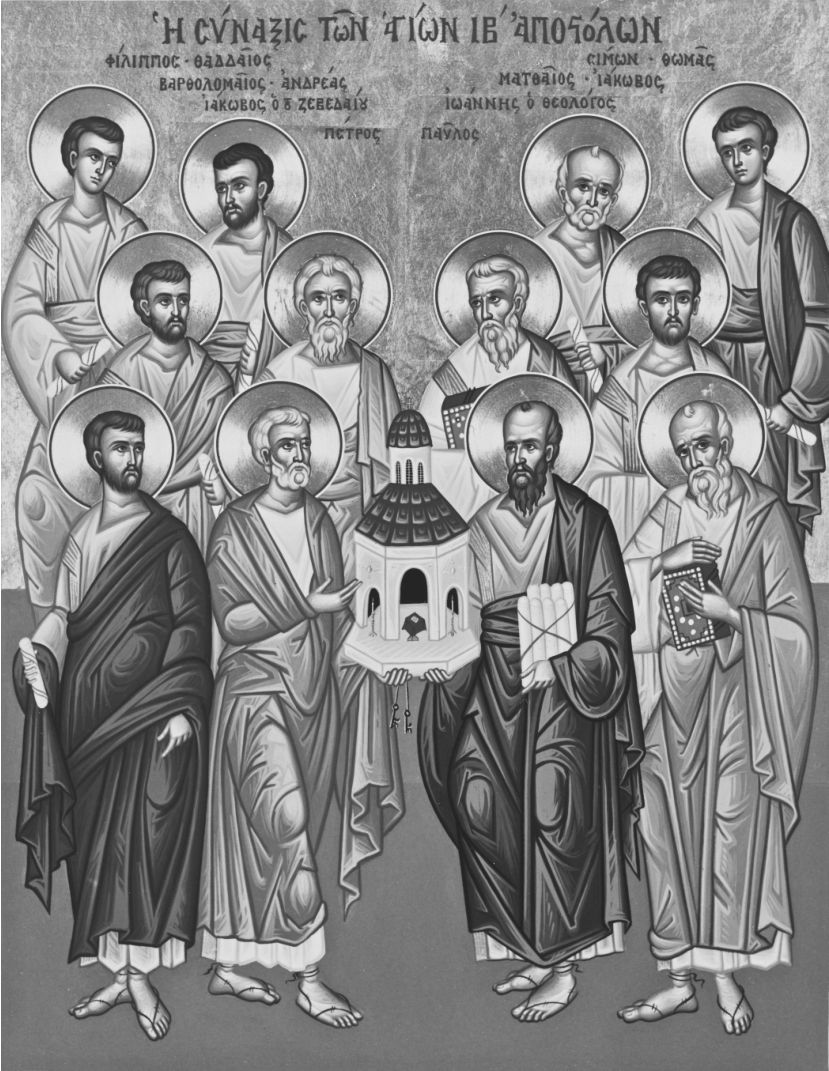
The Orthodox Faith Through the Centuries#
Throughout history, the Orthodox Church has experienced persecutions, empires rising and falling, cultural changes, political difficulties, and external challenges. Yet the Faith has remained, because its foundation is Christ. The Apostle Paul writes, “Jesus Christ, the same yesterday and today and to the ages” [Heb. 13:8].
The Church and the Modern World#
The Orthodox Church lives within the modern world but does not measure truth according to every changing idea of society. Her calling remains the same:
- To proclaim Christ
- To offer salvation
- To call humanity to repentance
- To reveal the Kingdom of God
The Church engages the world with love while remaining faithful to the Gospel.
Preserving Truth in a Changing Age#
Every generation faces temptations to replace eternal truth with temporary opinions. The Orthodox Church believes that truth does not depend on human preference. Christ declares: “I am the way, and the truth, and the life” [Jn. 14:6]. The Church preserves the complete truth because she preserves communion with Christ.
The Mission of the Orthodox Church#
The mission of the Church is the salvation and transformation of humanity. This mission includes:
- Proclaiming the Gospel: Christ commanded, “Go into all the world and proclaim the Gospel to the whole creation” [Mk. 16:15].
- Making Disciples: The Church continues Christ’s command to “make disciples of all nations” [Mt. 28:19].
- Bringing People Into Communion With God: Through the holy mysteries, believers participate in divine life.
The Orthodox Witness Through Worship#
The worship of the Orthodox Church remains one of her greatest witnesses. The Divine Liturgy preserves ancient prayers, apostolic Faith, Eucharistic worship and the confession of the Trinity. When Orthodox Christians worship, they join the same stream of prayer that has flowed through generations.
The Example of the Saints#
The saints demonstrate that the Orthodox Faith is not only a system of beliefs but a life transformed by God’s grace. They reveal that holiness is possible through prayer, repentance, love, sacrifice, and faithfulness. Christ says: “By their fruits ye shall fully know them” [Mt. 7:20].
The Orthodox Church and Christian Unity#
The Orthodox Church prays for unity among Christians according to the will of Christ. Christ prayed “in order that all may be one, even as Thou, Father, art in Me, and I in Thee” [Jn. 17:21]. The Orthodox understanding of unity is based on unity in the truth and life of Christ.
The Church as a Spiritual Hospital#
The fathers often described the Church as a hospital for wounded humanity. The Church offers healing through repentance, Confession, the Eucharist, prayer, and the grace of the Holy Spirit. Christ came both to teach humanity and also to heal and restore it. He said, “They who are strong have no need of a physician, but they who are ill” [Mt. 9:12].
The Orthodox Understanding of Freedom#
The modern world often understands freedom as doing whatever one desires. Orthodox Christianity understands true freedom differently. True freedom is freedom from slavery to sin and the ability to love God and others. Christ teaches: “Ye shall know the truth, and the truth shall set you free” [Jn. 8:32].
The Hope of the Church#
The Church does not place her ultimate hope in earthly powers, political systems, or human achievements. Her hope is the Kingdom of God. Christ teaches, “My kingdom is not of this world” [Jn. 18:36]. The Church awaits the fulfillment of all things in Christ.
The Orthodox Call to the Faithful#
Every Orthodox Christian is called to become a witness of Christ through daily life. This means living with humility, showing mercy, forgiving others, pursuing holiness, and remaining faithful to the Gospel. The world encounters Christ through the lives of His followers.
Conclusion#
The Orthodox Church understands herself as the continuing witness of the apostolic Faith founded by Christ, built upon the apostles, guided by the Holy Spirit, preserved through the holy fathers, and nourished by the holy mysteries. Her message remains unchanged: Jesus Christ is Lord, the Savior of humanity, and the source of eternal life. As Saint Jude writes: “Contend for the Faith which was once for all delivered to the saints” [Jude 3]. The Orthodox Church continues to proclaim this ancient and living Faith, awaiting the fulfillment of God’s Kingdom: “Behold, I make all things new” [Rev. 21:5].
Chapter Twenty-Four#
The Fullness of the Orthodox Faith: Remaining in the Apostolic Church Until the End
The journey through the history, teachings, worship, and spiritual life of the Orthodox Church leads us to one central truth: Christianity is a living communion with Jesus Christ. The Orthodox Church recognizes that the Faith entrusted by Christ to the apostles has been preserved through the Holy Spirit, handed down through apostolic succession, guarded by the holy fathers, confessed by the ecumenical councils, and lived through the holy mysteries. The Church, as more than just an institution of history, exists as the mystical body of Christ, continuing His saving work in the world. The Apostle Paul writes, “Now ye are the body of Christ, and members severally” [1 Cor. 12:27].
The One Faith Delivered by Christ#
The foundation of Orthodox Christianity is not human wisdom or theological speculation but rather divine revelation. Christ came into the world to reveal the Father and restore humanity to communion with God. The Gospel declares: “And this is the eternal life, that they may know Thee, the only true God, and Jesus Christ Whom Thou didst send forth” [Jn. 17:3]. The purpose of Christianity is union with God through the revealed knowledge of Jesus Christ.
Remaining in the Apostolic Faith#
The apostles received the Gospel from Christ and faithfully transmitted it to the Church. The Apostle Paul reminds believers: “I delivered to you in the first place what I also received” [1 Cor. 15:3]. The Orthodox Church sees herself as a guardian of this apostolic inheritance. The same Faith proclaimed by the apostles continues through the Scriptures, Holy Tradition, the Divine Liturgy, the mysteries, and the teachings of the fathers.
The Church as the Ark of Salvation#
The fathers often compared the Church to the ark of Noah. Just as Noah’s ark preserved life during the Flood, the Church preserves humanity through the storms of sin and death. The Church does not save by human power but because Christ is present within her. Christ says, “I am with you all the days until the completion of the age” [Mt. 28:20].
The Importance of Apostolic Succession#
Apostolic succession is the continuation of the apostolic ministry, teaching, and spiritual authority given by Christ. It involves both a historical chain of ordinations and the preservation of correct doctrine. Through the bishops and clergy, the Church continues the preaching of the apostles, the celebration of the Eucharist, and the shepherding of God’s people. The Church today remains connected to her beginning.
The Holy Eucharist: The Center of Church Life#
The Orthodox Church understands the Eucharist as the deepest expression of communion with Christ. Christ promises, “The one who eateth My flesh and drinketh My blood abideth in Me, and I in him” [Jn. 6:56]. The Eucharist reveals the purpose of the Church: humanity united with God through Jesus Christ.
The Holy Fathers: Faithful Witnesses#
The fathers of the Church are honored because they preserved the apostolic teaching. They defended the Holy Trinity, the incarnation, the true worship of God, and the hope of salvation. Their authority comes from their faithfulness to Christ, not from eloquence or personal invention. As Saint Irenaeus taught, the Church preserves the Faith received from the apostles and transmits it throughout the world.
The Saints: The Evidence of God’s Grace#
The saints are living witnesses that the Gospel transforms human beings. They show that holiness is attainable and is the purpose for which humanity was created. God tells His people even in the Old Testament: “Become holy, for I am holy” [cf. Lev. 11:44; 1 Pet. 1:16]. The saints reveal the beauty of a life united with God. Therefore, “Wonderful is God in His saints” [Ps. 67:33].
The Call to Repentance and Renewal#
Remaining in the Church requires more than external membership. Christ calls every believer to continual repentance and spiritual renewal. He says, “Repent ye and believe ye in the Gospel” [Mk. 1:15]. Repentance restores the heart and brings humanity back into communion with God.
The Orthodox View of Salvation#
Orthodox Christianity understands salvation as healing and transformation. Humanity is not merely forgiven; humanity is restored. The Son of God became man to heal human nature, to defeat death, to restore communion with God, and to make humanity participants in divine life. This is the mystery of theosis.
The Church in the Last Days#
The Orthodox Church lives with hope and expectation of Christ’s return. Christ promised: “Again I am coming, and will receive you to Myself, that where I am ye may be also” [Jn. 14:3]. The Church awaits the Kingdom of God with faith and prayer.
The Final Victory Belongs to Christ#
History contains struggles, persecutions, and difficulties, but the Church trusts in Christ’s victory. The Lord declares, “In the world ye shall have affliction; but be of good courage, I have overcome the world” [Jn. 16:33]. The victory of Christianity depends only on faithfulness to Christ, through His grace.
The Responsibility of Orthodox Christians#
Those who receive the Orthodox Faith are called to live it. This means loving God, loving neighbor, remaining faithful to the Church, participating in prayer and the mysteries, and becoming witnesses of Christ. The world should see the Gospel through transformed lives.
A Final Exhortation to Remain Faithful#
The Apostle Jude gives this command: “Keep yourselves in the love of God, awaiting the mercy of our Lord Jesus Christ unto life eternal” [Jude 21]. The Orthodox Christian calling is perseverance: to remain faithful in truth, to remain steadfast in love, and to remain united with Christ.
Conclusion#
The Orthodox Church confesses that the Faith received from Christ and the apostles continues unchanged through the centuries. She preserves the apostolic teaching, the sacramental life, the worship of the early Church, the wisdom of the fathers, and the hope of the resurrection. The invitation of Christ remains open to every generation: “Abide in Me, and I in you” [Jn. 15:4]. The fullness of the Orthodox Faith is found not merely in knowing teachings but in a living communion with the living God. To remain in Christ is to remain in the life, truth, and hope of His holy Church.
Appendix#
The One Church of Christ: The Ark of Salvation in the Midst of Apostasy
An Orthodox Patristic Reflection on Canonical Communion, Apostolic Tradition, and the Peril of Religious Innovation
“I will build My Church; and the gates of Hades shall not prevail against her.”
—Our Lord Jesus Christ, Matthew 16:18
Introduction: One Christ, One Faith, One Church#
Beloved in Christ, in an age of confusion, religious multiplication, doctrinal innovation, and spiritual uncertainty, the Christian soul must return to the question which is older than every modern denomination and more important than every theological fashion: Where is the Church of Christ? For Christianity did not begin as a marketplace of competing interpretations. It did not begin with thousands of independent assemblies, each founded according to the inspiration of a particular preacher. It began with Christ, the eternal Son of God, Who called the apostles, breathed upon them the Holy Spirit, commanded them to preach the Gospel, and promised to remain with His Church until the end of the age. Our Lord did not say: “I will build many churches.” He said: “I will build My Church.” And Saint Paul declares, “There is one body, and one Spirit,…one Lord, one Faith, one Baptism” [Eph. 4:4–5]. This is the foundation of Orthodox ecclesiology.
The Orthodox Church is not merely one denomination among many competing interpretations of Christianity. She confesses herself to be the one, holy, catholic and apostolic Church, the Church which has received, preserved, worshipped, and transmitted the apostolic Faith throughout the centuries. This claim is made only in order to glorify Christ, not because of human arrogance. For if Christ founded one Church, then faithfulness to Christ cannot be separated from faithfulness to His Church.
I. The Church Belongs to Christ#
The Church is not the possession of bishops. She is not the possession of priests. She is not the possession of emperors. She is not the possession of theologians. She belongs to Christ. Saint Paul says, “Christ also loved the church, and gave Himself for her” [Eph. 5:25]. The Church is therefore the bride purchased by the blood of the Bridegroom. She is the body whose Head is Christ. She is the household in which God dwells. She is the temple of the Holy Spirit. She is the ark upon the waters of this passing age. She is the visible communion through which the apostolic Faith has been handed down. This is why the Church cannot be reconstructed according to every generation’s preferences. A man may establish a school or a society or an organization. A man may gather followers. But no man can become the founder of Christ’s Church, because the Church already has her Founder. Her foundation is Christ. Her apostles are chosen by Christ. Her Gospel comes from Christ. Her mysteries (sacraments) are given by Christ. Her unity comes from Christ. Her life is the Holy Spirit.
II. The Testimony of Saint Ignatius of Antioch#
One of the earliest witnesses of ancient Christianity after the apostles is Saint Ignatius of Antioch, a bishop and martyr who wrote at the beginning of the second century. His testimony is striking because it reveals how Christians understood the Church before the rise of modern denominationalism. Saint Ignatius repeatedly emphasizes unity around the bishop and the Eucharist. For him, the Christian life was not that of an isolated believer privately interpreting Christianity. The faithful belonged to a concrete Eucharistic community. They gathered around their bishop. They received the Eucharist. They confessed the same Faith. They lived in communion. This ancient pattern remains visibly preserved in Orthodoxy. The bishop is not an independent religious entrepreneur. The priest is not a self-appointed spiritual authority. The Eucharist is not private religious symbolism. The Church is a communion. And communion is not possible without unity in faith. Saint Ignatius’ ancient witness therefore stands as a powerful reminder to modern Christians: Christianity was Eucharistic, episcopal, sacramental, and communal from the beginning.
III. Saint Cyprian: “Outside the Church There Is No Salvation”#
The great African father, Saint Cyprian of Carthage, spoke with extraordinary force about the unity of the Church. His famous teaching is traditionally expressed: “He cannot have God for his Father who has not the Church for his mother.” And again: “There is one God, and Christ is one, and there is one Church.” The language is severe because the issue is severe. Saint Cyprian did not understand the Church as an optional spiritual accessory. To him, disobedience and separation from the Church meant spiritual death. One’s preferred style of worship is irrelevant. The Church was the divinely established communion in which the Christian lived in Christ. This means that deliberate separation from the Church should never be treated as spiritually insignificant. The Christian should desire communion with the Church Christ established.
IV. Saint Irenaeus and the Apostolic Succession#
Saint Irenaeus of Lyons confronted heresies by pointing Christians back to the apostles and their successors. His argument was simple and profound: If someone claims to possess a secret or superior Christianity, where is this supposed faith found in the apostolic Church? The apostles openly preached the Gospel. The bishops succeeded them. The Church preserved the teaching. Therefore, the Christian does not need to chase after secret revelations or new spiritual inventions. The truth is not hidden in the imagination of an individual. It is publicly proclaimed in the Church. This is one of the great strengths of canonical Orthodoxy. The Orthodox Christian can trace the Church’s episcopal and sacramental life through the centuries. The only question he needs to ask is: “Where is this found in the apostolic tradition?” If a doctrine was only recently invented, that is proof of its falsity.
V. Saint Athanasius: Orthodoxy Against the World#
Consider the example of Saint Athanasius the Great. There were times when the Christian world appeared to be overwhelmed by theological confusion. Powerful people, even emperors, opposed him. Councils were manipulated. The truth appeared politically weak. Yet Athanasius stood firm. Why? Because truth is not determined by political power or by popularity or by the number of signatures on a document. Truth is determined by Christ. The life of Saint Athanasius teaches an enduring lesson: The Church must never alter the Faith merely because the world has changed. The Church is not called to follow the age. She is called to sanctify the age.
VI. Saint Basil and the Holy Tradition#
Saint Basil the Great reminds us that the Christian Faith cannot be reduced to isolated Biblical quotations detached from the worship and life of the Church. The apostolic inheritance includes what has been publicly confessed, sacramentally celebrated, and handed down within the Church. This is why Orthodoxy refuses the false choice between Scripture and tradition. Holy Scripture is not opposed to Holy Tradition. Scripture exists within the Church. The Church received the apostolic writings. The Church preserved them. The Church proclaimed them. The Church interpreted them in the light of the apostolic Faith. The Christian therefore reads Scripture not as an isolated individual standing above two thousand years of Christian worship but as a member of the Church. This is the Orthodox mind.
VII. Saint John Chrysostom: The Church as the Place of Healing#
Saint John Chrysostom constantly called Christians to repentance. For him, the Church was a place of conversion and healing. The Christian enters with wounds. He leaves with a new outlook. He comes burdened by sin. He hears the Gospel teaching restoration. He confesses, fasts, prays, receives the holy Mysteries. He is taught to forgive. He is taught to love. He is taught to carry the Cross. This is why belonging to the Church cannot be reduced to having one’s name on a membership register. The question is not merely: “Am I Orthodox?” The deeper question is: “Am I living the Orthodox life?” For a man may call himself Orthodox and still live like a pagan. The Church gives us the medicine of salvation, but we must willingly receive it.
VIII. The Seven Ecumenical Councils: The Church Guarding the Faith#
The history of the ecumenical councils demonstrates another truth: the Church treats correct doctrine as an essential element of true Christianity, not simply as a matter of personal taste. At Nicaea, the Church confessed the true divinity of the Son. At Constantinople, she confessed the divinity of the Holy Spirit. At Ephesus, she defended the truth of the incarnation and confessed the Virgin Mary as Theotokos, because the One born from her is truly God incarnate. At Chalcedon, she confessed Christ as truly God and truly man. At the Seventh Ecumenical Council, she defended the veneration of holy icons. Why did the fathers struggle so fiercely? Because they knew that distorted theology produces distorted practice. If Christ is not truly God, what does His incarnation mean? If Christ is not truly man, what does His suffering mean? If the Holy Spirit is not truly God, how can He sanctify us? If the incarnation is not real, what becomes of salvation? The fathers therefore defended dogma because they defended the Gospel of salvation.
IX. Icons and the Incarnation#
The Seventh Ecumenical Council gives us another profound insight. The Christian Faith is founded upon the truth that “the Logos (Word) was made flesh” [Jn. 1:14]. God became visible. The invisible God entered history, and the Son of God assumed human nature. Therefore, the Church can proclaim the reality of the incarnation through sacred images. The Christian does not worship matter as a deity, and the icon does not replace God. Rather, the honor shown to the icon passes to the prototype. The icon declares: Christ truly came in the flesh. The Church therefore proclaims the incarnation through the whole architecture of her worship, with both words and painted images.
X. The Divine Liturgy: Heaven on Earth#
Enter an ancient Orthodox temple during the Divine Liturgy. The candles burn, the incense rises, the icons surround the faithful, the choir sings. The priest stands before the holy Table. The Gospel is proclaimed. The people pray, “Lord, have mercy.” Then comes the terrifying and glorious moment: “Thine own of Thine own, we offer unto Thee, in behalf of all and for all.” The Eucharistic mystery unfolds, the Church on earth stands in communion with the heavenly hosts, and the cherubim are mystically represented. The angels worship, the saints are remembered, the Mother of God is magnified, and the faithful approach the chalice. This is the manifestation of the Kingdom, present now. This is why Orthodox Christianity cannot be reduced to intellectual assent. Orthodoxy is lived. It is prayed, fasted, confessed, sung, received, carried, suffered. It is ultimately offered back to God.
XI. The Church as the Ark#
The ancient image of Noah’s ark remains one of the most powerful ways of understanding the Church. God gave Noah the pattern of the ark; Noah did not invent his own. The waters came, and the world outside was submerged, but the ark remained afloat. The fathers saw in this an image of the Church. The vast majority of humanity perished outside of it, and only eight souls survived the Cataclysm. And “Even as the days of Noah were, so also shall be the coming of the Son of Man” [Mt. 24:37]. Only a small number will be saved out of a great sea of apostasy, but the Church will sail safely through the storm. There will be heresies and schisms, persecutions, and scandals. There will be weak bishops, sinful priests, and hypocritical Christians. There will be periods when the Church appears weak before the world. But none of these things invalidate Christ’s promise: “The gates of Hades shall not prevail against her” [Mt. 16:18].
XII. The Great Apostasy and the Spirit of the Age#
The Scriptures warn repeatedly about deception before the end. Saint Paul speaks of a great falling away [2 Thess. 2:3]. Christ warns of false prophets [Mt. 7:15]. The apostles warn against false teachers [2 Pet. 2:1]. These warnings should make the Orthodox Christian sober. The danger is not merely that people will cease to believe in God. The more subtle danger is that man may try to reshape Orthodox Christianity until it no longer resembles the apostolic Faith. The name of Christ may remain. The Cross may remain. The Bible may remain. Religious language may remain. But the content of the Faith can gradually be changed. Repentance can become self-esteem, holiness can become prosperity, the Cross can become entertainment, the Gospel can become motivational speech, the Church can become a business, the pastor can become a celebrity, the congregation can become an audience, and salvation can become a product. Against this spirit, canonical Orthodoxy raises the ancient Cross. “Remember the Faith of the fathers.”
XIII. The Problem of Religious Innovation#
The Orthodox Church must therefore be cautious about religious movements that depend fundamentally upon the authority of a recent founder or individual interpreter. Many people sincerely love Christ and sincerely seek God. But sincerity alone cannot determine theological truth. Saul of Tarsus was sincere before his conversion, yet sincerity did not make his understanding correct. The Christian therefore needs more than sincerity; he needs truth. And truth must be measured against the apostolic Faith. The question is therefore: Did Christ teach this? Did the apostles teach this? Did the ancient Church confess this? Is it consistent with the fathers and ecumenical councils? Has this teaching been preserved in the sacramental life of the Church? If the answer is no, the Christian must reject it. The Lord Jesus Christ established only one true Church in which we may be saved, not 50,000 churches, and these other churches cannot lead to salvation, since they, by the prompting of the devil, have altered the pure teachings of the apostles and holy fathers.
XIV. “Test the Spirits”#
Saint John commands: “Beloved, cease believing every spirit, but keep on putting the spirits to the test, if they are of God” [1 Jn. 4:1]. This command is especially relevant in an age of countless teachers. Every Christian must become discerning. A beautiful sermon is not necessarily an Orthodox sermon. A large congregation is not necessarily evidence of truth. A miracle claim is not necessarily proof of divine approval. A charismatic preacher is not necessarily a saint. A successful ministry is not necessarily the Church. The apostle tells us to test. The Orthodox Christian therefore tests everything against the apostolic Faith.
XV. The Canonical Church and the Danger of Schism#
The word canonical reminds us that the Church possesses an ordered life. The canonical Orthodox Church is not merely a collection of people who happen to use Byzantine worship. She possesses bishops, priests, deacons, holy mysteries, canonical structures, and communion with the legitimate Orthodox churches. This matters because Christianity is not simply an invisible collection of individuals. The Church is visible: she gathers, she baptizes, she ordains, she celebrates the Eucharist, she receives converts, she disciplines her members, she buries her dead, she blesses marriages, she proclaims the Gospel, she prays for the living and the departed. She carries the faithful through the whole journey from Baptism to the grave. To deliberately abandon canonical communion should therefore never be regarded as a trivial matter. Many modern churches call themselves “Orthodox,” but they are preaching the heresy of Ecumenism, which denies that there is only one true Church and claims that even Christians who teach false doctrines can also be saved. These Ecumenist churches cannot be considered canonical.
XVI. But the Orthodox Must Never Become Proud#
Here the Orthodox Christian must tremble, because simply belonging to the true Church and upholding correct dogmas is no guarantee of salvation. The doctrine of the one Church can be transformed into a weapon of pride if it is separated from repentance. A man may say: “I am Orthodox.” But does he forgive? Does he pray? Does he fast? Does he repent? Does he love his enemies? Does he care for the poor? Does he confess his sins? Does he control his tongue? Does he carry the Cross? If not, his Orthodox identity becomes a condemnation rather than a crown. The apostle warns, saying: “The one who thinketh he standeth, let him take heed lest he should fall” [1 Cor. 10:12]. We do not enter the Church in order to boast. We enter the Church because we are sick, because we need Christ, because we need mercy, because we need salvation. Therefore the Orthodox Christian should say: “I am Orthodox by the mercy of God, not by my own righteousness.”
XVII. Do We Judge Those Outside?#
The Church teaches us to confess the truth without pretending to occupy God’s judgment seat. We can say confidently: The Orthodox Church confesses herself to be the only one, holy, catholic and apostolic Church. We can say: The fullness of the sacramental life is found in the canonical Orthodox Church. We can say that separation from the Church is spiritual death. But we do not presume to pronounce the eternal fate of every individual who is not visibly Orthodox. Christ is the Judge. He alone pronounces the judgment on every soul and knows every heart. He alone knows the condition and circumstances of every person; He knows what every person has rejected, received, or never encountered. Therefore, our confession of the Faith of our loving God should not be construed as hatred; it is a witness—not arrogance but hope for repentance, not condemnation but proclamation of Christ’s truth.
XVIII. The Last Word Belongs to Christ#
The world will pass. Civilizations will pass. Political systems will pass. Modern ideologies will pass. Religious fashions will pass. But Christ remains. “Jesus Christ, the same yesterday and today and to the ages” [Heb. 13:8]. The Church therefore does not need to reinvent Christ. She needs to proclaim Him. She does not need to improve the Gospel but needs to preserve it. She does not need to manufacture a new apostolic tradition but rather to remain faithful to the one she received. This is the Orthodox vocation.
Conclusion: Stand in the Church#
Beloved Christian, the age in which we live is not an age for spiritual carelessness. It is an age for vigilance. Christ warned: “Be taking heed, lest anyone lead you astray” [Mt. 24:4]. The apostles warned: “Test the spirits.” The fathers warned: Guard the Faith. The martyrs proclaimed that Christ is worth dying for. The ecumenical councils confessed: The apostolic Faith cannot be altered. The Divine Liturgy proclaims, “Christ is in our midst.” And the Church continues to cry, “Come and receive the body of Christ.” Therefore, once you are united to the true Orthodox Church, do not treat that inheritance lightly. You have received something that did not begin with you. It came through the apostles, the martyrs, the bishops, the fathers, the ecumenical councils, through generations who prayed, suffered, fasted, and died confessing Christ. You have inherited the Faith of those who stood against emperors rather than deny the truth. You have inherited the worship of those who entered the catacombs rather than abandon Christ. You have inherited the prayers of monks who spent their lives crying: “Lord Jesus Christ, Son of God, have mercy on me.” Guard this inheritance and do not exchange it casually for novelty. Do not despise the fathers. Do not abandon the ancient Faith because the world considers it old. For what the world calls old may be precisely what the apostles handed down. And what the world calls new may be precisely what the apostles warned us to examine. Remain in Christ, remain in His Church, remain in the apostolic Faith, remain at the altar, remain beneath the Cross, remain faithful to the holy mysteries, and remain watchful until the end. For the Bridegroom shall come, the trumpet shall sound, the dead shall rise, the books shall be opened, the King shall appear, and the Church shall behold her Lord. Then every earthly distinction will disappear before His glory. The only lasting treasure will be Christ Himself. Therefore let us not merely call ourselves Orthodox. Let us live Orthodox. Let us repent Orthodox. Let us pray Orthodox. Let us forgive Orthodox. Let us worship Orthodox. Let us die in Christ. And, by His mercy, let us rise with Him—one Lord, one Faith, one Baptism, one body, one Eucharist, one Church, one Kingdom, one King, Jesus Christ, our Lord and God. To Him, together with His eternal Father and His all-holy, good and life-giving Spirit, belong all glory, honor and worship, both now and ever, and unto the ages of ages.
Amen.
The End
And to God be the glory!
Afterword#
The reader must understand: We are living through the greatest heresy in the history of the Church, Ecumenism. The Great Apostasy has swallowed up almost the entire world in heresy. We are living in the last times. Do not get caught in World Orthodoxy, which is a deception that clothes its own apostasy with a semblance of legitimacy. “Enter through the narrow gate; for wide is the gate and broad is the way that leadeth away to destruction, and many are they who enter through it” [Mt. 7:13]. Salvation can only be found in the true Church, the Genuine Orthodox Church of America, which is pure from all heretical falsehood. To join the Church, please contact our clergy in America, Africa, or Europe: www.TrueOrthodoxy.org
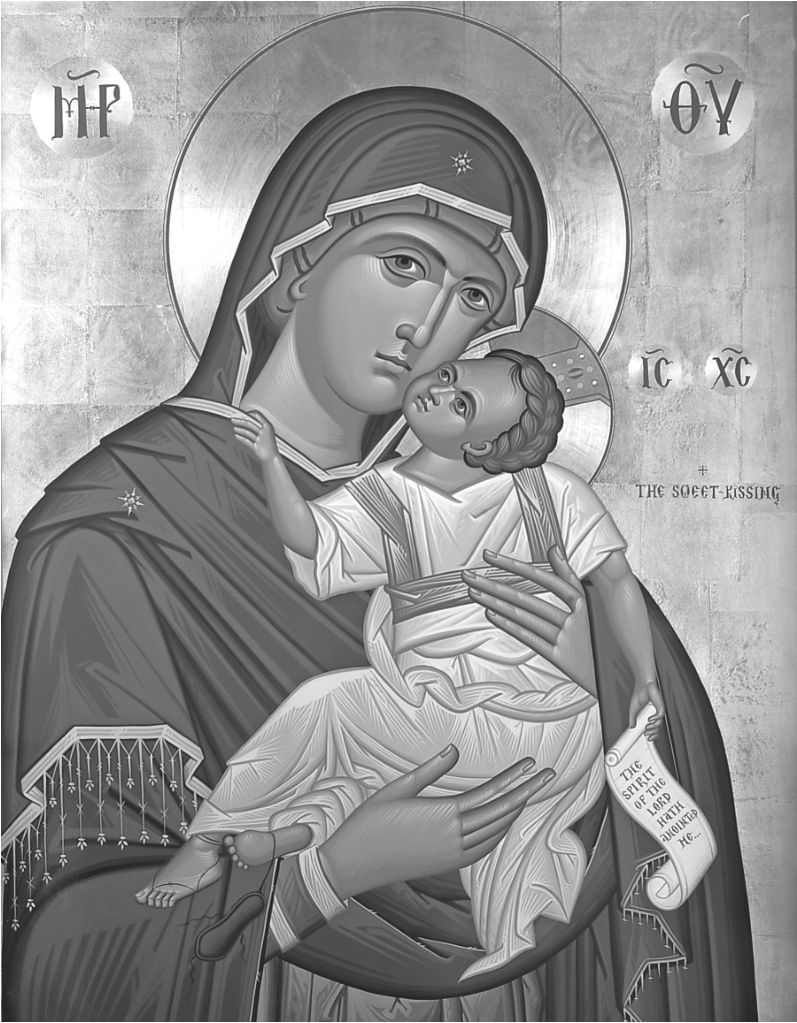
Copyright © 2026 by Dormition Skete. All rights reserved. ISBN 978-0-935889-10-9.