

Daily Devotional
Thursday, August 2, 2029 (NS), July 20, 2029 (OS)
No Fasting.
Thursday of the Tenth Week
The commemoration of the holy and glorious Prophet Elias the Thesbite.
Scripture Readings
Paschalion — Movable Calendar
Thursday of the Tenth Week
Epistle
The Reading is from the Second Epistle of Saint Paul to the Corinthians [§ 167].
1 1Paul, an apostle of Jesus Christ by the will of God, and Timothy our brother, to the Church of God which is in Corinth, with all the saints who are in all Achaia: 2Grace to you and peace from God our Father and the Lord Jesus Christ.
3Blessed be the God and Father of our Lord Jesus Christ, the Father of mercies and God of all consolation, 4Who comforteth us in all our affliction, that we may be able to comfort those who are in any affliction, through the comfort with which we ourselves are being comforted by God. 5For even as the sufferings of Christ abound in us, so our consolation also aboundeth through Christ. 6And whether we are being afflicted, it is for your consolation and salvation, which energizeth itself in the endurance of the same sufferings which we also suffer—and our hope for you is steadfast— 7or whether we are being comforted for your consolation and salvation, knowing that even as ye are partakers of the sufferings, so shall ye be also of the consolation.
Gospel
The Reading is from the Holy Gospel according to Saint Matthew [§ 88]. The Lord said to the Jews who came to Him:
21 43“I say to you that the kingdom of God shall be taken away from you, and it shall be given to a nation producing the fruits of it. 44“And the one who falleth upon this stone shall be broken; but on whomsoever it shall fall, it will crush him.” 45And after the chief priests and Pharisees heard His parables, they knew that He was speaking about them. 46Though they sought to lay hold of Him, they were afraid of the crowds, since they held Him as a prophet.
Menaion — Fixed Calendar
The commemoration of the holy and glorious Prophet Elias the Thesbite.
Epistle
The Reading is from the General Epistle of Saint Iakovos [§ 57].
5 10Brethren, take the prophets, who spoke in the name of the Lord, as an example of suffering ill and forbearance. 11Behold, we deem happy those who endure. Ye heard of the patience of Job, and saw the end of the Lord, that the Lord is full of tender-heartedness and mercies.
12But above all things, my brethren, cease swearing, neither by the heaven, nor by the earth, nor by any other oath; but let your yes be yes, and your no, no, lest ye should fall into hypocrisy. 13Is anyone among you suffering ill? Let him keep on praying. Is anyone cheerful? Let him keep on chanting. 14Is anyone among you infirm? Let him call for the presbyters of the Church; and let them pray over him, having anointed him with oil in the name of the Lord. 15And the prayer of faith shall save the one who is sick, and the Lord shall raise him up; and if he be one who hath committed sins, it shall be forgiven him. 16Keep on confessing your transgressions to one another and praying for one another, that ye might be healed. The entreaty of a righteous man hath much strength when it is energized. 17Elias was a man of like feelings to us, and with prayer he prayed for it not to rain; and it did not rain upon the earth for three years and six months. 18And he prayed again, and the heaven gave rain, and the earth blossomed forth her fruit.
19Brethren, if anyone among you should be led astray from the truth, and someone should turn him around, 20let him know that the one who turneth a sinner from the error of his way shall save a soul from death and shall cover a multitude of sins.
Gospel
In the Orthros and Liturgy
The Reading is from the Holy Gospel according to Saint Luke [§ 14]. At that time:
4 22 The crowds were wondering at the words of grace which were proceeding out of Jesus’ mouth, and were saying, “This is the Son of Joseph, is it not?” 23And He said to them, “No doubt, ye will say this parable to Me, ‘Physician, heal thyself; as much as we heard was done in Capernaum, do also here in Thy country.’” 24And He said, “Verily I say to you that not one prophet is accepted in his own country. 25“But in truth I say to you, many widows were in Israel in the days of Elias, when the heaven was shut up for three years and six months, when a great famine arose over all the land; 26“and to not even one of them was Elias sent, except to Sarepta of Sidon, to a woman who was a widow. 27“And many lepers were in Israel in the time of Elisaios the prophet, and not one of them was cleansed, except Neman the Syrian.” 28And all in the synagogue were filled with anger when they heard these things. 29And they rose up and cast Him outside of the city; and they led Him up to the brow of the hill on which their city had been built, in order to throw Him down headlong. 30But He, having passed through the midst of them, kept going on His way.
Lives of the Saints (Prologue)
August 2nd – Civil Calendar
July 20th – Church Calendar
1. The Holy Prophet Elias (Elijah).
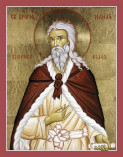 A man who saw God, a wonder-worker and a zealot for faith in God,
Elias was of the tribe of Aaron, from the city of Tishba, whence he was known as ‘the
Tishbite’. When Elias was born, his father Sabah saw angels of God around the child,
swaddling it with fire and feeding it with flames. This was a foreshadowing of Elias’ fiery
character and his God-given fiery powers. He spent his whole youth in prayer and meditation,
withdrawing often to the desert to ponder and pray in tranquillity. At that time, the Jewish
Kingdom was divided into two unequal parts: the Kingdom of Judah consisted only of the tribes of
Judah and Benjamin, with its capital at Jerusalem, while the Kingdom of Israel consisted of the
other ten tribes, with its capital at Samaria. The former kingdom was ruled by the descendants of
Solomon, and the latter by the descendants of Jeroboam, a servant of Solomon’s. The prophet
Elias came into the greatest conflict with the Israelite king, Ahab, and his evil wife Jezebel,
for they worshipped idols and turned the people from the service of the one, living God. On top
of this, Jezebel, being a Syrian, persuaded her husband to build a temple to the Syrian god,
Baal, and appointed many priests to the service of this false god. Elias performed many miracles
by the power of God: he closed the heavens, that no rain should fall for three years and six
months; called down fire from heaven to consume the sacrifice to his God, while the priests of
Baal were unable to do this; brought rain from the heavens at his prayers; miraculously
multiplied grain and oil in the widow’s house at Sarepta (Zarephath), and restored her dead
son to life; prophesied to Ahab that the dogs would lick up his blood, and to Jezebel that the
dogs would devour her—which came to pass; and performed many other miracles and foretold many
events. He talked with God on Horeb and heard His voice in the gentle breeze. At the time of his
departure, he took Elissaios and appointed him his heir as a prophet; he parted the Jordan with
his mantle and was finally borne to heaven in a fiery chariot drawn by fiery horses. He appeared
together with Moses to our Lord Jesus Christ on Tabor. At the end of the world, Elias will come
again, to break the power of Antichrist (Rev. 11).
A man who saw God, a wonder-worker and a zealot for faith in God,
Elias was of the tribe of Aaron, from the city of Tishba, whence he was known as ‘the
Tishbite’. When Elias was born, his father Sabah saw angels of God around the child,
swaddling it with fire and feeding it with flames. This was a foreshadowing of Elias’ fiery
character and his God-given fiery powers. He spent his whole youth in prayer and meditation,
withdrawing often to the desert to ponder and pray in tranquillity. At that time, the Jewish
Kingdom was divided into two unequal parts: the Kingdom of Judah consisted only of the tribes of
Judah and Benjamin, with its capital at Jerusalem, while the Kingdom of Israel consisted of the
other ten tribes, with its capital at Samaria. The former kingdom was ruled by the descendants of
Solomon, and the latter by the descendants of Jeroboam, a servant of Solomon’s. The prophet
Elias came into the greatest conflict with the Israelite king, Ahab, and his evil wife Jezebel,
for they worshipped idols and turned the people from the service of the one, living God. On top
of this, Jezebel, being a Syrian, persuaded her husband to build a temple to the Syrian god,
Baal, and appointed many priests to the service of this false god. Elias performed many miracles
by the power of God: he closed the heavens, that no rain should fall for three years and six
months; called down fire from heaven to consume the sacrifice to his God, while the priests of
Baal were unable to do this; brought rain from the heavens at his prayers; miraculously
multiplied grain and oil in the widow’s house at Sarepta (Zarephath), and restored her dead
son to life; prophesied to Ahab that the dogs would lick up his blood, and to Jezebel that the
dogs would devour her—which came to pass; and performed many other miracles and foretold many
events. He talked with God on Horeb and heard His voice in the gentle breeze. At the time of his
departure, he took Elissaios and appointed him his heir as a prophet; he parted the Jordan with
his mantle and was finally borne to heaven in a fiery chariot drawn by fiery horses. He appeared
together with Moses to our Lord Jesus Christ on Tabor. At the end of the world, Elias will come
again, to break the power of Antichrist (Rev. 11).
Author’s note: In the Greek Lives of the Saints, the following miracle of the holy prophet Elias is recorded: a certain Paisius, abbot of the monastery of St. Elias in Jerusalem, went to Constantinople and from Constantinople to Belgrade at the time that Patriarch Paisius was staying there. At that time, there was an Orthodox Christian living in Belgrade, married to a Latin wife. On St. Elias’ day, the wife planned to make bread, but her husband said to her: ‘You must not work.’ His wife replied that the feast had been two days earlier (according to the Roman Calendar). And so a dispute arose between them. The stubborn woman kneaded the dough, but then a marvel! The dough became stone in her hands! At that, the neighbors gathered round, and each of them took a piece of the stone. Paisius took a piece of it, as a witness to God’s miracle, and took it with him to Jerusalem. He laid this piece of stone in front of the icon of the holy Prophet Elias in his monastery. (This is recorded in Dositheus Book XII, Ch. 11, Para. 2, p. 1192.)
2. St. Elias, Patriarch of Jerusalem, and St. Flavian, Patriarch of Antioch.
Great zealots for the Faith and defenders of Orthodoxy, they both died in exile, driven there by the heretical Emperor Anastasios. They foresaw precisely the death of Emperor Anastasios and their own deaths. They wrote to each other at the same time from widely different places: ‘Anastasios the emperor is dying today; let us go to God’s judgement with him.’ After two days, both these holy hierarchs died, in the year 518.
FOR CONSIDERATION
Writing about the life of his sister Makrina, St. Gregory of Nyssa refrained from enumerating her miracles, saying: ‘...that I may not bring weak men to the sin of unbelief’. He calls those weak who do not believe. And, indeed, there is none weaker than the man without faith. A man without faith believes in the power of dead things, but does not believe in the power of God or of the men of God. That is spiritual obtuseness, and that obtuseness is equivalent to spiritual death. Thus souls that believe are alive and those that do not are dead. Living souls believe in the mighty miracles of the Prophet Elias; these miracles delight and encourage them, for they know that they are revelations of the power of God. If God can reveal His power through dead things and elements, can He not reveal it through living and holy men? That which gives the greatest joy to the believer is that the Prophet Elias appeared alive on Mount Tabor at the time of the Lord’s Transfiguration. During his earthly life, this great prophet gave proofs of the existence of the one, living God, and several hundred years after his bodily translation, his appearing on Tabor gave to men a living proof of life beyond this world.
Daily Scripture Readings taken from The Orthodox New Testament, translated and published by Holy Apostles Convent, Buena Vista, Colorado, copyright © 2000, used with permission, all rights reserved.
Daily Prologue Readings taken from The Prologue of Ochrid, by Bishop Nikolai Velimirovic, translated by Mother Maria, published by Lazarica Press, Birmingham, England, copyright © 1985, all rights reserved. Edited by Dormition Skete.