

Daily Devotional
Wednesday, July 8, 2026 (NS), June 25, 2026 (OS)
Fast Day. No Meat, Fish, Dairy, Eggs, Alcohol or Olive Oil Allowed.
Wednesday of the Sixth Week
The commemoration of our venerable mother among the saints, Fevronia, the Virgin-martyr of Nisibis, and the blessed Prince Peter and blessed Princess Fevronia (tonsured David and Ephrosynia), Wonder-workers of Murom.
Scripture Readings
Paschalion — Movable Calendar
Wednesday of the Sixth Week
Epistle
The Reading is from the First Epistle of Saint Paul to the Corinthians [§ 127]. Brethren:
2 9“Eye hath not seen, and ear hath not heard, and neither hath it entered into the heart of man the things which God prepared for those who love Him [cf. Is. 64:4].” 10But God revealed them to us by His Spirit; for the Spirit searcheth all things, even the deep things of God. 11For who among men knoweth the things of a man, except the spirit of the man that is in him? Even so no one knoweth the things of God, except the Spirit of God. 12Now we did not receive the spirit of the world, but the Spirit Who is of God, in order that we might know the things which were freely given to us by God, 13which things also we speak, not in words taught of human wisdom, but in those taught of the Holy Spirit, comparing spiritual things with spiritual. 14But a material-minded man receiveth not the things of the Spirit of God; for it is foolishness to him, and he is not able to come to know it, because it is spiritually examined. 15But the spiritual one examineth all things, yet he himself is examined by no one. 16“For who knoweth the mind of the Lord? Who shall instruct Him [cf. Is. 40:13]?” But we have the mind of Christ.
3 1And I, brethren, was not able to speak to you as to spiritual ones, but as to carnal ones, as to infants in Christ. 2I gave you milk to drink, and not solid food; for ye were not yet able, but neither now are ye yet able. 3For ye are yet carnal. For whereas there is among you jealousy and strife, and divisions, are ye not carnal and walking according to man? 4For whenever one saith, “I indeed am of Paul,” and another, “I am of Apollos,” are ye not carnal? 5Who then is Paul, and who is Apollos, but ministers by whom ye believed, even as the Lord gave to each? 6I planted, Apollos watered, but God was giving the increase. 7So that neither is the one who planteth anything, nor the one who watereth, but God Who giveth the increase. 8Now the one who planteth and the one who watereth are one, and each one shall receive his own reward according to his own labor.
Gospel
The Reading is from the Holy Gospel according to Saint Matthew [§ 53]. The Lord said this parable:
13 31“The kingdom of the heavens is like a grain of mustard, which a man took and sowed in his field, 32“which indeed is the smallest of all the seeds; but whenever it is grown, it is the greatest of all the herbs, and doth become a tree, so that the birds of the heaven come and settle in its branches.” 33He spoke another parable to them: “The kingdom of the heavens is like leaven, which a woman took and hid in three measures of wheat meal until the whole was leavened.”
34Jesus spoke all these things in parables to the crowds; and without a parable He was not in the habit of speaking to them, 35in order that it might be fulfilled that which was spoken by the prophet, saying, “I will open My mouth in parables; I will utter things which have been hidden from the foundation of the world [cf. Ps. 77(78):2].”
36Then Jesus sent the crowds away and went into the house.
Menaion — Fixed Calendar
The commemoration of our venerable mother among the saints, Fevronia, the Virgin-martyr of Nisibis, and the blessed Prince Peter and blessed Princess Fevronia (tonsured David and Ephrosynia), Wonder-workers of Murom.
Epistle
For the Martyr:
The Reading is from the Second Epistle of Saint Paul to the Corinthians [§ 181]. Brethren:
6 1We, working together, beseech you also not to receive the grace of God in vain— 2for He saith, “In an acceptable time I heard thee, and in a day of salvation I helped thee [Is. 49:8]”; behold, now is an acceptable time; behold, now is a day of salvation— 3by not giving even one cause of stumbling in anything, that the ministry might not be blamed. 4But in all things commending ourselves as ministers of God, in much patience, in afflictions, in necessities, in straits, 5in blows, in imprisonments, in instabilities, in toils, in vigils, in fastings, 6in pureness, in knowledge, in long-suffering, in kindness, in the Holy Spirit, in love unfeigned, 7in the word of truth, in the power of God, by the weapons of righteousness of the right hand and of the left, 8by glory and dishonor, by ill-fame and good fame; as deceivers and yet true; 9as unknown and well-known; as dying, and, behold, we live; as chastened, and not put to death; 10as ones sorrowful, but always rejoicing; as poor, but enriching many; as having nothing, and yet possessing all things.
For the Wonder-workers:
The Reading is from the Epistle of Saint Paul to the Galatians [§ 213]. Brethren:
5 22The fruit of the Spirit is love, joy, peace, long-suffering, kindness, goodness, faith, 23meekness, self-control; against such things there is no law. 24But they who are of the Christ crucified the flesh with the passions and the lusts. 25If we live by the Spirit, let us also be walking by the Spirit. 26Let us not become vainglorious, provoking one another, envying one another.
6 1Brethren, even if a man should be overtaken in some transgression, ye, the spiritual ones, be restoring such a one in the spirit of meekness, looking out for thyself, lest thou also be tempted. 2Keep on bearing one another’s burdens, and thus fill up the law of the Christ.
Gospel
For the Martyr:
The Reading is from the Holy Gospel according to Saint Luke [§ 33]. At that time:
7 36A certain one of the Pharisees was asking Jesus that He would eat with him. And He entered into the house of the Pharisee, and reclined at table. 37And behold, a woman in the city who was a sinner, when she found out that He was reclining at table in the house of the Pharisee, brought an alabaster flask of perfumed ointment, 38and she stood beside His feet behind Him, weeping; and she began to wet His feet with tears, and was wiping them off with the hairs of her head; and she was kissing His feet ardently and anointing them with the perfumed ointment. 39Now when the Pharisee who invited Him saw it, he spoke within himself, saying, “This One, if He were a prophet, would know who and of what sort the woman is who toucheth Him, for she is a sinner.” 40And Jesus answered and said to him, “Simon, I have something to say to thee.” And he saith, “Teacher, say it.” 41“There were two debtors to a certain creditor: the one was owing five hundred denarii, and the other fifty. 42“But when they had nothing to pay back the debt, he showed himself gracious to both. Say which of them then will love him more?” 43Simon answered and said, “I suppose that he, to whom he showed himself the more gracious.” And He said to him, “Rightly thou didst judge.” 44And He turned to the woman, and said to Simon, “Seest thou this woman? I entered into thy house; water thou gavest Me not for My feet, but she with tears did wet My feet, and with the hairs of her head wiped them off. 45“A kiss thou gavest Me not, but she from the time that I entered did not cease from ardently kissing My feet. 46“With oil thou didst not anoint My head, but she anointed My feet with perfumed ointment. 47“For which reason I say to thee, her sins, which are many, have been forgiven, for she loved much. But to whom little is forgiven, the same loveth little.” 48And He said to her, “Thy sins have been forgiven.” 49And those reclining at table with Him began to say among themselves, “Who is this Who even forgiveth sins?” 50And He said to the woman, “Thy faith hath saved thee; go thy way in peace.”
Lives of the Saints (Prologue)
July 8th – Civil Calendar
June 25th – Church Calendar
1. Our Holy Mother, the Martyr Fevronia.
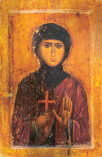 She was the daughter of Prosphorus, a
Roman senator. In order to escape marriage with a mortal man, she betrothed herself to Christ and
became a nun in the East, in Assyria, in a monastery where her aunt, Bryaena, was abbess.
Lysimachus, a nobleman’s son, was desirous of entering into marriage with Fevronia, but the
Emperor Diocletian, suspecting him of being a secret Christian, sent him to the East with his
uncle, Silenus, to seize and kill the Christians. Silenus was as ferocious as a wild beast and
mercilessly exterminated the Christians wherever he could. Lysimachus, on the contrary, protected
the Christians whenever possible and hid them from his bestial uncle. Having emptied Palmyra of
Christians, Silenus came to the city of Nisibis, close to which there was the monastery of fifty
ascetic virgins in which Fevronia was a nun. Although she was barely twenty years old, Fevronia
was held in respect both in the monastery and in the city for her meekness, wisdom and restraint.
The monastery followed the rule of a former abbess, Blessed Platonida, and every Friday the nuns
would spend their time in prayer and reading sacred books, with no other work. Bryaena had
appointed Fevronia to read to the other sisters while standing behind a curtain, so that no one
would be distracted or captivated by the beauty of her face. When Silenus heard about Fevronia,
he ordered that she be brought before him. When the holy maiden refused to renounce Christ and
enter into marriage with a mortal man, he ordered them to whip her and then cut off her hands,
breasts and feet and finally to slay her with the sword. But a fearful divine punishment came
upon her tormentor that very day. A demon entered into him, and a fearful terror took hold of
him. In his terror, he struck his head on a marble pillar and fell down dead. Lysimachus ordered
that Fevronia’s body be gathered together and brought to the monastery for solemn burial,
and he, together with many of the soldiers, was baptized. Many healings were wrought through
Fevronia’s holy relics, and she herself appeared on the day of her feast, standing in her
usual place among the sisters. They beheld her with both fear and joy. St. Fevronia suffered and
went to eternal blessedness in the year 310, and her relics were translated to Constantinople in
363.
She was the daughter of Prosphorus, a
Roman senator. In order to escape marriage with a mortal man, she betrothed herself to Christ and
became a nun in the East, in Assyria, in a monastery where her aunt, Bryaena, was abbess.
Lysimachus, a nobleman’s son, was desirous of entering into marriage with Fevronia, but the
Emperor Diocletian, suspecting him of being a secret Christian, sent him to the East with his
uncle, Silenus, to seize and kill the Christians. Silenus was as ferocious as a wild beast and
mercilessly exterminated the Christians wherever he could. Lysimachus, on the contrary, protected
the Christians whenever possible and hid them from his bestial uncle. Having emptied Palmyra of
Christians, Silenus came to the city of Nisibis, close to which there was the monastery of fifty
ascetic virgins in which Fevronia was a nun. Although she was barely twenty years old, Fevronia
was held in respect both in the monastery and in the city for her meekness, wisdom and restraint.
The monastery followed the rule of a former abbess, Blessed Platonida, and every Friday the nuns
would spend their time in prayer and reading sacred books, with no other work. Bryaena had
appointed Fevronia to read to the other sisters while standing behind a curtain, so that no one
would be distracted or captivated by the beauty of her face. When Silenus heard about Fevronia,
he ordered that she be brought before him. When the holy maiden refused to renounce Christ and
enter into marriage with a mortal man, he ordered them to whip her and then cut off her hands,
breasts and feet and finally to slay her with the sword. But a fearful divine punishment came
upon her tormentor that very day. A demon entered into him, and a fearful terror took hold of
him. In his terror, he struck his head on a marble pillar and fell down dead. Lysimachus ordered
that Fevronia’s body be gathered together and brought to the monastery for solemn burial,
and he, together with many of the soldiers, was baptized. Many healings were wrought through
Fevronia’s holy relics, and she herself appeared on the day of her feast, standing in her
usual place among the sisters. They beheld her with both fear and joy. St. Fevronia suffered and
went to eternal blessedness in the year 310, and her relics were translated to Constantinople in
363.
2. Our Holy Father Dionysius.
The founder of the monastery of St. John (Dionysiou) on Mount Athos, he was born in Koritza in Albania. His elder brother, Theodosius, went off to the Holy Mountain and became for a time abbot of the monastery of Philotheou. When St. Dionysius had grown up, he went to his brother at Philotheou and became a monk at his hand. By divine dispensation, when Theodosius was engaged on some business for his monastery in Constantinople, he was elected and consecrated Metropolitan of Trebizond. A wondrous light began to appear to Dionysius each night on the spot where he later built the monastery of St. John the Forerunner. Understanding the light as a sign from heaven that he was to build a monastery, Dionysius went to Trebizond to seek help from his brother and from the Emperor Alexios Komnenos. The emperor gave him both money and a Royal Charter, which is still preserved in the monastery. Dionysius founded the monastery of St. John the Forerunner in 1380. When pirates plundered the monastery, Dionysius went again to Trebizond, and there finished his earthly course at the age of seventy-two. Dionysiou still flourishes like a flower to the present day. An icon of the Mother of God known as ‘Of the Praises,’ a gift from the Emperor Alexios Komnenos to Dionysiou, can be found in the monastery. According to tradition, it was before this icon that the Akathist to the Mother of God, composed by Patriarch Sergius, was read for the first time.
FOR CONSIDERATION
‘Whoever desires to escape future tribulations must bear the present ones with joy,’ said St. Mark the Ascetic. People consider slander a great tribulation, and there are few who can bear it without grumbling.
But how beautiful are the fruits of tribulations borne with a good grace! Tribulation is given to us for profitable spiritual commerce, and we let the opportunity slip by and are left empty-handed in the market-place.
Consider: Ss. Athanasius, Basil, John Chrysostom, Makarios, Sisoës and thousands of other followers of the One Who was most maligned were themselves maligned. But God, Who orders all things for our salvation, so disposed that, on the thorns of slander, fragrant roses would spring up for all the slander endured for the name of Christ. If he had not been slandered, would Stephen have seen the heavens open and the glory of God appear in the sky? And did not all the slander against Joseph the Chaste serve for his still greater glory?
Daily Scripture Readings taken from The Orthodox New Testament, translated and published by Holy Apostles Convent, Buena Vista, Colorado, copyright © 2000, used with permission, all rights reserved.
Daily Prologue Readings taken from The Prologue of Ochrid, by Bishop Nikolai Velimirovic, translated by Mother Maria, published by Lazarica Press, Birmingham, England, copyright © 1985, all rights reserved. Edited by Dormition Skete.